
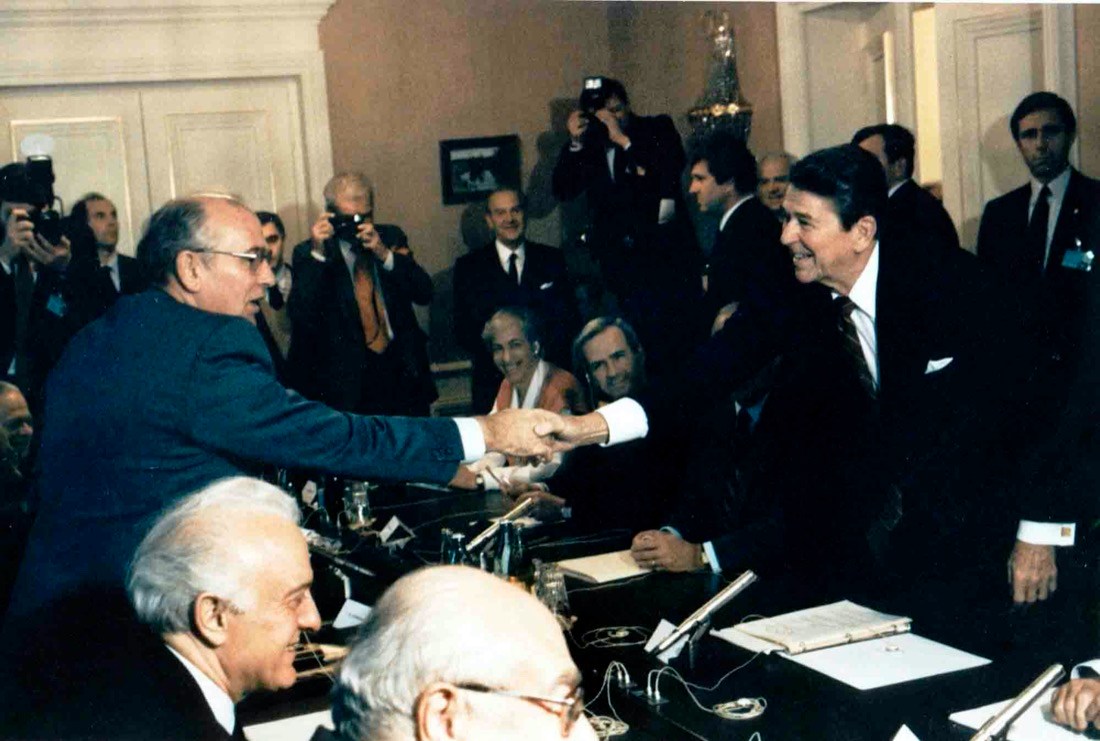
NEW YORK (AP) – A rivalry with Russia. A proxy battleground. Nuclear brinksmanship. For many generations of Americans, it’s just like old times.
The invasion of Ukraine has rapidly returned echoes of a Cold War mentality to the United States, with a familiar foe in Russia. Bars have poured out their Russian vodka. McDonald’s, a symbol of the end of the Soviet Union when it first opened in Moscow, has shuttered its Russian locations. Once again, a U.S. president sees a pitched ideological battle. “We will save democracy,” President Joe Biden said in his State of the Union address.
For an America where Russia never quite went out of style as an evergreen villain in film and television, revived tensions with the Kremlin have drawn from a well-worn geopolitical script. A familiar, chilly East-West wind is blowing again.
“It’s very much a Cold War echo,” says James Hershberg, professor of history and international affairs at Georgetown University and former director of the Cold War International History Project of the Woodrow Wilson Center.
Hershberg sees much that’s different about today’s inflamed tensions with Russia. Vladimir Putin’s aggressions, he says, don’t seem driven by ideology the way communism was for the Soviet Union. A transformed media landscape, too, has helped turn Ukrainian President Volodymyr Zelenskyy into a global protagonist.