
Wednesday, November 4, 2026Nov 4

This story is free to read.

EU countries could face fines for rejected refugees

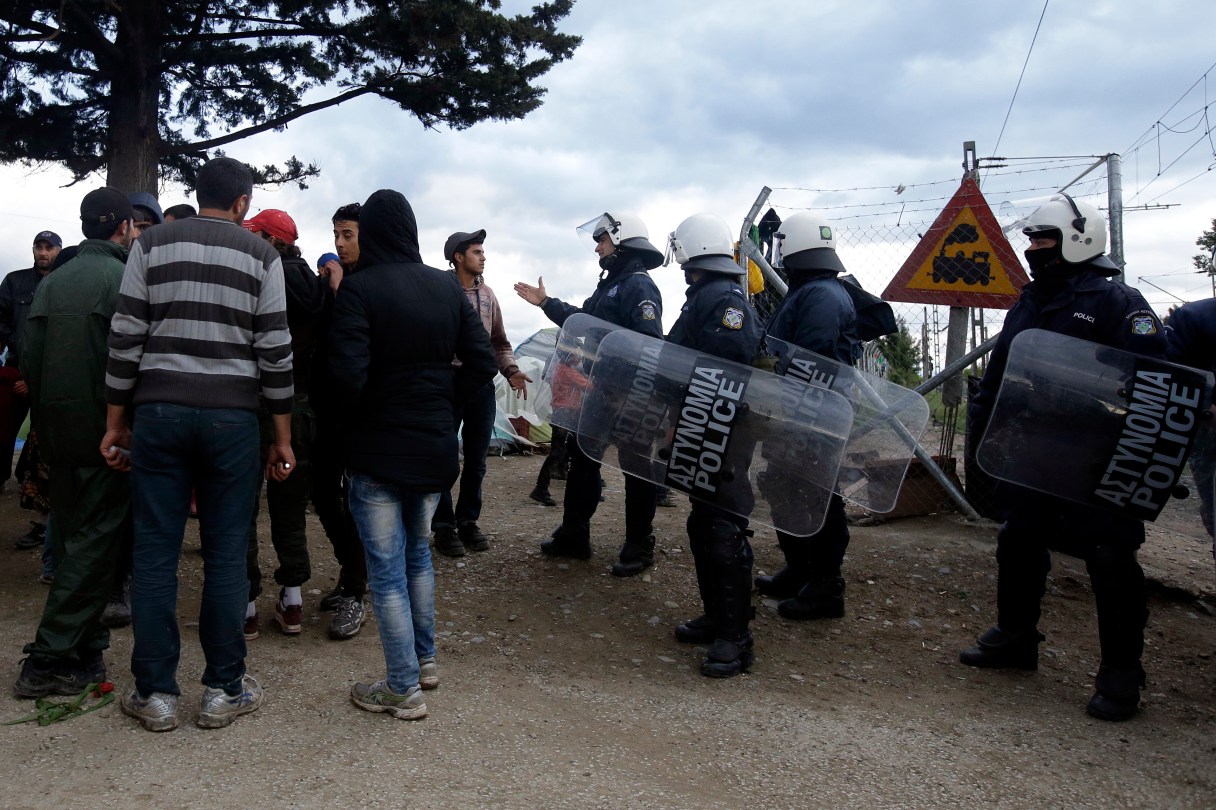
Greek police in riot gear stand near refugees and migrants at the northern Greek border point of Idomeni, Greece, Tuesday, May 3, 2016. Germany and some other EU countries are planning to ask the European Commission for an extension of border controls within the Schengen passport-free travel zone for another six months because they fear a new wave of migrants. (AP Photo/Gregorio Borgia)
Greek police in riot gear stand near refugees and migrants at the northern Greek border point of Idomeni, Greece, Tuesday, May 3, 2016. Germany and some other EU countries are planning to ask the European Commission for an extension of border controls within the Schengen passport-free travel zone for another six months because they fear a new wave of migrants. (AP Photo/Gregorio Borgia) Greek police in riot gear stand near refugees and migrants at the northern Greek border point of Idomeni, Greece, Tuesday, May 3, 2016. Germany and some other EU countries are planning to ask the European Commission for an extension of border controls within the Schengen passport-free travel zone for another six months because they fear a new wave of migrants. (AP Photo/Gregorio Borgia)

BRUSSELS (AP) – European Union countries that refuse to accept refugees under proposals to overhaul the EU’s failed asylum laws could face large fines for each asylum seeker.

The fines are part of a European Commission plan to be made public Wednesday to more evenly share the burden of hosting hundreds of thousands of people fleeing conflict and violence in places like Syria.

One document seen by The Associated Press shows that the fines – dubbed a “solidarity contribution” – could total 250,000 euros ($287,300) for each asylum seeker a country turns down.

Under current EU laws, people must apply for asylum in the country where they first arrive. That effectively means over-burdened Greece and Italy.

The plan still has to be accepted by member countries and EU lawmakers.