
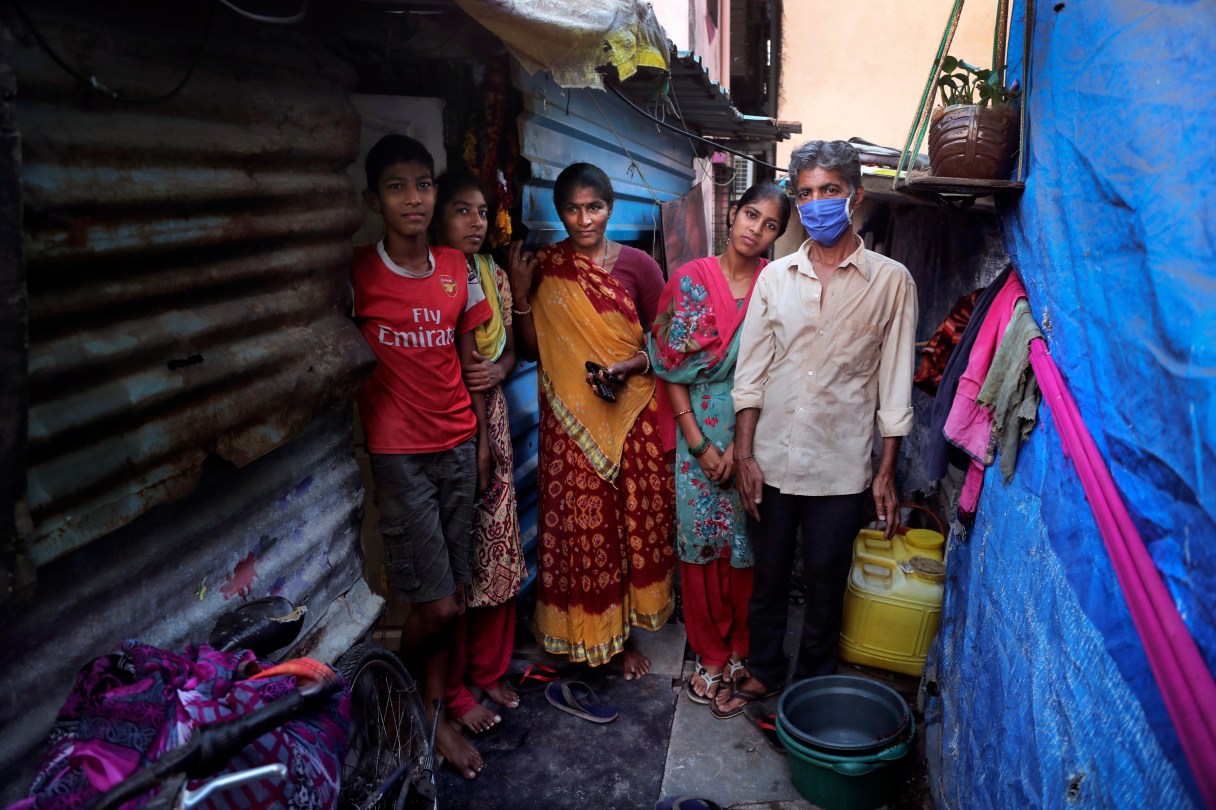
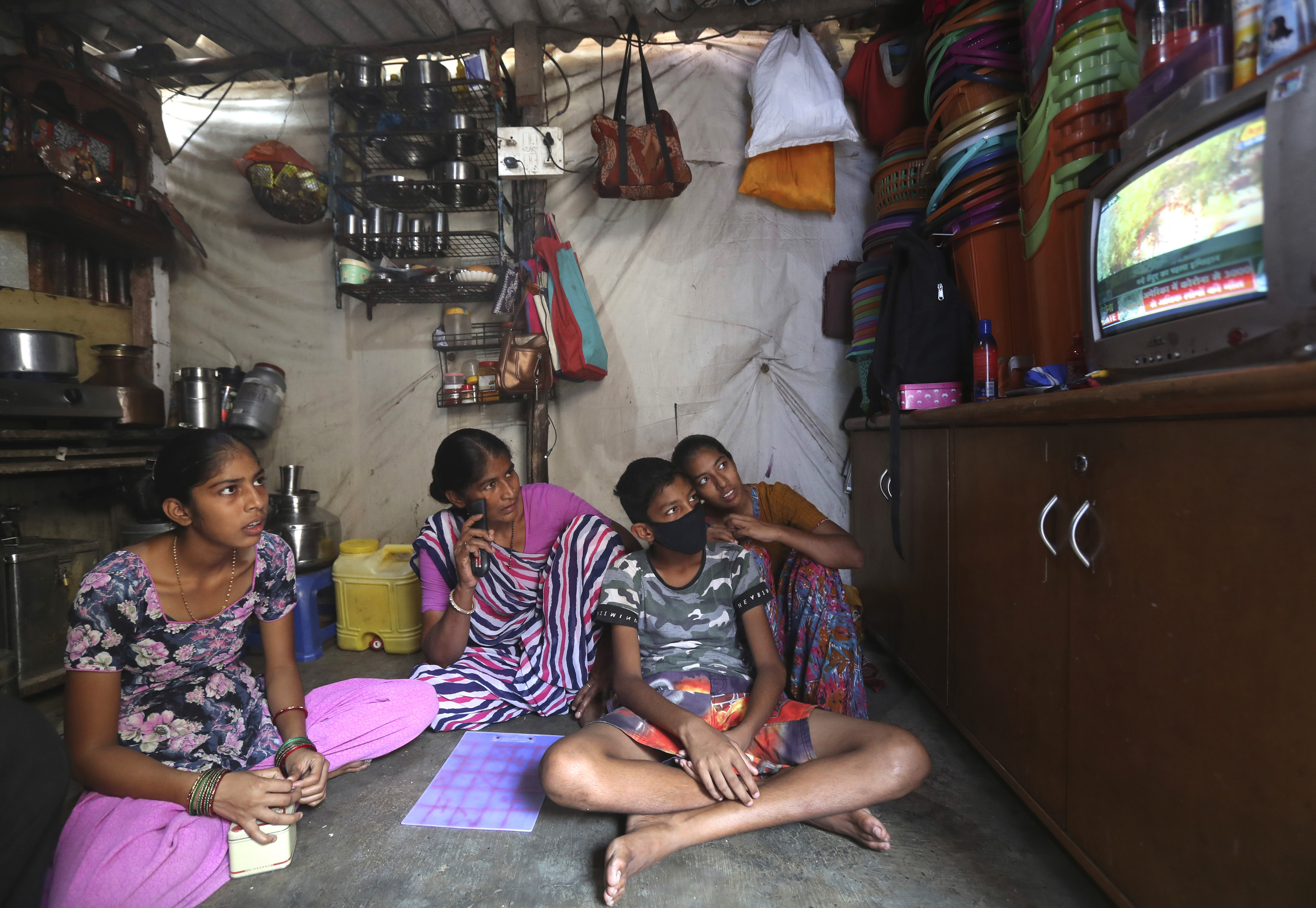
 In this March 31, 2020, photo, Mina Ramesh Jakhawadiya, center, watches news on coronavirus along with her children in her one room house in a slum in Mumbai, India. Jakhawadiya makes a living selling cheap plastic goods with her husband on the streets of Mumbai. For her, the order means 21 days in a 6-by-9 foot room with five people, no work, a couple days of food and very less cash. As governments around the world debate ways to slow the spread of coronavirus, India has launched one of the most draconian social experiments in human history, locking down its entire population, including hundreds of millions of people who struggle to survive on a few dollars a day. (AP Photo/Rafiq Maqbool)
The street peddler watched the prime minister’s speech on a battered TV with her family of five crowded around her, in a one-room house with no toilet and no running water. It’s squeezed in a shanty town controlled by an obscure Mumbai organized crime family.
Mina Jakhawadiya knew that somewhere in India, the coronavirus had arrived, wending its way through this sprawling nation of 1.3 billion people. But the danger seemed far away.
Then it wasn’t.
“Every state, every district, every lane, every village will be under lockdown” for three weeks, Prime Minister Narendra Modi told the nation on March 24, giving India four hours’ notice to prepare.
As governments around the world try to slow the spread of the coronavirus, India has launched one of the most draconian social experiments in history, locking down its entire population — including an estimated 176 million people who struggle to survive on $1.90 a day or less. Modi’s order allows Indians out of their homes only to buy food, medicine or other essentials. No going to work. No school. No playgrounds.