
Monday, November 16, 2026Nov 16

South China Sea: China willing to pay the price of defiance

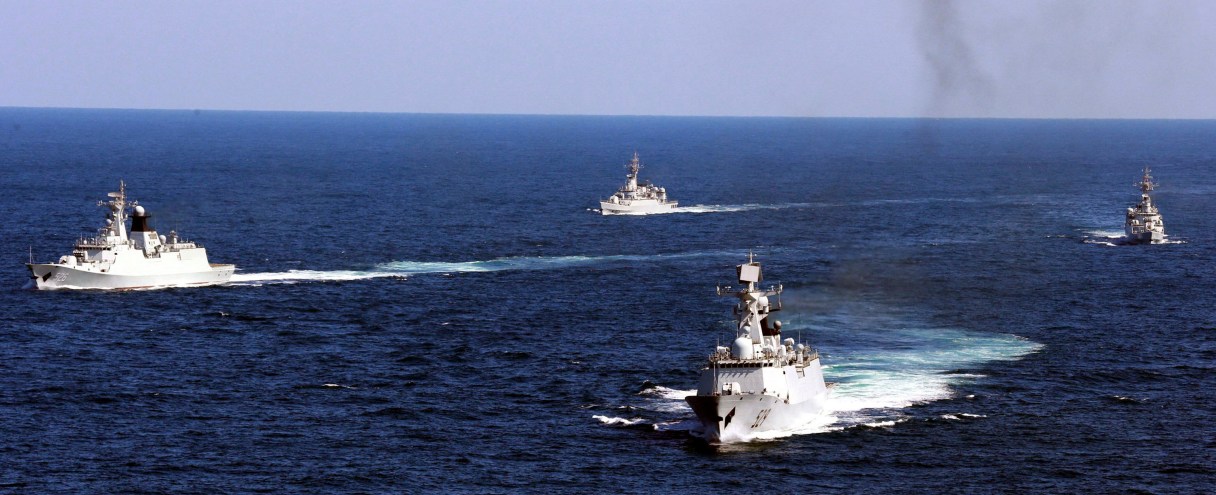
FILE - In this Oct. 19, 2012 file photo, Chinese navy vessels take part in a drill in the waters off Zhoushan in east China's Zhejiang province. Despite pressure from Washington and elsewhere, China appears determined to avoid granting any hint of legitimacy to the U.N. abitration tribunal that might challenge its claim to ownership of virtually the entire South China Sea, including its islands, reefs, fish stocks and potentially rich reserves of oil and gas. (AP Photo/File) CHINA OUT

BEIJING (AP) – Even before a ruling, China may have lost by refusing to cooperate with a U.N. arbitration tribunal over its claim to virtually the entire strategic South China Sea. Yet Beijing seems prepared to absorb the cost to its reputation, confident that in terms of territory and resources, it won’t lose a thing.

Here is a look at some of the key points of the case before the tribunal and its potential effects for China, the region and the world.

___

THE ARBITRATION CASE

The case before The Hague tribunal, filed by the Philippines, centers on the applicability of China’s vaguely drawn “nine-dash line” boundary claim in the South China Sea under the United Nations Convention on the Law of the Sea. A decision is expected sometime within the next several weeks, but since there is no enforcement mechanism, its potential impact is unclear.