
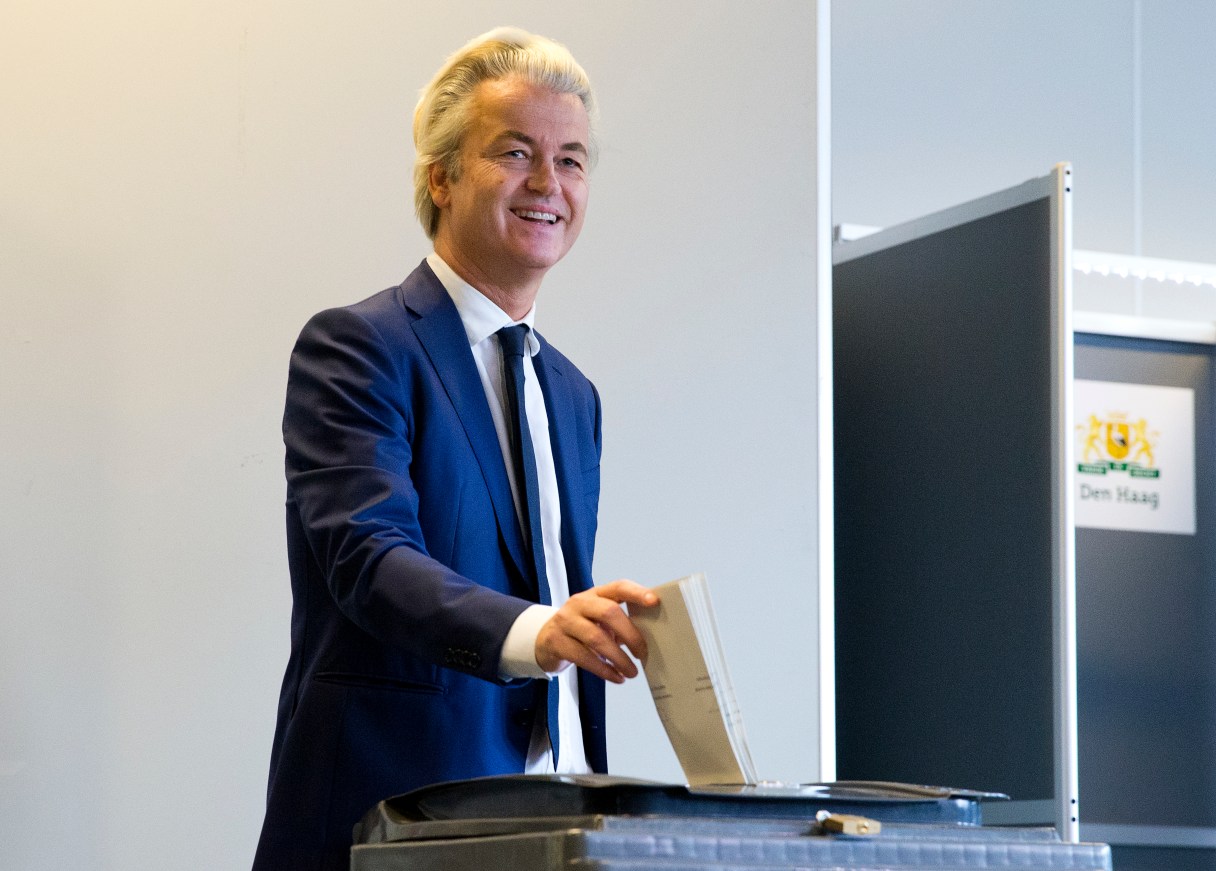
THE HAGUE, Netherlands (AP) – If far-right Geert Wilders is looking for somebody to blame for his disappointing showing in the Dutch election, he could point to a couple of possible candidates: Turkish President Recep Tayyip Erdogan and U.S. President Donald Trump.
That’s the assessment of Matthijs Rooduijn, an assistant professor at Utrecht University who researches the rise of populist radical parties, and other Dutch political experts.
Erdogan’s diplomatic spat with the Netherlands, which erupted over the weekend, allowed Dutch Prime Minister Mark Rutte to portray himself as a tough statesman on the eve of Wednesday’s national vote, Rooduijn said Thursday. In addition, Trump’s early chaotic days in the White House showed potential Wilders voters that putting populist policies into practice can trigger turmoil, he added.
But ultimately, Dutch politicians muscling into Wilders’ traditional far-right territory may have cost the firebrand lawmaker the most votes.
In Wednesday’s election for The Netherland’s 150-seat lower house of Parliament, Wilders’ Party for Freedom, or PVV, got just over 13 percent of the vote. That was enough for 20 seats and second place behind Rutte’s conservative VVD party, which easily won the election with 21 percent of the vote and 33 seats.