
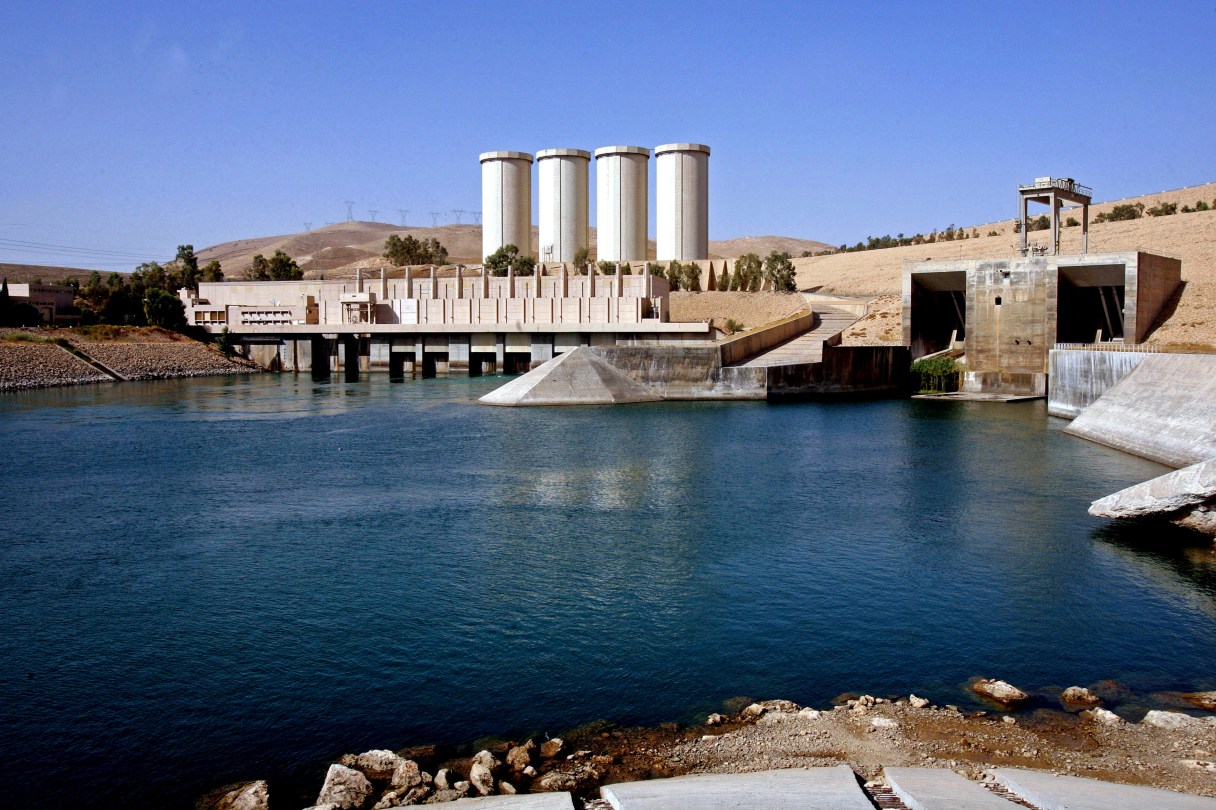
BAGHDAD (AP) – The militants who have overrun large parts of Iraq are now battling ferociously to capture one of the country’s vital resources, water.
Fighters with the Islamic State group launched a three-pronged attack over the weekend in a drive to capture Haditha Dam, in western Iraq, a complex with six power generators located alongside Iraq’s second-largest reservoir. At the same time, they are fighting to capture Iraq’s largest dam, Mosul Dam, in the north of the country.
Seizing the dams and the large reservoirs they hold would give the militants control over water and electricity that they could use to help build support in the territory they now rule by providing the scarce resources to residents. Or they could sell the resources as a lucrative source of revenue.
They could also use the dams as a weapon of war by flooding terrain downstream to slow Iraq’s military or disrupt life. They have done that with a smaller dam they hold closer to Baghdad. But with the larger dams, there are limits on this tactic since it would also flood areas that the insurgents hold.
On Friday, the fighters unleashed a powerful attack from three sides on the town of Haditha in western Anbar province. Suicide attackers tried but failed to detonate an oil tanker and several trucks packed with explosives. The aim was to obliterate the final line of defense between the militants and Haditha Dam on the Euphrates River, Lt. Gen. Rasheed Fleih, the commander of Anbar Operations Command, told The Associated Press.