
Monday, November 16, 2026Nov 16

Proposed Los Angeles-area NFL stadium boasts lightning bolts

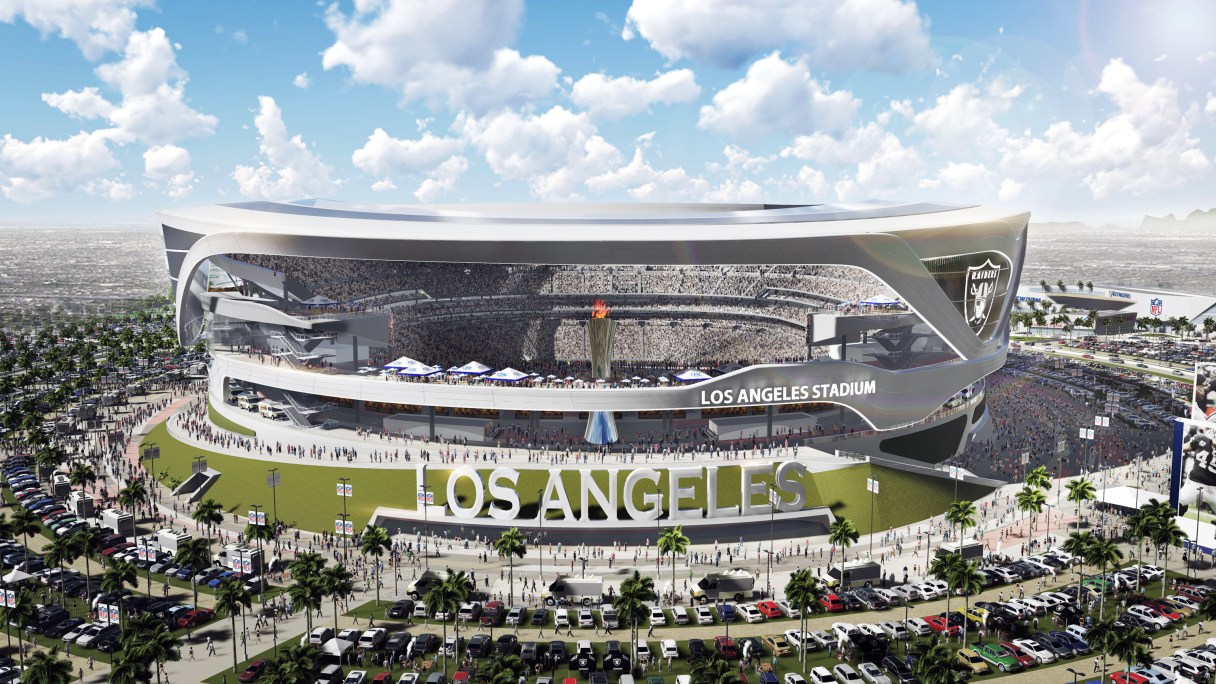
An artist's rendering provided by Carson2gether shows the exterior of a proposed stadium that would house both the Chargers and the Raiders NFL football teams, shown here in Raiders home game configuration, in Carson, Calif. New designs for the proposed NFL stadium in the Los Angeles area include simulated lightning bolts for the San Diego Chargers and an eternal flame honoring late Oakland Raiders owner Al Davis. The thoroughly revamped stadium renderings for the $1.7 billion joint stadium planned by the two teams were released on Thursday, April 23, 2015. (Manica Architecture/Carson2gether via AP)

CARSON, Calif. (AP) – New designs for a proposed NFL stadium in the Los Angeles area include simulated lightning bolts for the San Diego Chargers and a flame honoring late Oakland Raiders owner Al Davis.

The thoroughly revamped plans for the $1.7 billion joint stadium proposal by the two teams were released Thursday, just two months after the project and an initial set of designs were announced and two days after it received approval from the Carson City Council.

The designs were presented in New York this week to NFL Commissioner Roger Goodell and the league’s committee on possibly relocating a team to greater Los Angeles.

The flowing, metallic modern stadium design features a horseshoe-shaped seating arrangement that is open on one end.

“We wanted the building to be iconic and sleek, like a luxury sports car,” David Manica, president of stadium designer Manica Architecture, told the Los Angeles Times, which first reported on the revamped design. “Very aerodynamic, in motion, flowing lines from every angle.”