
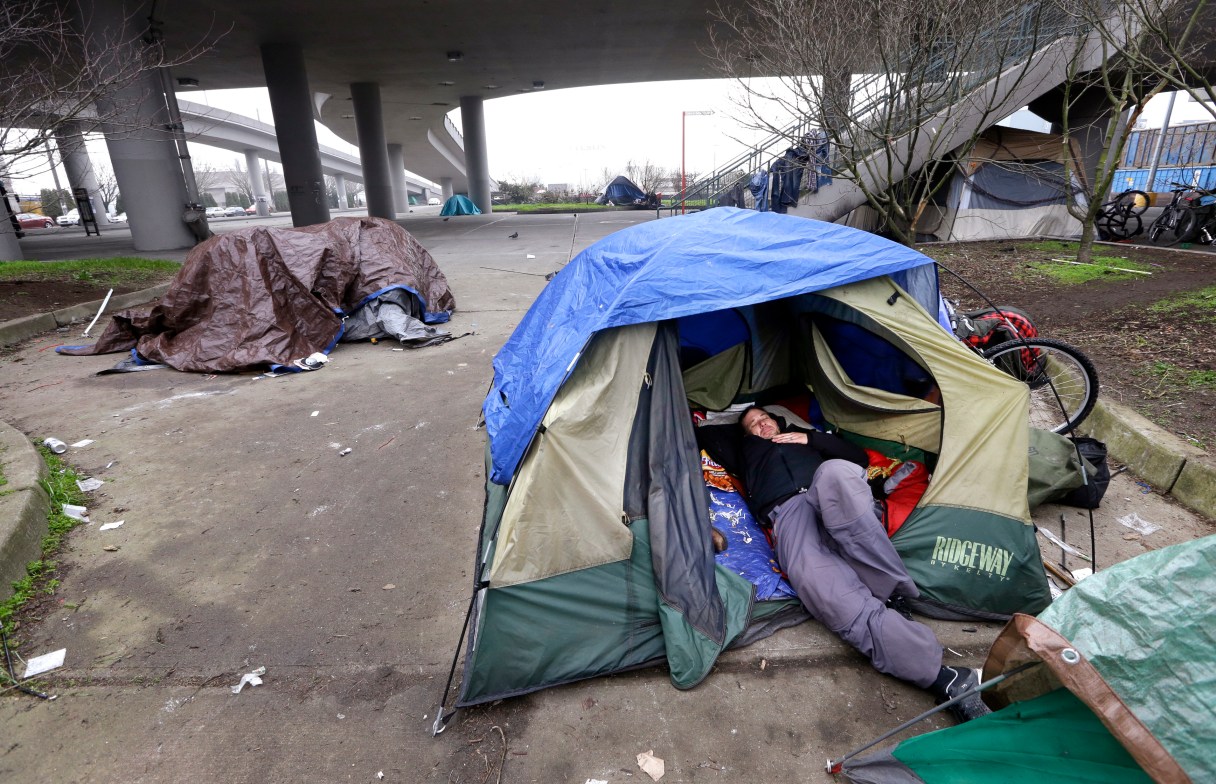
SAVANNAH, Ga. (AP) – It’s called plarn, a word that’s a mash up of plastic and yarn. And it’s made from those ubiquitous grocery bags that seem to proliferate in kitchen cabinets and drawers. On Thursday (Nov. 21) at the Jewish Educational Alliance about a dozen women gathered to first make plarn and then crochet it into sleeping mats for the homeless.
“We’re reusing items that really don’t serve a purpose after 15 minutes of use, and we’re helping homeless folks,” said Sanita Wolfe as she cut bags into loops and linked them to make plarn.
The goal is to get a dozen mats finished to present them to Union Mission before the holidays, said Carol Towbin Greenberg, creative director of the nonprofit MorningStar Cultural Arts, which is coordinating the project. The 2.5 x 6-foot mats are lightweight and easy to clean and disinfect. They dry quickly in the sun and are made with a carrying strap that makes them easy to tote around. Each one takes about 1,200 plastic bags out of the waste stream.
On Thursday, Rochelle Frank guided the newbies, especially on the crochet technique, which employs an oversized plastic crochet hook and thousands of chain stitches. Already an accomplished knitter, Frank learned about plarn mats from her granddaughter Jessica, a Girl Scout who makes one once a month. Once neighbors learned of Frank’s project they started dropping off plastic bags at her doorstep. And Greenberg recruited her to teach two classes at the JEA.
For Vicky Haggerty, who stood at a table smoothing bags and cutting them into strips, the mats are a connection to her grandmother who made the most of the little she had in small town Missouri.