
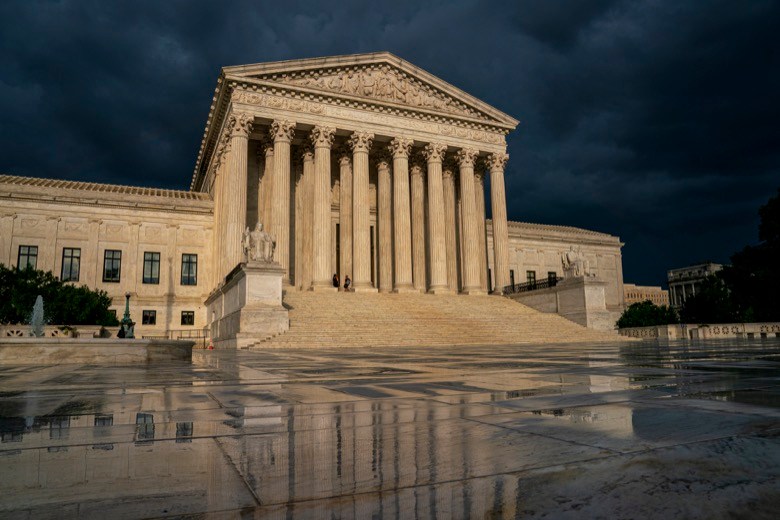
WASHINGTON (AP) – The Supreme Court is taking up the first major abortion case of the Trump era, an election-year look at a Louisiana dispute that could reveal how willing the more conservative court is to roll back abortion rights.
The outcome could have huge consequences at a time when several states have passed laws, being challenged in the courts, that would ban abortions after a fetal heartbeat is detected, as early as six weeks.
The justices on Wednesday are examining a Louisiana law requiring doctors who perform abortions to have admitting privileges at a nearby hospital. A federal judge found that just one of Louisiana’s three abortion clinics would remain open if the law is allowed to take effect.
It is similar to one in Texas that the Supreme Court struck down in 2016. Since then, though, Donald Trump was elected president and he appointed two justices, Neil Gorsuch and Brett Kavanaugh, who have shifted the court to the right. Even with those two additions to the court, Chief Justice John Roberts almost certainly holds the deciding vote.
When the justices temporarily blocked the Louisiana law from taking effect a year ago, Roberts joined the court’s four liberal justices to put it on hold. Kavanaugh and Gorsuch were among the four conservatives who would have allowed the law to take effect.