
Monday, November 16, 2026Nov 16

Officials monitoring chemical plant after explosion, fire

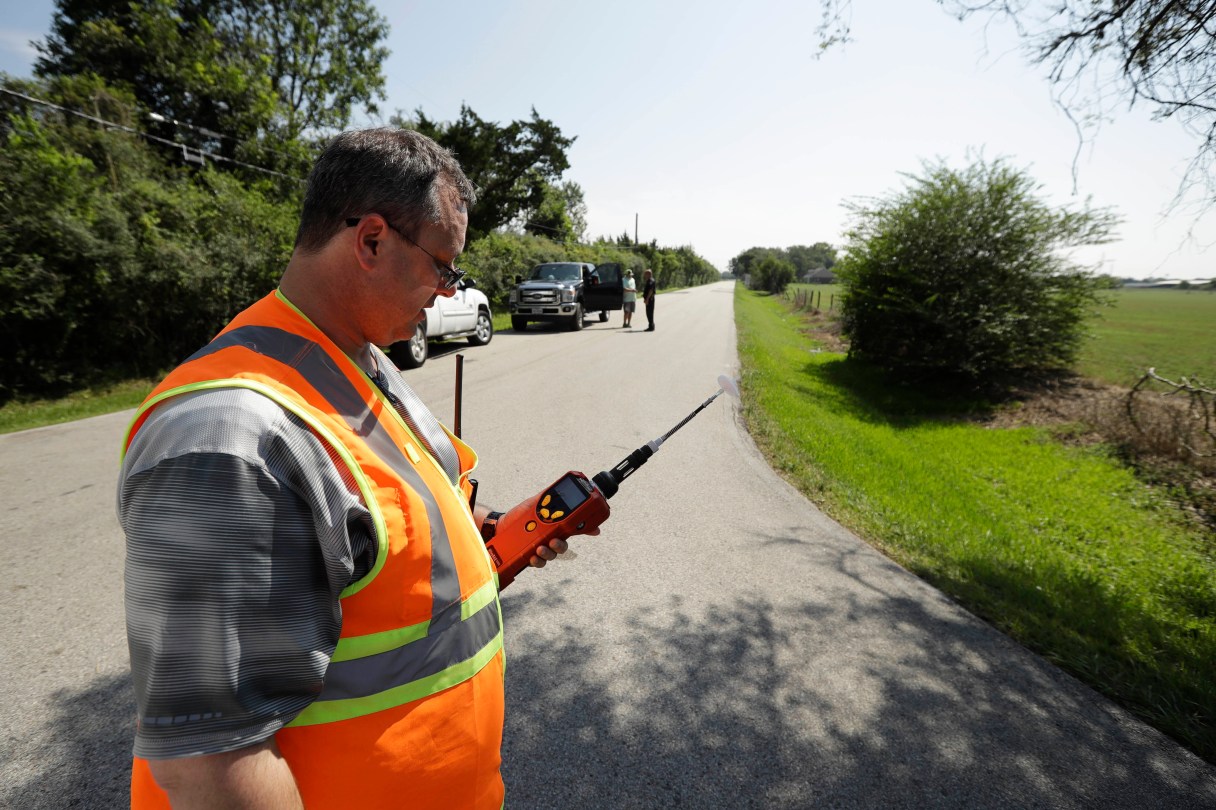
Mike Cossey, of Bureau Veritas, uses an air monitor to check the quality of air at a police roadblock marking the 1.5-mile perimeter of the evacuation area around the Arkema Inc. chemical plant Thursday, Aug. 31, 2017, in Crosby, Texas. The Houston-area chemical plant that lost power after Harvey engulfed the area in extensive floods was rocked by multiple explosions early Thursday, the plant's operator said. The Arkema Inc. plant had been left without refrigeration for chemicals that become volatile as the temperature rises. (AP Photo/Gregory Bull)

HOUSTON (AP) – At least 2 tons of highly unstable chemicals used in such products as plastics and paint exploded and burned at a flood-crippled plant near Houston, sending up a plume of acrid black smoke that stung the eyes and lungs.

The blaze that began early Thursday at the Arkema Inc. chemical plant burned out around midday, but emergency crews continued to hold back because of the danger that eight other trailers containing the same compound could blow, too.

No serious injuries were reported. But the blast added a new hazard to Hurricane Harvey’s aftermath and raised questions about the adequacy of the company’s master plan to protect the public in the event of an emergency in the flood-prone Houston metropolitan area of 5.6 million people.

“This should be a wake-up call (for) all kinds of plants that are storing and converting reactive chemicals in areas which have high population densities,” said Nicholas Ashford, a Massachusetts Institute of Technology expert.

The Environmental Protection Agency and Texas environmental regulators called the health risks minimal in Crosby but urged residents downwind to stay indoors with windows closed to avoid inhaling the smoke.