
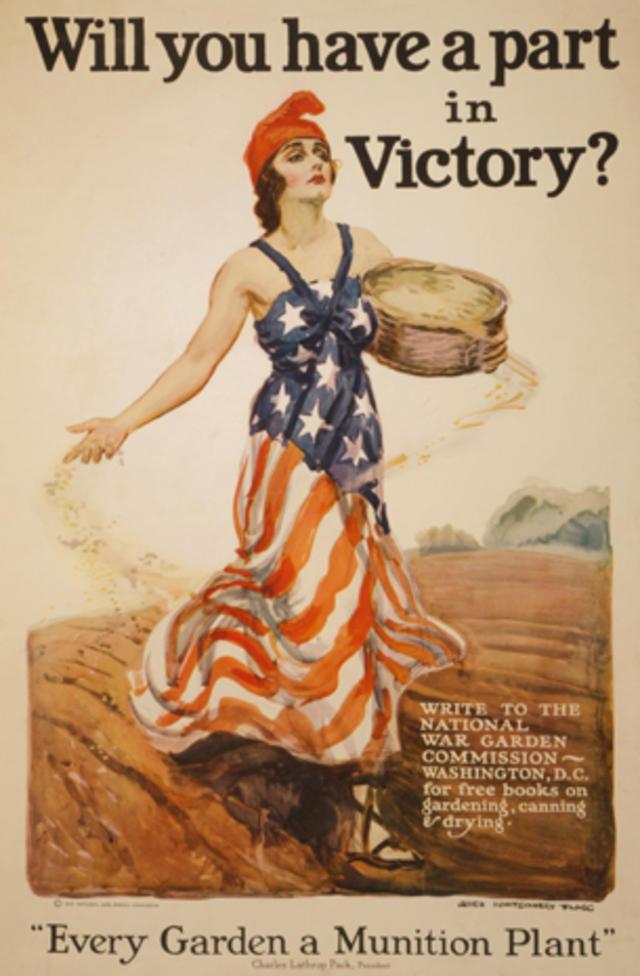
With the renewed interest in urban gardening along with food production and preservation in general, it’s almost impossible for local historians to not reflect on the Victory Garden programs advanced during World War II from 1942 through 1945.
The news of the Dec. 7, 1941, surprise attack on Pearl Harbor, followed the next day by President Franklin D. Roosevelt’s address to a joint session of Congress asking for an official declaration of war, brought the war being fought in Europe home to the United States. Within days, local industries began retooling for wartime production, and volunteers began lining up to join the armed forces. Support for the military extended to new programs financing the war through the sale of war bonds, a program that had been extremely successful during The Great War. Additionally, civilians were asked to begin rationing goods needed for the military and devising civil defense programs to protect local populations.
Since food was a major requirement for the troops, as Napoleon so wisely observed during his attempted conquest of Europe more than 100 years earlier, communities were asked to produce their own food as a part of a well-publicized program, Victory Gardens.
By early February 1942, local garden clubs were making the transition from beautification to food production. In a Feb. 8 article in the Chattanooga Daily Times, Mrs. W.D. Johnston was recognized as the new civilian defense chairwoman of the Hickory Valley Garden Club. Mrs. Johnston, assisted by Mrs. Bruce Lauderbach, the chairwoman of defense gardening, Mrs. Dennis Corbly, Mrs. D.L. Rowe, J.A. Stein and Mrs. M.F. McDonald, were charged with developing a “Victory Garden” plan that would encourage all residents to “plant early greens and vegetables among the shrubbery for beauty and profit.” The Defense Gardening Committee was to provide gardening and “soil facts” at each future meeting. Similar committees were organized in all local garden clubs and in the four Chattanooga DAR chapters.
Club minutes also included plans for avoiding waste in meal planning and using alternative sources of protein, allowing meats and cheeses to be used for military rations. Their “Meatless Mondays” and “Friday Vegetable Soup” themes extended to Hamilton County school cafeterias. Local garden clubs also organized committees that would coordinate “health and sanitation efforts” by working with the officers and personnel at Fort Oglethorpe. Garden club members had reorganized as a civilian force, and their work was making a difference in Chattanooga.