
Saturday, November 14, 2026Nov 14

The lore and lure of eclipses: Blood, sex and some snacking

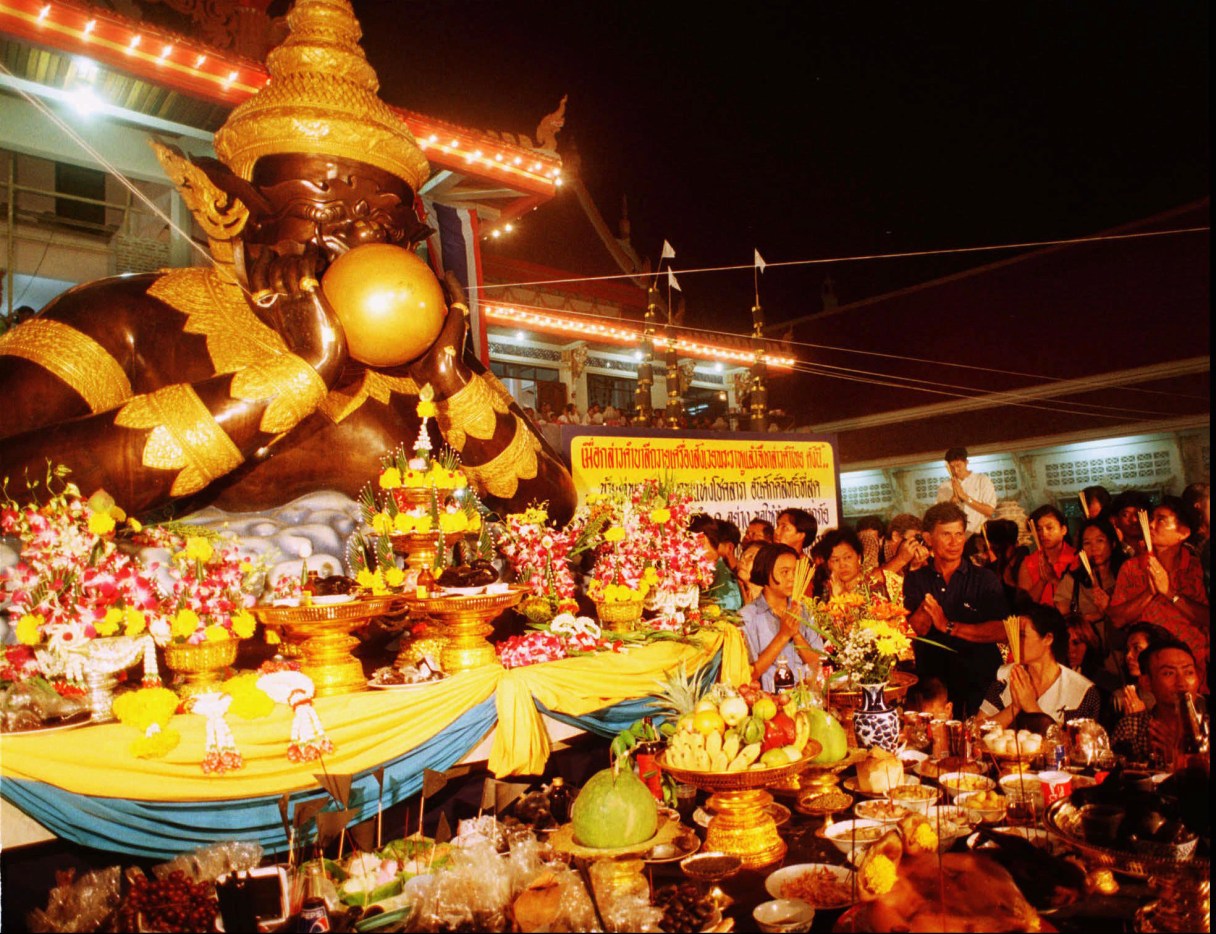
FILE - In this Tuesday night, Sept. 16, 1997 file photo, worshippers pay their respects to Rahu (the God of Darkness) during a ceremony at the Srisathong Temple in Nakhon Pathom Province, 50 kilometers (31 miles) west of Bangkok, on the occasion of a lunar eclipse. Describing the Indian myth, Mark Littmann of the University of Tennessee says the demon Rahu tried to steal the nectar of immortality from the gods, but the sun and the moon recognized him. Rahu started drinking the nectar when Vishnu threw a discus and it “sliced right through Rahu’s neck,” Littmann said. The nectar was still in Rahu’s mouth but the rest of the body disappeared so the immortal head would chase the sun and moon around the sky and “whenever it catches up with the sun and moon it takes a bite.” (AP Photo/Sakchai Lalit)

WASHINGTON (AP) – It’s not just the skies that get dark when there’s a total solar eclipse. So do we.

Modern science explains that the sun disappears because the moon is passing in front of it. But before that, people had to come up with reasons for what was happening in the sky. Some of them weren’t exactly bedtime stories.

The lore of early eclipses often told us more about the people spinning the yarns than it did about the sun or the moon, said Anthony Aveni, author of “In the Shadow of the Moon: The Science, Magic, and Mystery of Solar Eclipses.”

“It’s not myth. It’s not science. It’s culture,” said Aveni, a professor of physics and sociology at Colgate University.

They are often morality tales to warn against everything from incest to lying, Aveni said. They could be quite bloody and scary- and thus make a good lesson. After all, what’s more unnerving than the sun disappearing in the middle of the day?