
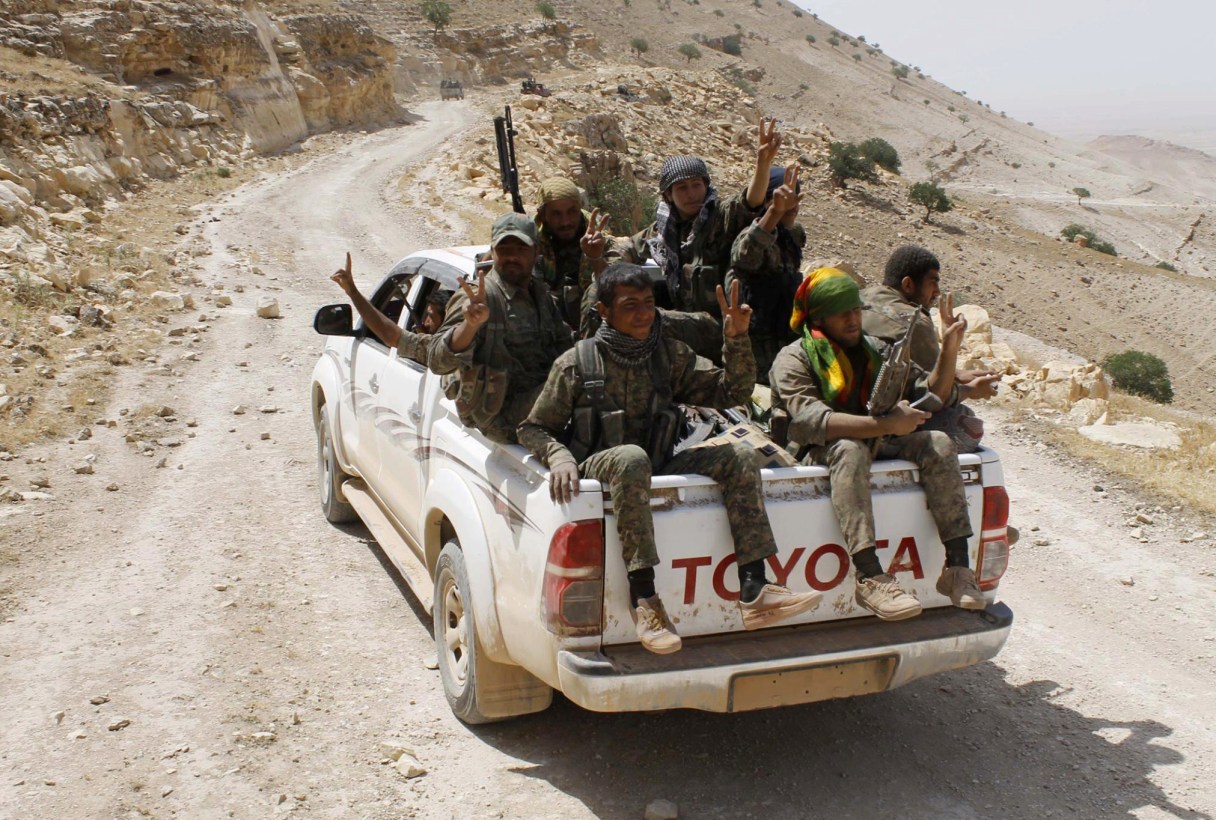
BEIRUT (AP) – In contrast to the Iraqi army’s failures, Kurdish fighters in Syria are on the march against the Islamic State group, capturing towns and villages in an oil-rich swath of the country’s northeast under the cover of U.S.-led airstrikes.
As the Kurds close in on Tel Abyad, a major commercial center on the Turkish border, their advance highlights the decisive importance of combining airstrikes with the presence of a cohesive and motivated ally on the ground – so clearly absent in Iraq.
In Syria, a country now split mostly between al-Qaida-style militants and forces loyal to President Bashar Assad, the U.S. has found a reliable partner in the country’s main Kurdish fighting force, known as the YPG. They are moderate, mostly secular fighters, driven by revolutionary fervor and deep conviction in their cause.
Since the beginning of May, they have wrested back more than 200 Kurdish and Christian towns in northeastern Syria, as well as strategic mountains seized earlier by IS. Along the way, they have picked up ammunition, weapons and vehicles left behind by Islamic State fighters.
The push has gotten them closer to Tel Abyad, a major avenue for commerce for the extremist group through which it smuggles foreign fighters and sells black-market oil to help fund its conquests. The city is also a key link between Turkey and the northern Syrian city of Raqqa, the Islamic State group’s de-facto capital in its self-declared caliphate.