
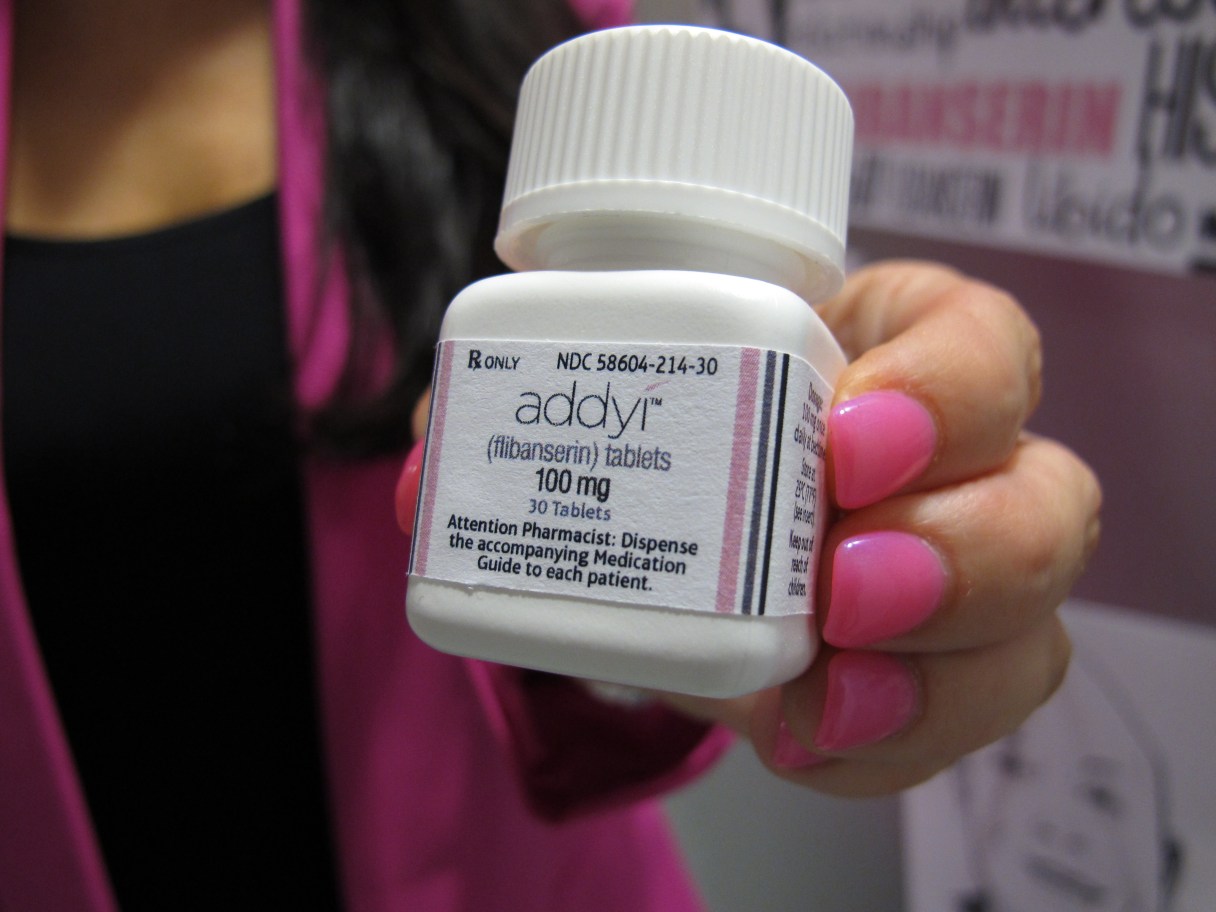
WASHINGTON (AP) – Most women with low sexual desire won’t rush to get the first prescription drug to boost female libido when it becomes available on Saturday. But they may have more options down the road.
Addyi can’t be taken with alcohol or certain other medications, which will likely limit its use. But experts believe those restrictions could spur development of better treatments for women’s sexual problems after more than a decade of neglect by most of the world’s large drugmakers.
Kim Wallen, a psychology professor at Emory University, says Addyi represents a historic milestone that may open the door to more drugs targeting desire in men and women. Where Viagra and other men’s erectile dysfunction drugs work by increasing blood flow to the genitals, Addyi acts on brain chemicals associated with desire.
“This is the first time that a drug, for either men or women, has been approved strictly to increase sexual desire,” Wallen says. “That legitimizes many other drugs that are in development.”
Treatments for women’s libido issues are an untapped financial opportunity for drugmakers. Analysts estimate the market could be worth over $2 billion, based on academic estimates that between 5 million and 9 million U.S. women may suffer from desire disorders.