
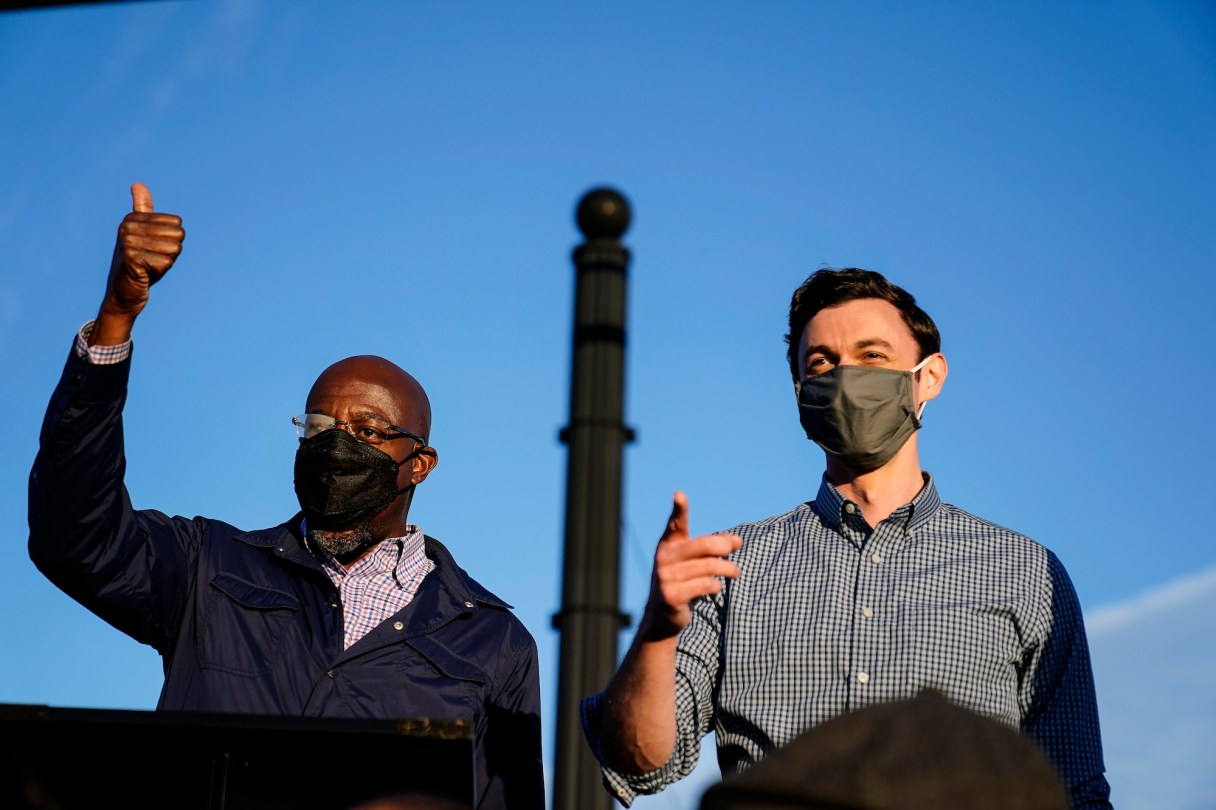
On Jan. 5 voters in Georgia will vote in two runoff elections for the U.S. Senate. Uppermost in the voters’ minds will be how well the two sets of candidates will represent their state’s interests in Washington, D.C. But Georgians will also determine whether President-elect Joe Biden, whose victory in the state was certified on Nov. 20, will be able to govern without obstruction from a Republican-controlled Senate.
In one of the Georgia runoffs, incumbent Republican Sen. David Perdue is being challenged by Democrat Jon Ossoff. The other election, which is for the remaining two years of former Sen. Johnny Isakson’s term, pits Republican Sen. Kelly Loeffler, serving temporarily by gubernatorial appointment, against the Rev. Raphael Warnock, a Democrat.
As a result of the Nov. 3 election, Republicans have 50 seats in the Senate that will convene in January, and Democrats have 46 (the chamber’s two independents – Bernie Sanders of Vermont and Angus King of Maine – caucus with the Democrats). If both Democratic challengers in Georgia were to win, the Senate would be evenly divided, and Vice President Kamala Harris could break a tie, giving Democrats control of that body. If even one of the Republicans in Georgia is elected, that party will continue to control the Senate.
And based on recent experience, that would be a bad result for all 50 states.
Power has frequently been divided in Washington, but the split has been more bitter in recent years. Despite Biden’s promise to work across party lines, there is little indication that a Republican-controlled Senate would reciprocate or that McConnell would cooperate with Biden any more than he did with Obama.