
Monday, November 16, 2026Nov 16

US employers add 215,000 jobs in July; 5.3 pct. unemployment

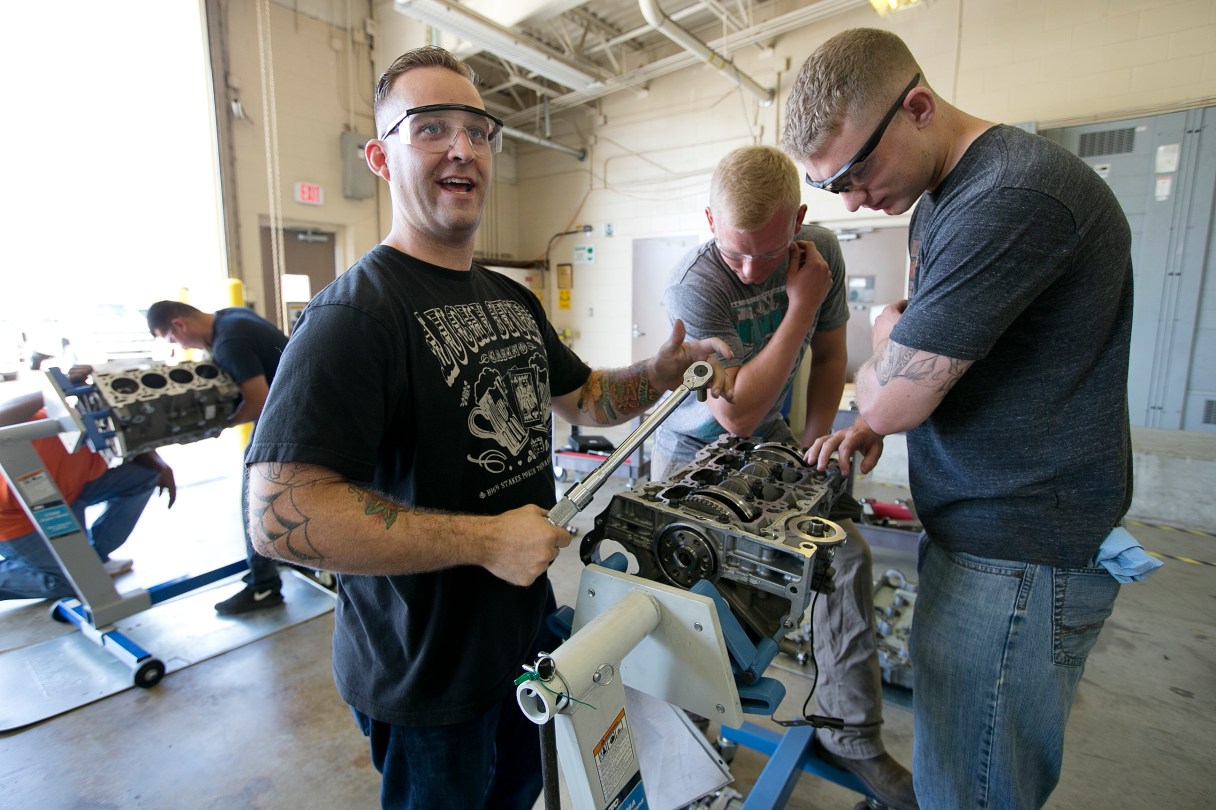
FILE - In this Thursday, June 18, 2015 file photo, from left, Sgt. Garret Baganz, Spc. Tyler Sonsoucie and Spc. Ian Sokol work on a ecotech engine during an automotive skills class at Fort Hood, Texas. The men are participants in Shifting Gears, a program sponsored by General Motors that teaches automotive skills and tries to match participants with dealerships around the country. The Labor Department releases employment data for July on Friday, Aug. 7, 2015. (Deborah Cannon/Austin American-Statesman via AP, File)  AUSTIN CHRONICLE OUT, COMMUNITY IMPACT OUT, INTERNET AND TV MUST CREDIT PHOTOGRAPHER AND STATESMAN.COM, MAGS OUT
FILE - In this Thursday, June 18, 2015 file photo, from left, Sgt. Garret Baganz, Spc. Tyler Sonsoucie and Spc. Ian Sokol work on a ecotech engine during an automotive skills class at Fort Hood, Texas. The men are participants in Shifting Gears, a program sponsored by General Motors that teaches automotive skills and tries to match participants with dealerships around the country. The Labor Department releases employment data for July on Friday, Aug. 7, 2015. (Deborah Cannon/Austin American-Statesman via AP, File) AUSTIN CHRONICLE OUT, COMMUNITY IMPACT OUT, INTERNET AND TV MUST CREDIT PHOTOGRAPHER AND STATESMAN.COM, MAGS OUT

WASHINGTON (AP) – U.S. employers added a solid 215,000 jobs in July, signaling a steadily rising job market and providing a key piece of evidence for the Federal Reserve in deciding whether the economy can withstand higher interest rates as soon as September.

The Labor Department also says the unemployment rate held at a relatively low 5.3 percent for a second straight month.

Monthly job growth has averaged 211,286 so far this year, indicating that employers are confident that the six-year recovery from the Great Recession can sustain strong consumer demand and require more workers.

Hiring has remained robust even though the economy’s overall growth rate has been subpar and pay raises have been modest for many workers. Average hourly earnings in July increased just 2.1 percent from a year earlier.

The Fed has held its key short-term rate near zero since late 2008, a policy introduced after the financial crisis to try to energize the economy through stronger borrowing, investing and spending. Now, more than a half-dozen years into the recovery, Fed Chair Janet Yellen has suggested that the economy not only can tolerate but needs higher rates.