
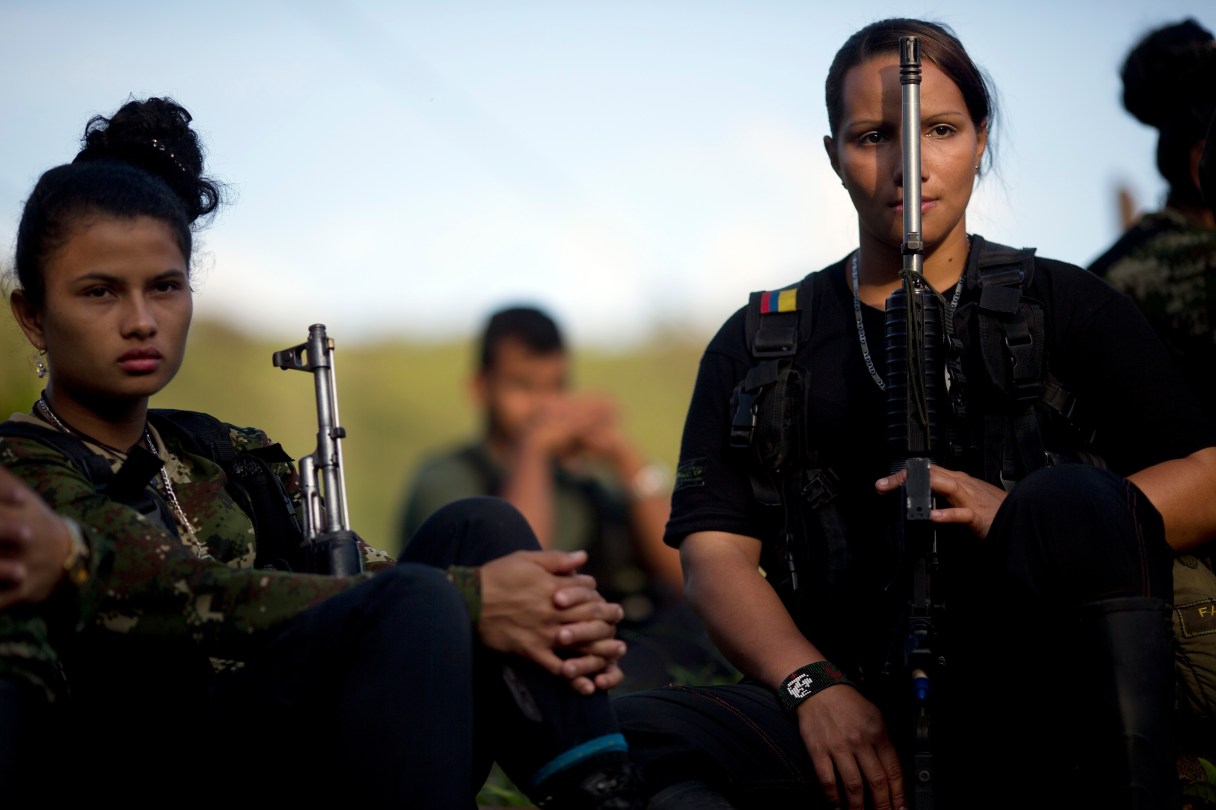
HAVANA (AP) – The Colombian government and leftist FARC rebels announced on Wednesday that they have reached a deal on a bilateral cease-fire that would be the last major step toward ending one of the world’s longest wars.
Colombia’s conflict has killed more than 220,000 people and displaced millions since 1964. But a 15-year, U.S.-backed military offensive has thinned the rebels’ ranks and forced its aging leaders to the negotiating table in 2012.
President Juan Manuel Santos will travel to Cuba Thursday for the announcement with the Revolutionary Armed Forces of Colombia, or FARC. Both sides in January tasked the U.N. with monitoring adherence to an eventual cease-fire and resolving disputes emerging from the expected demobilization of at least 7,000 armed rebels.
The peace talks have been bumpy and extended much longer than Santos or anyone else anticipated. But if a final deal is reached it would bring an end to Latin America’s last major insurgency, one that’s accused of being a major supplier of cocaine to the U.S., though the much-smaller and more recalcitrant National Liberation Army has a toehold in some areas and could fill the void left by the FARC.
Santos this week said he hoped to ink a final deal by July 20, when Colombia celebrates its declaration of independence from Spain