
China displaces Wacker as top polysilicon maker
The Chinese chemical giants Tongwei and GCL Technology are the new leading manufacturers in the polysilicon industry, according to Bernreuter Research.
After Tongwei superseded Germany-based Wacker Chemie as the world’s largest polysilicon manufacturer in 2020, GCL ousted Wacker from the second place in 2021. Each of the two Chinese companies exceeded an annual output of 100,000 metric tons (MT) for the first time in 2021, and each will reach a production capacity of 370,000 MT after massive expansion by 2023.
Wacker has fallen back to the fourth rank, closely behind China-based Daqo New Energy , the new report from Bernereuter Research said.
“Wacker will take a similar course as former market leader Hemlock Semiconductor did a decade ago,” says Johannes Bernreuter, head of Bernreuter Research. “The company is increasingly focusing on expanding its leading position in the electronic-grade polysilicon market for semiconductors; at the same time, it is abandoning more and more market share in the rapidly growing solar-grade sector.”
Bernreuter Research predicts Wacker will be overtaken by two more Chinese manufacturers, Xinte Energy and East Hope, and slide down to number six by 2023.
When U.S.-based Hemlock Semiconductor lost its top position in 2012, China had a share of just 30% in global polysilicon production. By 2021, this share had already risen to 76%, and to even more than 80% in the solar-grade sector.
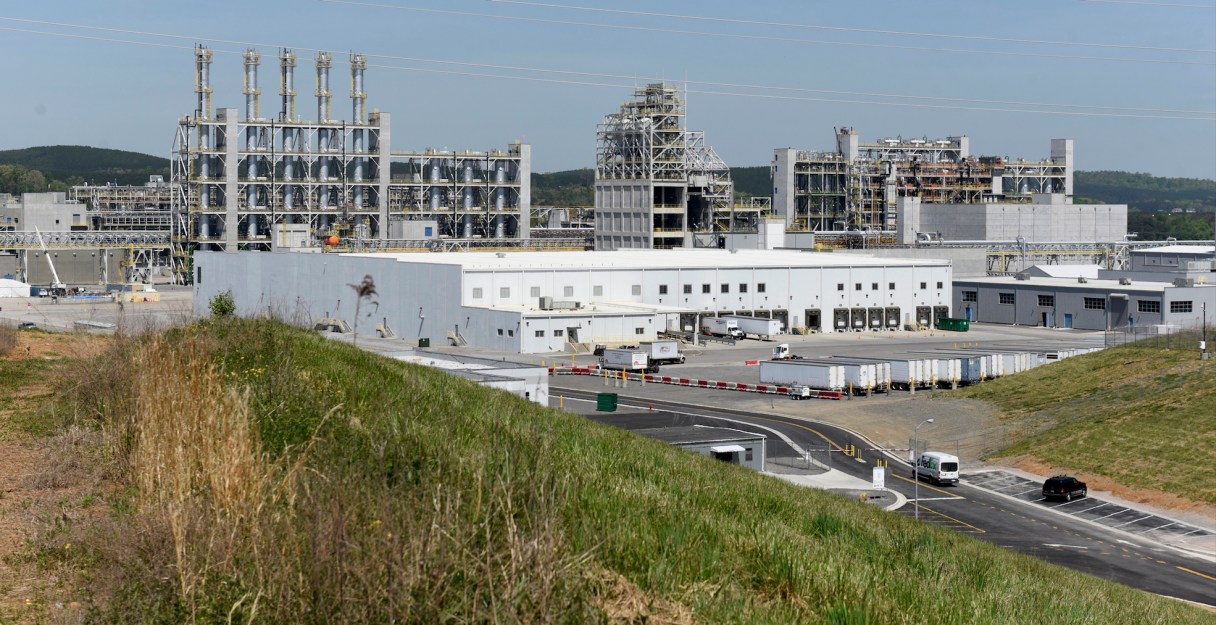
Wacker has invested more than $2.5 billion at its polysilicon plant in Charleston, Tennessee in the single-biggest manufacturing investment ever in Southeast Tennessee.
30-year mortgages drop to 5.1 percent
The average long-term U.S. mortgage rate edged down for the first time in two months following a swift ascent to levels that have not been seen in more than a decade.
After seven weeks of increases, the average rate on a 30-year mortgage inched down to 5.1% from 5.11% last week, mortgage buyer Freddie Mac reported Thursday. Last week’s average rate was the highest since April of 2010. One year ago the 30-year rate stood at 2.98%.
Federal Reserve officials have signaled that they will take an aggressive approach to fighting high inflation, saying that half-point interest rate hikes, rather than traditional quarter-point increases, “could be appropriate” multiple times this year. The Fed raised its main borrowing rate by a quarter-point in March, its first increase since late in 2018.
Last week, the National Association of Realtors reported that sales of previously occupied U.S. homes fell in March to the slowest pace in nearly two years with surging mortgage rates and record-high prices sidelining would-be homebuyers just as the spring buying season begins.
Median home prices in March jumped 15% from a year ago at this time to $375,300. That’s an all-time high on data going back to 1999, NAR said.
With inflation at a four-decade high, rising mortgage rates, elevated home prices and tight supply of homes for sale, homeownership has become less attainable, particularly for first-time buyers.
ExxonMobile probed over plastic wastes
California’s attorney general has subpoenaed ExxonMobil as part of what he called a first-of-its-kind investigation into the petroleum industry for its alleged role in causing a global plastic pollution crisis.
Attorney General Rob Bonta on Thursday said the industry has encouraged the development and use of petroleum-based plastic products. He says the industry has sought to minimize public understanding widespread use of plastics harms the environment and public health.
Bonta says ExxonMobil was subpoenaed as a major source of global plastics pollution and for allegedly deceiving the public. ExxonMobil did not immediately comment. The American Chemistry Council says U.S. plastic makers are committed to a more sustainable future.
Amazon reports rare loss as online shopping slows
Amazon reported its first quarterly loss since 2015 on Thursday, its money-making juggernaut stalled by a slowdown in pandemic-induced online shopping and a huge write-down of its investment in an electric-vehicle startup.
The Seattle-based e-commerce giant’s stock fell almost 10% in after-hours trading. Amazon reported a loss of $3.84 billion, or $7.56 a share, for the first three months of the year. A year ago, it reported a profit of $8.1 billion, or $15.79 a share, for the first quarter. Wall Street analysts expected $8.35 a share in the latest quarter.
The red ink in Amazon’s report came from the accounting for a $7.6 billion loss in value of its stock investment in Rivian Automotive.
– Compiled by Dave Flessner