
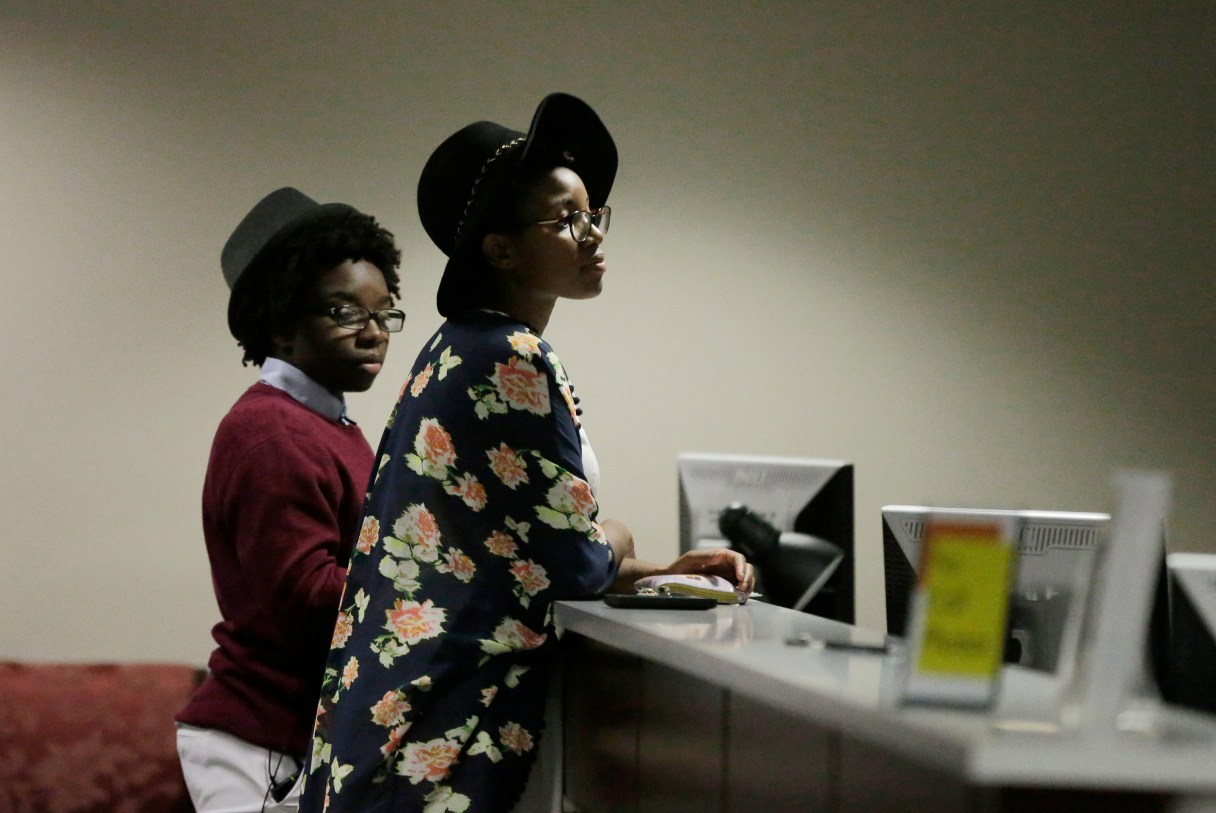
The Alabama Supreme Court on Tuesday ordered the state’s probate judges to stop issuing marriage licenses to gay couples, saying a previous federal ruling that gay-marriage bans violate the U.S. Constitution does not preclude them from following state law, which defines marriage as between a man and a woman.
The all-Republican court in Montgomery sided with the argument offered by a pair of conservative organizations when they appealed a decision last month by U.S. District Judge Callie Granade of Mobile, who ruled that both Alabama’s constitutional and statutory bans on same-sex marriage were unconstitutional.
It was not immediately clear what impact the court’s ruling would have or whether it would stand. While a six-member majority of the nine-member court did not explicitly invalidate the marriages of hundreds of same-sex couples who obtained licenses in the state in recent weeks, the decision used the term “purported” to describe those licenses.
The court’s most outspoken opponent of gay marriage, Chief Justice Roy Moore, recused himself from the case and did not participate in the writing of the unsigned 134-page decision.
After Granade’s ruling, Moore told probate judges across the state not to issue same-sex marriage licenses. His stance created widespread confusion, prompting some judges to refuse to issue the licenses and others to shut down their operations for all couples, gay and straight, until they could get a clear answer. Still others decided to issue the licenses.