
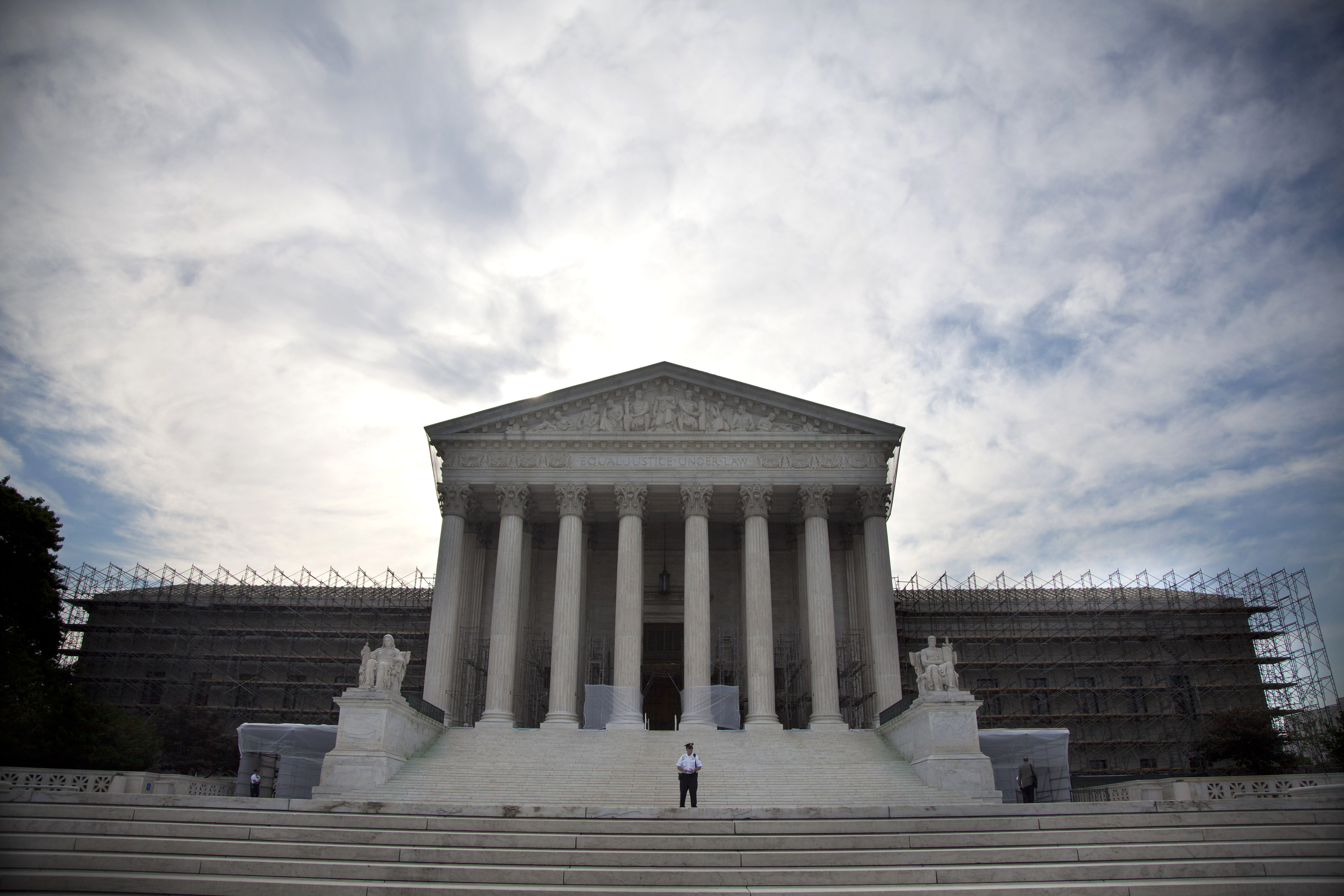
 The U.S. Supreme Court in Washington ruled Monday that it is unconstitutional for state laws to require juveniles convicted of murder to be sentenced to life in prison without possibility of parole.
DETROIT – The Supreme Court ruling that banned states from imposing mandatory life sentences on juveniles offers an unexpected chance at freedom to more than 2,000 inmates who had almost no hope they would ever get out.
In more than two dozen states, lawyers can now ask for new sentences. And judges will have discretion to look beyond the crime at other factors such as a prisoner’s age at the time of the offense, the person’s background and perhaps evidence that an inmate has changed while incarcerated.
“The sentence may still be the same,” said Lawrence Wojcik, a Chicago lawyer who co-chairs the juvenile justice committee of the American Bar Association. “But even a sentence with a chance for parole gives hope.”
Virtually all of the sentences in question are for murder. When Henry Hill was an illiterate 16-year-old, he was linked to a killing at a park in Saginaw County and convicted of aiding and abetting murder.
Hill had a gun, but he was never accused of firing the fatal shot. Nonetheless, the sentence was automatic: life without parole. He’s spent the last 32 years in Michigan prisons.