
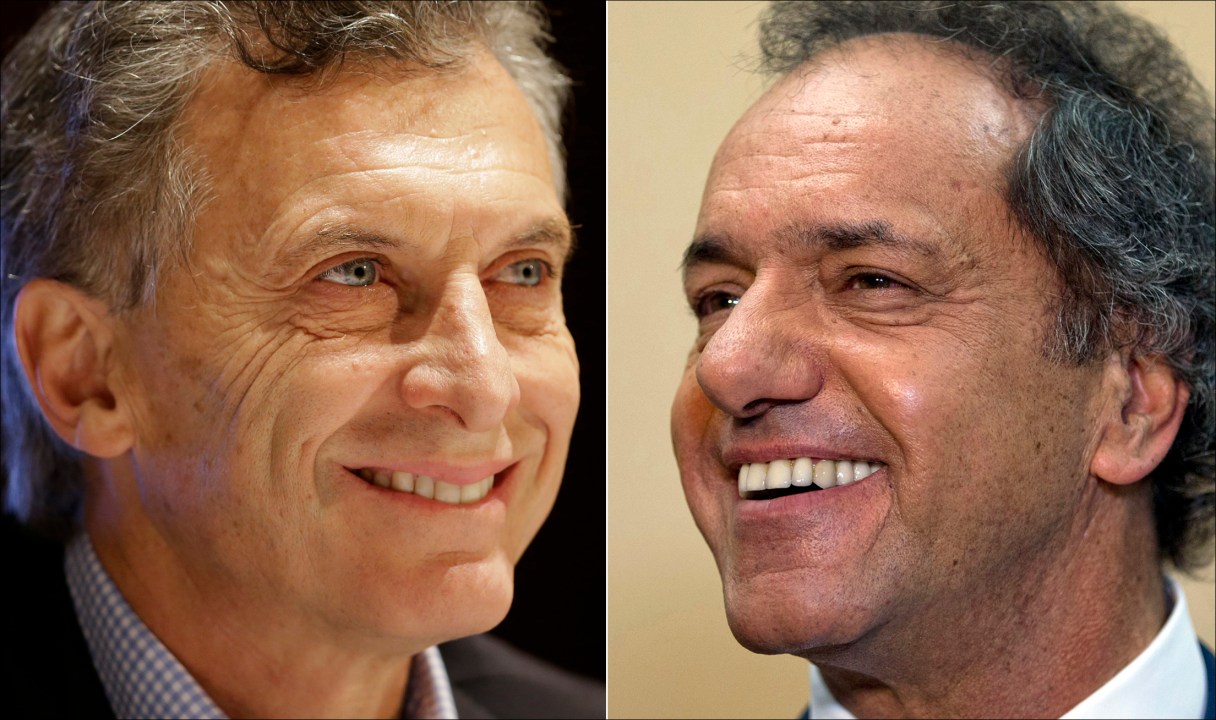
BUENOS AIRES, Argentina (AP) – From rising crime to soaring prices, Argentines will have a lot on their mind during Sunday’s runoff election that is seen as a referendum on the left-leaning policies of polarizing President Cristina Fernandez and could ultimately have ripple effects across South America.
Opposition leader Mauricio Macri, who campaigned on promises to big large changes to Argentina’s economy, went in as the front-runner after his unexpectedly strong showing in the Oct. 25 first round that forced a runoff against Daniel Scioli, the president’s chosen successor.
Scioli, who had been expected to win by 10 or more points in last month’s six-candidate election, tried to regain momentum by frequently attacking Macri before the runoff. He said a Macri victory would subject this nation of 41 million people to the neoliberal policies of the 1990s, a period of deregulation that many Argentines believe set the stage for the financial meltdown of 2001-2002.
Macri rejected such characterizations, saying he would lead with “21st century development” as opposed to “21st century socialism” – a term used by supporters of the late Venezuelan President Hugo Chavez and his successor, Nicolas Maduro.
Macri also promised to shake things up regionally. If elected, he said, he would push to expel Venezuela from the South American trade bloc known as Mercosur because of the jailing of opposition leaders under Maduro. That would be a huge change for a continent where many countries, including neighbors Chile and Brazil, have left-leaning governments.