
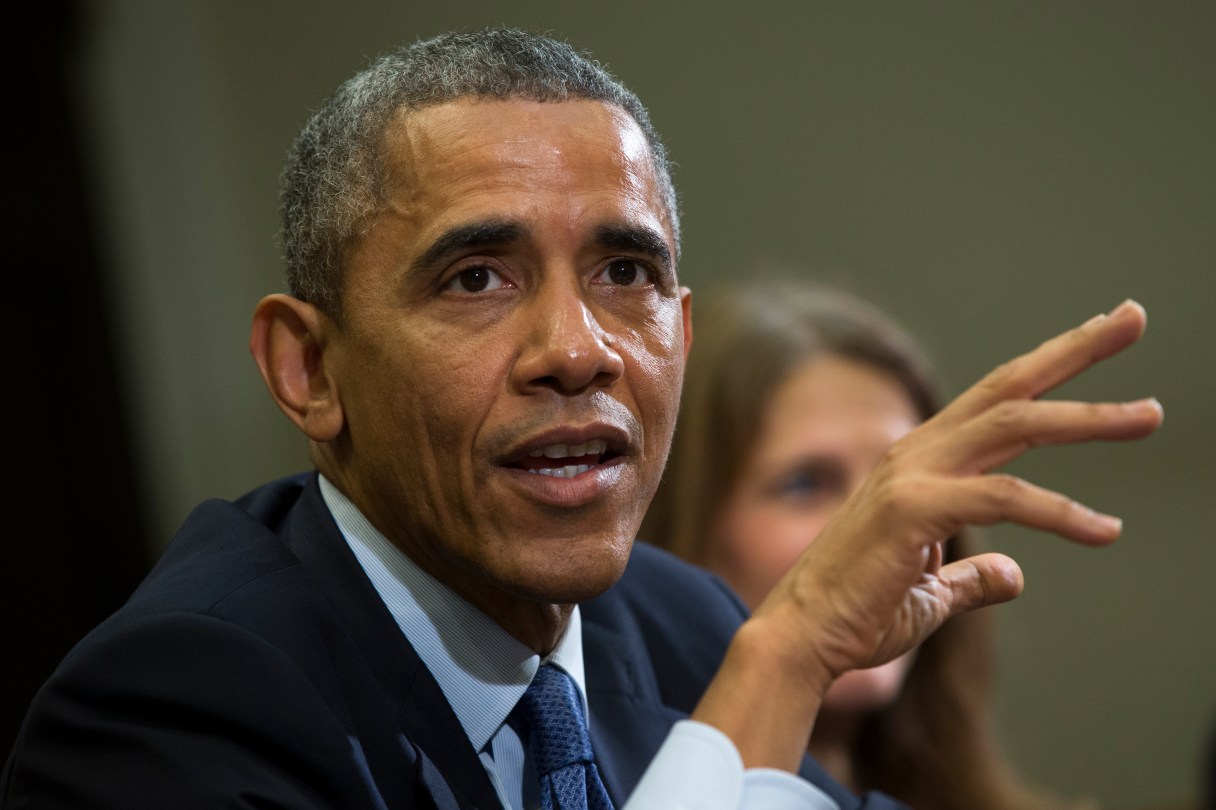
Somewhere out there, in the muddle of presidential arrogance and Republican election swagger, is serious business that can and should be transacted for the American people.
Yet, President Barack Obama, in the mandated annual budget he must submit to Congress, offered plans Monday that must be baffling even to those on the receiving end of his traditional take-from-the-rich/give-to-the-poor schemes.
With a suggested $1.5 trillion in new revenue from increased taxes on the wealthy and on American corporations, his proposals would reward only a third of the bottom 20 percent of families, whose incomes average $15,600, with tax cuts averaging $617, the nonpartisan Tax Policy Center found. That’s a little less than $51.50 a month, far less than half of what a family of four would spend on groceries per week, according to the United States Department of Agriculture. And the rest of the bottom 20 percent? They’d have little or no change in their taxes.
Middle-income families, the ones the president has been playing to lately in his get-out-of-Washington speeches and in the recent State of the Union message, would do even worse. Only about a fourth of families earning between $50,000 and $75,000 a year would see a cut, averaging $545. Six percent actually would see a tax increase, and the rest — slightly less than 70 percent — would see little change.
The budget Obama submitted, even according to administration figures, does not balance any time over the next decade and projects deficits rising to $687 billion by 2025. This is the same Obama who touted falling budget deficits as recently as the State of the Union, though much of that decrease was forced by the 2011 Budget Control Act and the automatic spending cuts, or sequestration, it triggered.
If the president and the Republican Congress are able to look beyond their own agendas, though, items of possible compromise are hiding in plain sight.
One of those is improvements in the nation’s crumbling highways, bridges and other infrastructure. The administration refers to it as a public works program and suggests half of it be financed with a one-time, 14 percent tax on U.S. companies’ overseas profits.
Though the infrastructure desperately needs improving, the administration’s “public works” tag sounds suspiciously like something resurrected from the president’s 2009 stimulus plan, where “shovel-ready” infrastructure projects were supposed to be — but weren’t — waiting and where a lot of the money wound up the hands of wealthy Democrats, Democrat-led states and unions.
But infrastructure is one expenditure where there might be room for the president and Congress to give a little to improve things for millions of people.
Military spending is another area with potential for compromise. Both Obama and Congress want to increase spending, but the GOP doesn’t want to bust out of the caps set by the 2011 Budget Control Act. The president said it’s time to break down those walls in military spending and many other areas.
Ironically, the president’s budget pares back the Veterans Choice Program, signed into law less than six months ago, that was passed following the exposure of the breakdowns in the Veterans Administration and in order to help speed up access to health care. A portion of the funding, which allows veterans the choice of private health care, would be reallocated, administration officials said.
A third area where compromise is possible involves taxes. Both Obama and the GOP say they want corporate tax reform, and Obama would like to have some costly taxpayer credit goodies. A little horse-trading might get both sides some of what they want.
What’s necessary but not mentioned by the White House is the one thing the president-elect said in January 2009 would have to be dealt with during his administration: entitlement reform.
“What we have done is kicked this can down the road,” he told Washington Post editors and reporters. “We are now at the end of the road and are not in a position to kick it any further. We have to signal seriousness in this by making sure some of the hard decisions are made under my watch, not someone else’s. … You have to have a president who is willing to spend some political capital on this. And I intend to spend some.”
He hasn’t, and while the economy is in better shape now than it was when he took office, it will never be the best it can be until that elephant-in-the-room is dealt with.
Let the battle begin.