
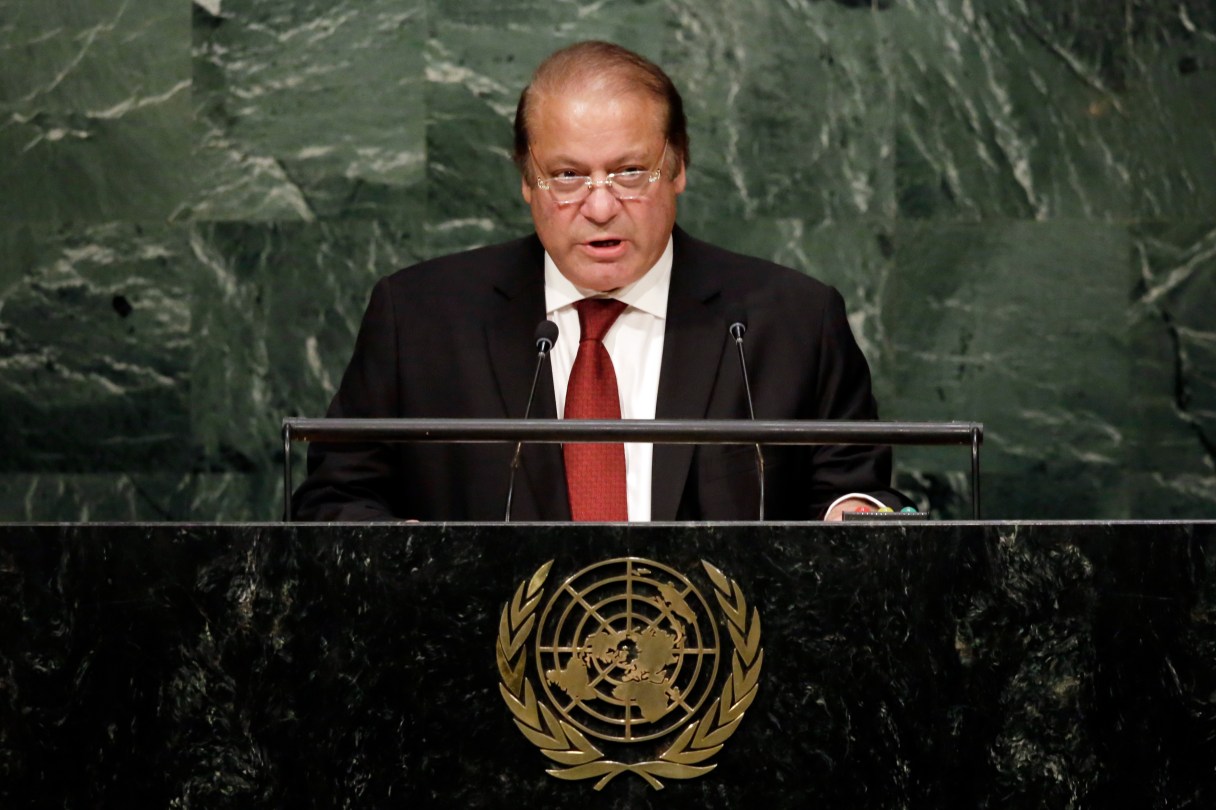
UNITED NATIONS (AP) – Pakistani Prime Minister Nawaz Sharif on Wednesday proposed a new peace initiative with historical rival India.
Speaking at the U.N. General Assembly, Sharif called for the demilitarization of the divided Himalayan region of Kashmir, and for both countries to respect a 2003 cease-fire on the de facto frontier where there has been an increase in cross-border firing.
Sharif also called for an unconditional withdrawal of forces from the Siachen Glacier, often dubbed the world’s highest battlefield, where the two militaries have been arrayed against each other for years for control of an uninhabited expanse of ice.
The hostility between Pakistan and India dates back seven decades, and the nuclear-armed rivals have fought three wars. The hostilities have been punctuated by periodic attempts at peace talks but they’ve failed to make a breakthrough on the core issues that divide them, such as the Kashmir dispute and Indian concerns about attacks by Pakistan-based militants. India also wants Pakistan to bring to justice suspects in the 2008 Mumbai attacks that killed 166 people.
Strains have grown since nationalist Indian Prime Minister Narendra Modi took office last year, despite initial hopes that he and Sharif could make headway on improving ties. Forces on both sides have frequently exchanged fire in Kashmir in recent months, causing multiple civilian and military deaths.