
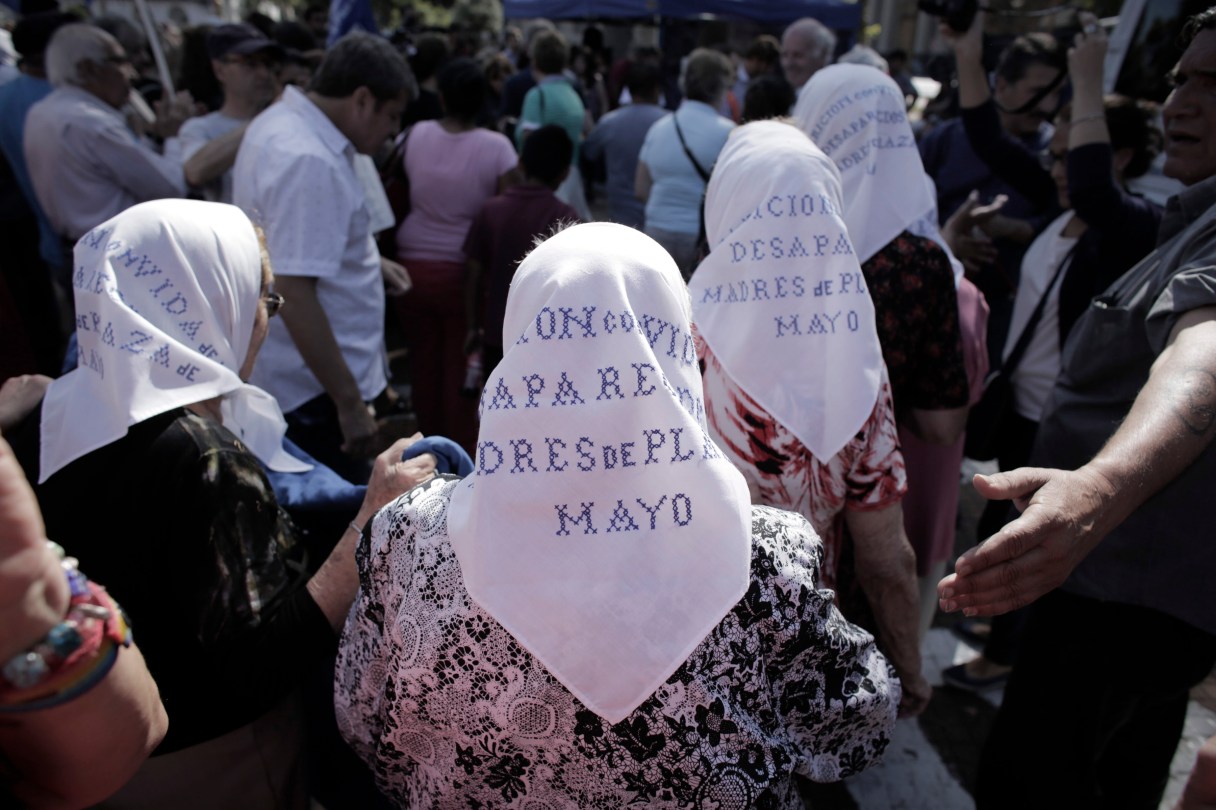
BUENOS AIRES, Argentina (AP) – Confronting a dark chapter in Latin America’s history, President Barack Obama will pay tribute to victims of Argentina’s “Dirty War,” as he works to bring closure to questions about the U.S. role in one of the region’s most repressive dictatorships.
This week marks the 40th anniversary of the 1976 coup that opened a period of military rule still haunting Argentina, where millions are spent each year prosecuting perpetrators and searching for remains of the thousands who died or disappeared. Closing out his South America trip, Obama planned to use his visit to Remembrance Park in Buenos Aires Thursday to lay the groundwork for the U.S. to come clean about any involvement.
Though much remains unknown, rights groups believe U.S. backing for authoritarian regimes in Latin America extended to Argentina during the 1976 to 1983 period known as the “Dirty War.” As controversy mounted ahead of Obama’s visit, he announced the U.S. would declassify military and intelligence records shedding light on what happened, granting a request from new President Mauricio Macri’s government.
Yet that step, while welcomed by Macri, hasn’t quelled concerns. Even as Obama met with Macri on Wednesday, protesters gathered in Buenos Aires to protest his visit, while some prominent rights groups threatened to boycott Obama’s visit to Remembrance Park.
“We are absolutely determined to do our part as Argentina continues to heal and move forward as one nation,” Obama said. Of his pledge to release documents, Obama said: “I hope this gesture also helps to rebuild trust that may have been lost between our two countries.”