
Monday, November 16, 2026Nov 16

Whisky’s worries mirror economic fears in Scotland

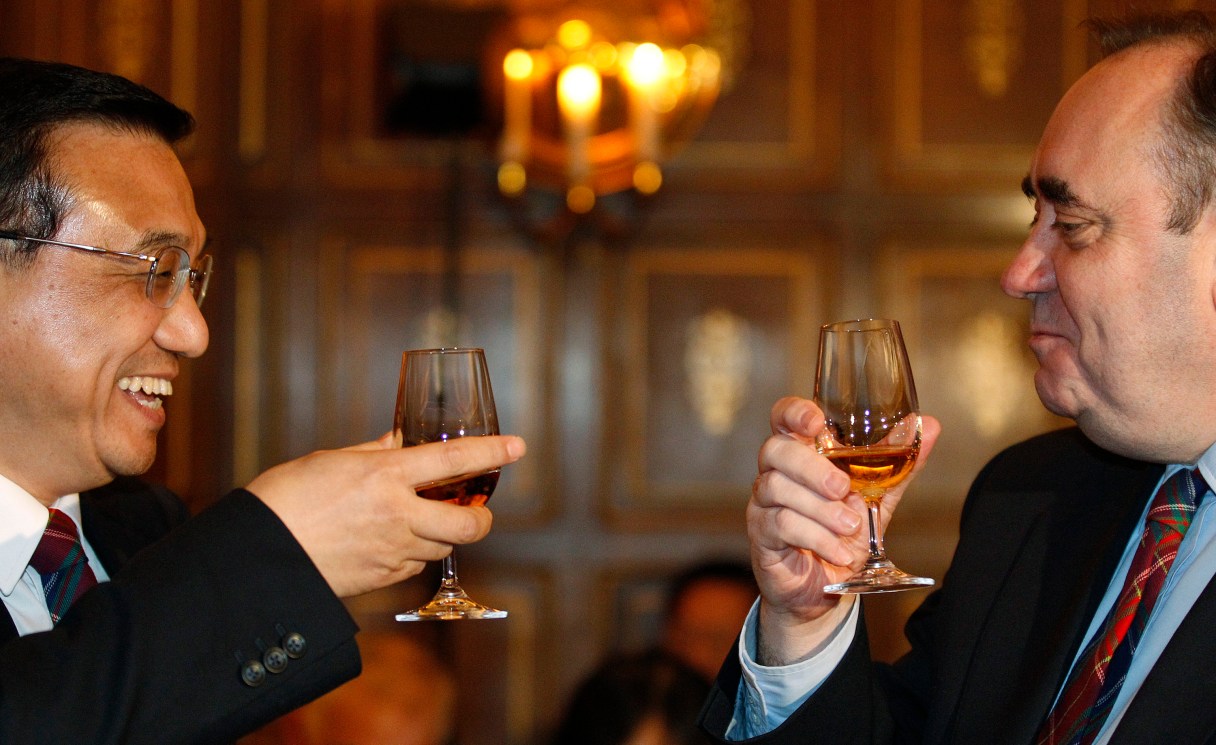
FILE - In this is Jan. 9, 2011, file photo China's Vice Premier Li Keqiang, left, laughs as he raises a glass of whisky to Scotland's First Minister Alex Salmond before attending a state dinner at Edinburgh castle in Edinburgh, Scotland. Distilleries need to have long-term plans for investments and financing, all of which could be thrown into turmoil on Sept. 18, 2014, when Scotland votes on whether to leave Britain. Whisky makers and other businesses are worried about the risks involved in finding themselves in a new country with, among other things, a different currency.(AP Photo/David Moir, Pool, File)

ISLAY, Scotland (AP) – Carl Reavey plunged his nose into the glass, inhaled the amber liquid’s scent, then sipped. Slowly.

It’s said that Scotch tastes of the place where it is made, so Reavey’s Bruichladdich Black Art single malt would offer a touch of barley, a splash of the sea, and a whiff of salt from the island of Islay, 140 miles (225 kilometers) west of Glasgow.

That taste takes time – a long time – to produce, with top-rated Scotch aged for decades. And it means distilleries need to have long-term plans for investments and financing – all of which could be thrown into turmoil in a single day, Sept. 18, when Scotland votes on whether to leave Britain.

Whisky makers and many other businesses are worried about the risks involved in finding themselves overnight in a new country with, among other things, a different currency.

“The uncertainty associated with independence, rather than independence itself, really, I think is the concern,” Reavey said.