
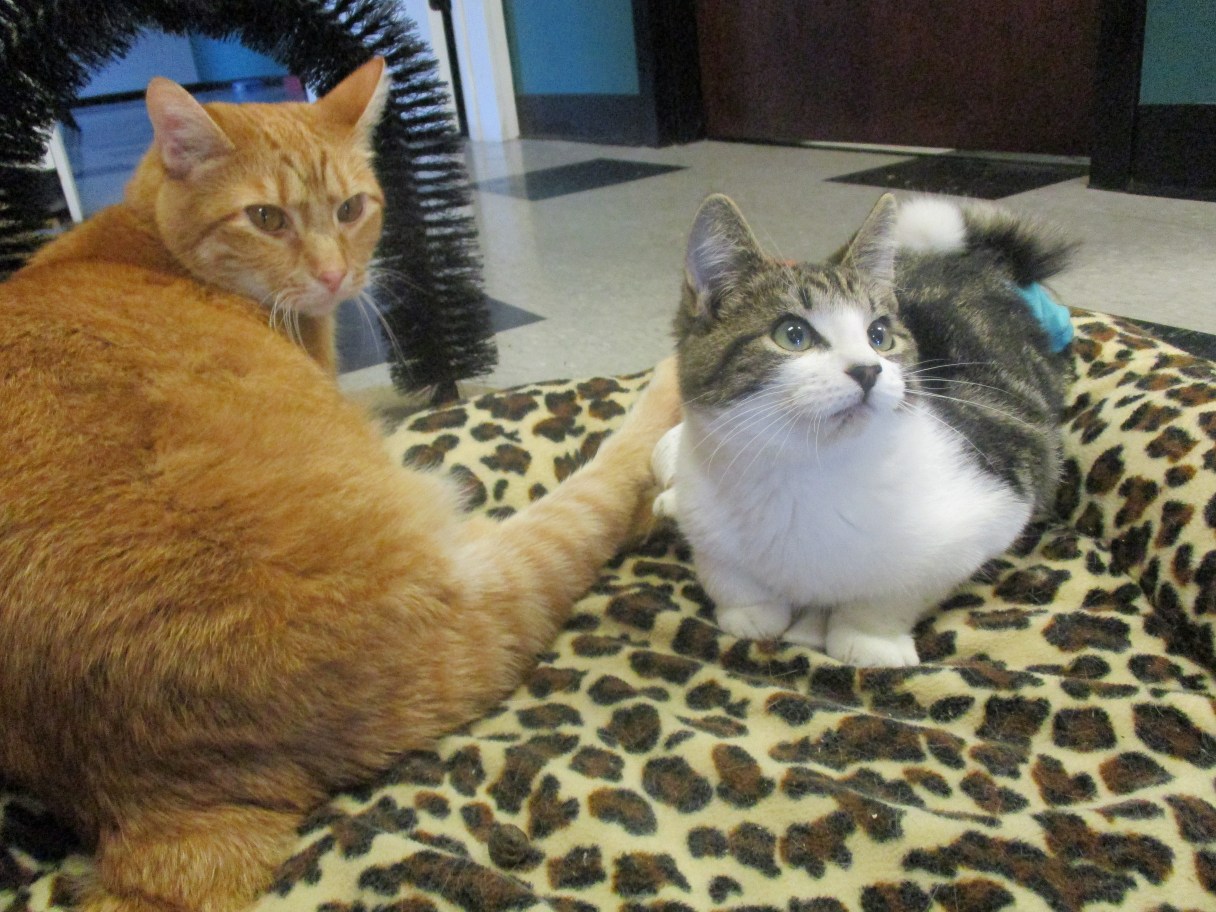
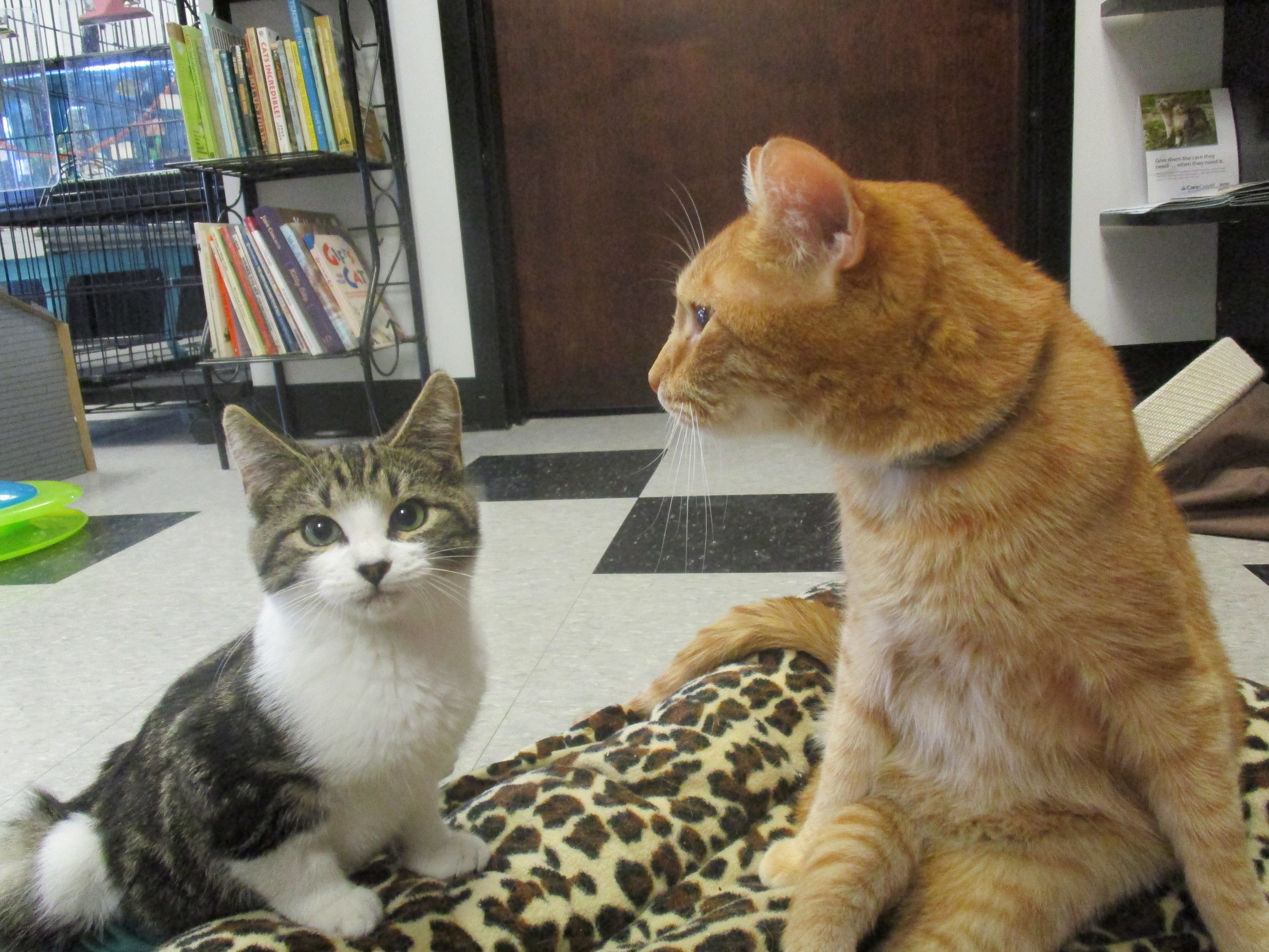
 It wasn’t always rainbow and sunshine for the pair, though. While Jesse is happy to play and cuddle with any cat or person that comes through the door, Willie was a little hesistant of the 7-year-old tabby initially. However, clinic employee Jennifer Allen said they’ve warmed up to one another, and has even caught Willie desperately trying to get Jesse’s attention to play.
When a kindly stranger found a tiny, partially paralyzed kitten on her porch, she knew she couldn’t just have him euthanized like others suggested. Instead, she brought him to the Cat Clinic, where he would have a role model and guide in the life of a paraplegic kitty: 7-year-old Jesse the Wondercat.
Willie, just 14 weeks old, has quickly become the darling of the office and of visitors. Despite a congenital condition that stymied the development of his lower body, the young kitten has already established himself as a premier roughhouser among the clinic cats under the mentorship of his kind elder, Jesse.
Jesse has been with the clinic since he was roughly 6 weeks old. He was also found by a stranger, but on the side of the road in St. Elmo without any function in his legs.
He quickly became a favorite of guests and employees at the clinic, dazzling everyone with his voracity for playtime and pets despite having no use of his hind legs.
“She said he was so sweet and fun-loving that she didn’t feel it would be the right decision,” Jennifer Allen, a veterinary technician at the Cat Clinic, said about Willie’s savior. “She brought him here and we took him in.”
The young cat has proven to be an agile and scrappy wrestler with the other kittens at the facility, even without his hind legs. While the clinic believes Jesse’s paralysis is a result of injury or abuse, Willie’s is congenital.
The clinic has had numerous individuals offer to adopt Jesse, and they expect the same to happen with Willie. However, the health concerns present in the animals lead Allen and the rest of the staff to keep the felines for their own safety.
“Willie wants to use the litter box, but he can’t really get in there and do it himself,” Allen said. She and the staff have to manually massage Jesse and Willie a few times a day to force them to use the bathroom. “Also, based on X-rays, Jesse seems to be at risk for certain diseases that would be better monitored here.”
While the employees of the clinic are waiting to see if Willie has any further complications from his condition, he’s a fully functional, healthy kitten at the moment.
Willie barely seems to mind the lack of function in his legs, though Allen said she’s noticed him try and jump whenever a playmate hops up onto a chair. He’s too young for a wheelchair, which are modeled specifically to a cat’s size. Jesse has a wheelchair, but Allen said he’s not much of a fan.
“He can’t do as much when he’s in his wheelchair,” said Allen. “He can’t sit or lie down. He just has to stay in motion and walking somewhere, and that’s kind of boring when you want to put a kitten in a headlock.”
While Jesse was happy to welcome Willie as a new member of the family, it took a few days Jesse came for Willie to stop hissing at him whenever near. Allen said she thinks it’s just the kitten having a go at dominance. She caught Willie trying to play with Jesse a few days ago.
Hopefully, Allen said, Jesse and Willie will prove to people that animals with special needs are loving animals all the same and deserve the same attention and care as an able-bodied pet.
For more information, contact the Cat Clinic of Chattanooga at 752-0737.
Email Shane Foley at sfoley@timesfreepress.com