
Sunday, November 15, 2026Nov 15

Politics slows flow of US virus funds to local public health

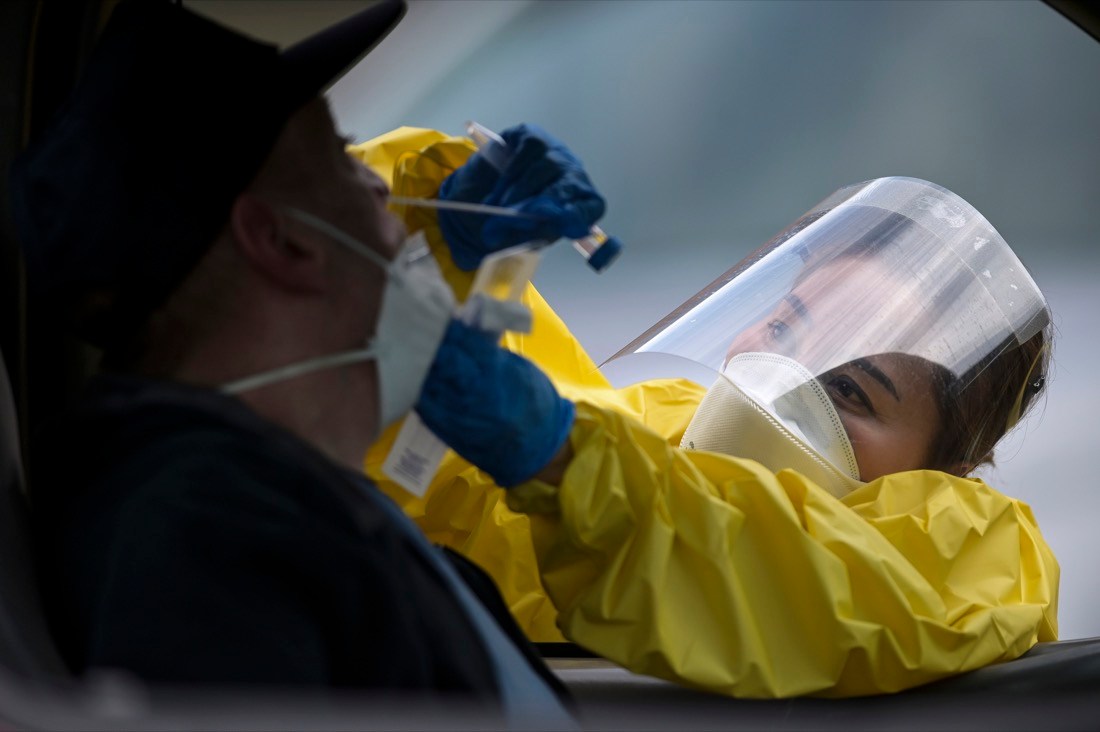
FILE - In this May 23, 2020, file photo Elizabeth Santoro, a medic with the Minnesota Air National Guard 133rd Medical Group, administers a free COVID-19 test at the Minneapolis Armory in Minneapolis. Since the pandemic began, Congress has set aside trillions of dollars to ease the crisis. A joint KHN and Associated Press investigation finds that many communities with big outbreaks have spent little of that federal money on local public health departments for work such as testing and contact tracing. Others, like Minnesota, were slow to do so. (Aaron Lavinsky/Star Tribune via AP, File)

As the novel coronavirus began to spread through Minneapolis this spring, Health Commissioner Gretchen Musicant tore up her budget to find funds to combat the crisis. Money for test kits. Money to administer tests. Money to hire contact tracers. And yet even more money for a service that helps tracers communicate with residents in dozens of languages.

While Musicant diverted workers from violence prevention and other core programs to the COVID-19 response, state officials debated how to distribute $1.87 billion Minnesota received in federal aid.

As she waited, the Minnesota Zoo got $6 million in federal money to continue operations, and a debt collection company outside Minneapolis received at least $5 million from the federal Paycheck Protection Program, according to federal data.

It was not until Aug. 5 – months after Congress approved aid for the pandemic – that Musicant’s department finally received $1.7 million, the equivalent of $4 per Minneapolis resident.

“It’s more a hope and a prayer that we’ll have enough money,” Musicant said.