
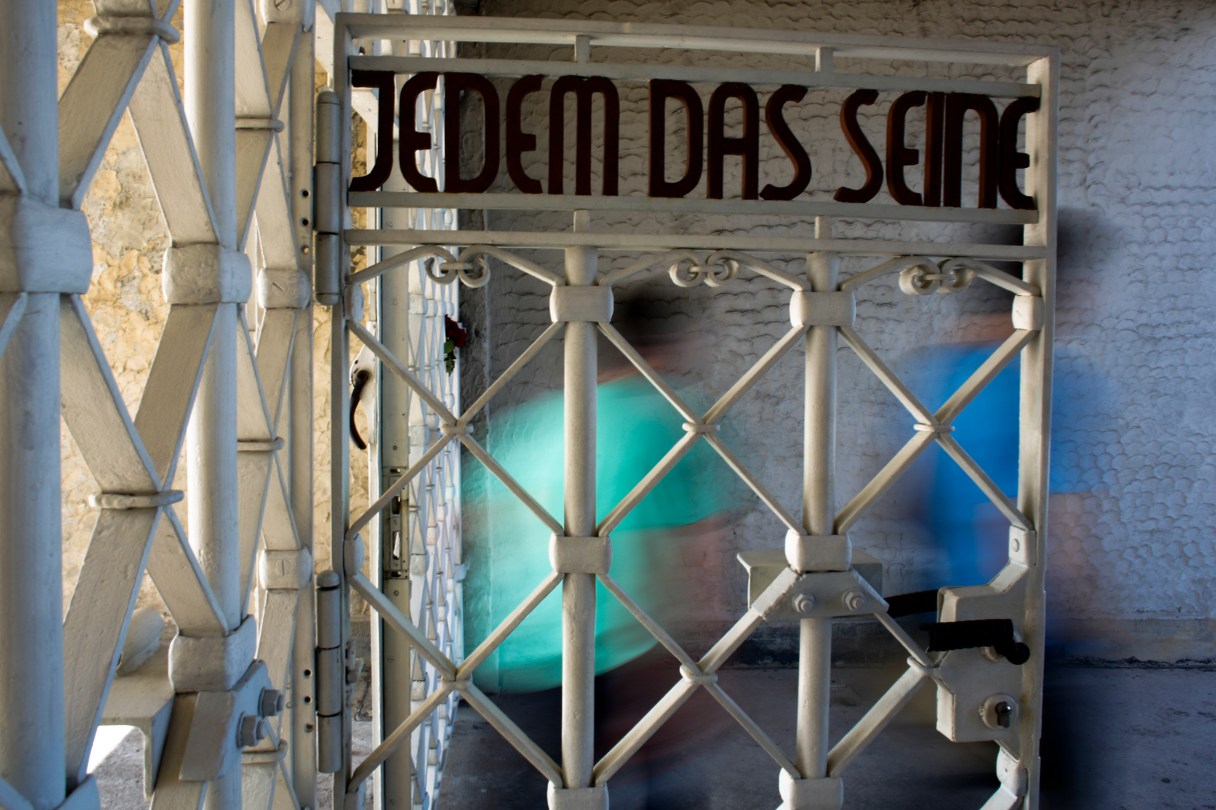
WEIMAR, Germany (AP) – Buchenwald survivor Henry Oster recalls thinking that a fellow inmate had “lost his sense of reality” when he said 70 years ago Saturday that the concentration camp was being liberated, bringing an end to the long ordeal of the 21,000 surviving prisoners.
Oster, 86, visited the site near the German city of Weimar for the first time since its liberation on April 11, 1945 – one of a group of survivors and veterans who came to mark the anniversary of the liberation. Buchenwald was the first major concentration camp entered by American forces at the end of World War II.
“What I see here, where the barracks used to be, at every barrack there was a pile of dead bodies, this is in your memory forever,” Oster said. “When someone asks how Buchenwald was, you immediately see the dead bodies again.”
Around 250,000 prisoners were held at Buchenwald from its opening in July 1937 to its liberation. An estimated 56,000 people were killed, including political prisoners, people dubbed “asocial” by the Nazis, Soviet prisoners of war, Sinti and Roma, and approximately 11,000 Jews.
Oster, a Jewish German born in Cologne, was taken to the Lodz ghetto in occupied Poland in 1941 and later to the Auschwitz-Birkenau death camp. His father died of starvation and his mother was gassed on the day they arrived at Auschwitz, he said.