
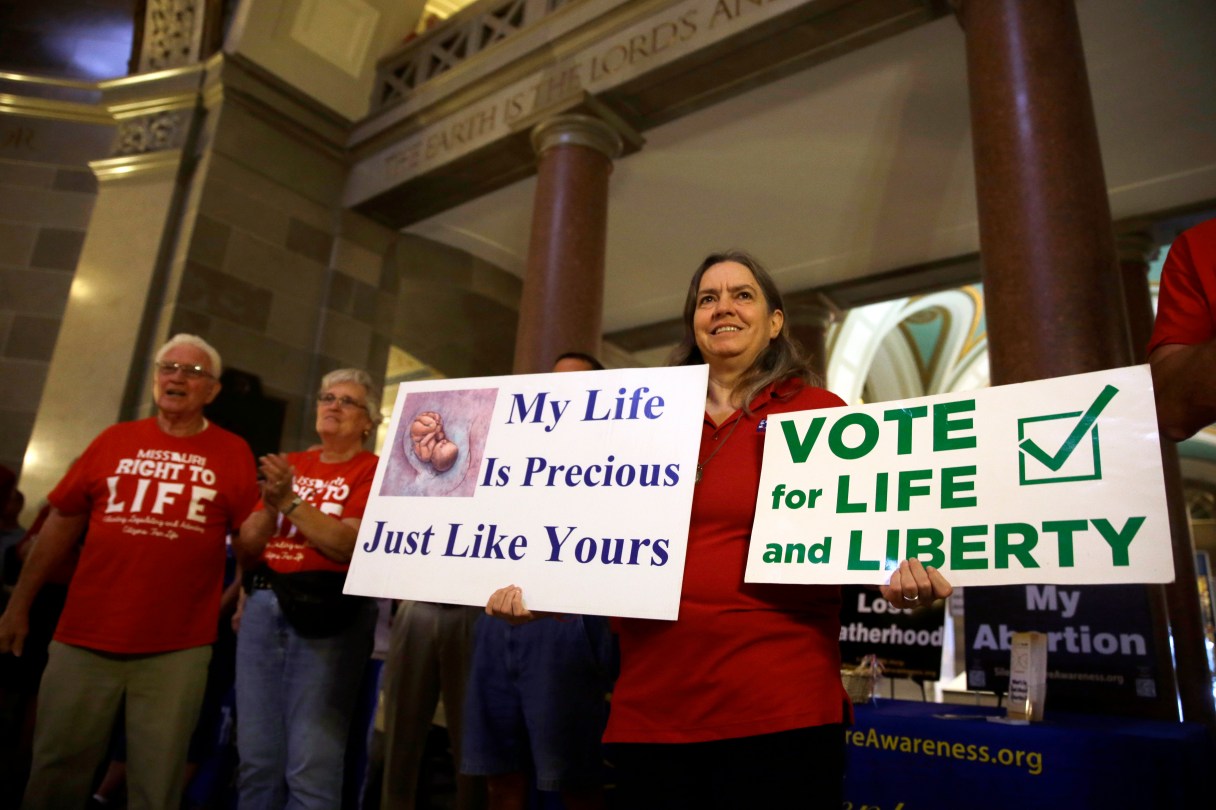
JEFFERSON CITY, Mo. (AP) – Missouri lawmakers enacted one of the nation’s most stringent abortion waiting periods Wednesday, overriding a veto of legislation that will require women to wait 72 hours after consulting with a doctor before ending a pregnancy.
The vote by Missouri’s Republican-led Legislature overrules the veto of Democratic Gov. Jay Nixon, who had denounced the measure as “extreme and disrespectful” toward women because it contains no exception for cases of rape or incest.
About half of the states, including Missouri, already have abortion waiting periods of 24 hours.
Missouri’s new law will be the second most-stringent behind South Dakota, where its 72-hour wait can sometimes extend even longer because weekends and holidays are not counted. Utah is the only other state with a 72-hour delay, but it grants exceptions for rape, incest and other circumstances.
Missouri lawmakers specifically rejected an amendment earlier this year that would have granted exceptions for rape and incest. Abortion opponents argued that it would have diminished the value of some lives depending on how they were conceived. Supporters of the legislation describe it as a “reflection period” for women and their families.