
Monday, November 16, 2026Nov 16

Police to citizens: Be careful what you tweet

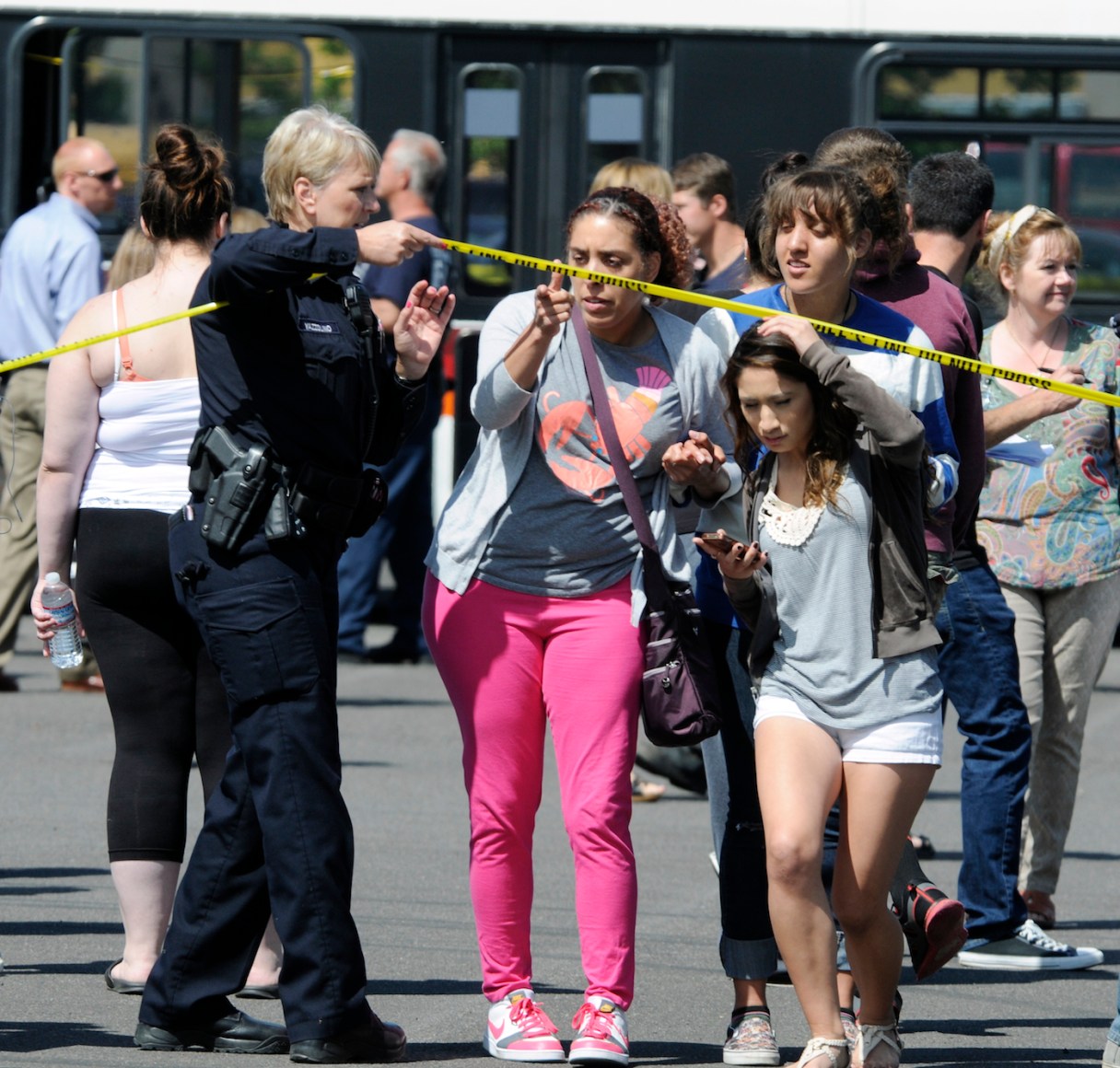
FILE - In this Tuesday, June 10, 2014, file photo, a police officer lifts up police tape as students arrive by bus to meet their parents and/or family at the Fred Meyer grocery store parking lot in Wood Village, Ore., after a shooting at Reynolds High School, in nearby Troutdale. Police in Washington state are asking the public to stop tweeting during shootings and manhunts to avoid accidentally telling the bad guys what officers are doing. Two recent incidents led the Washington State Patrol to organize the "TweetSmart" campaign: the search for a gunman in Canada after three officers were killed and the shooting at Reynolds High School. (AP Photo/Greg Wahl-Stephens, File)

SEATTLE (AP) – Police in Washington state are asking the public to stop tweeting during shootings and manhunts to avoid accidentally telling the bad guys what officers are doing.

The “TweetSmart” campaign began in late July by a coalition of nine agencies, including the Washington state patrol and the Seattle police, and aims to raise awareness about social media’s potential impact on law enforcement.

Some have called the effort a step that could lead to censorship; others dismissed it as silly. Police, however, say it’s just a reminder at a time when cell phones and social networks can hasten the lightning-quick spread of information.

A social media expert at the International Association of Chiefs of Police said she’s unaware of similar awareness campaigns elsewhere but the problem that prompted the outreach is growing.

“All members of the public may not understand the implications of tweeting out a picture of SWAT team activity,” said Nancy Korb, who oversees the Alexandria, Virginia, organization’s Center for Social Media.