
You’ve probably heard the phrase “your mileage may vary” with regard to how your real-world fuel economy compares to the EPA estimate. The adage refers to gasoline-powered vehicles, but the same applies to electric vehicles.
Edmunds has found, however, that the variance can be even greater with an EV, depending on the vehicle.
After owning and testing many of the popular EVs on the roads today, Edmunds created its own standardized real-world test to provide an additional data point for comparison. A closer look at its tests for the Porsche Taycan and the Tesla Model Y Performance turned up some interesting results.
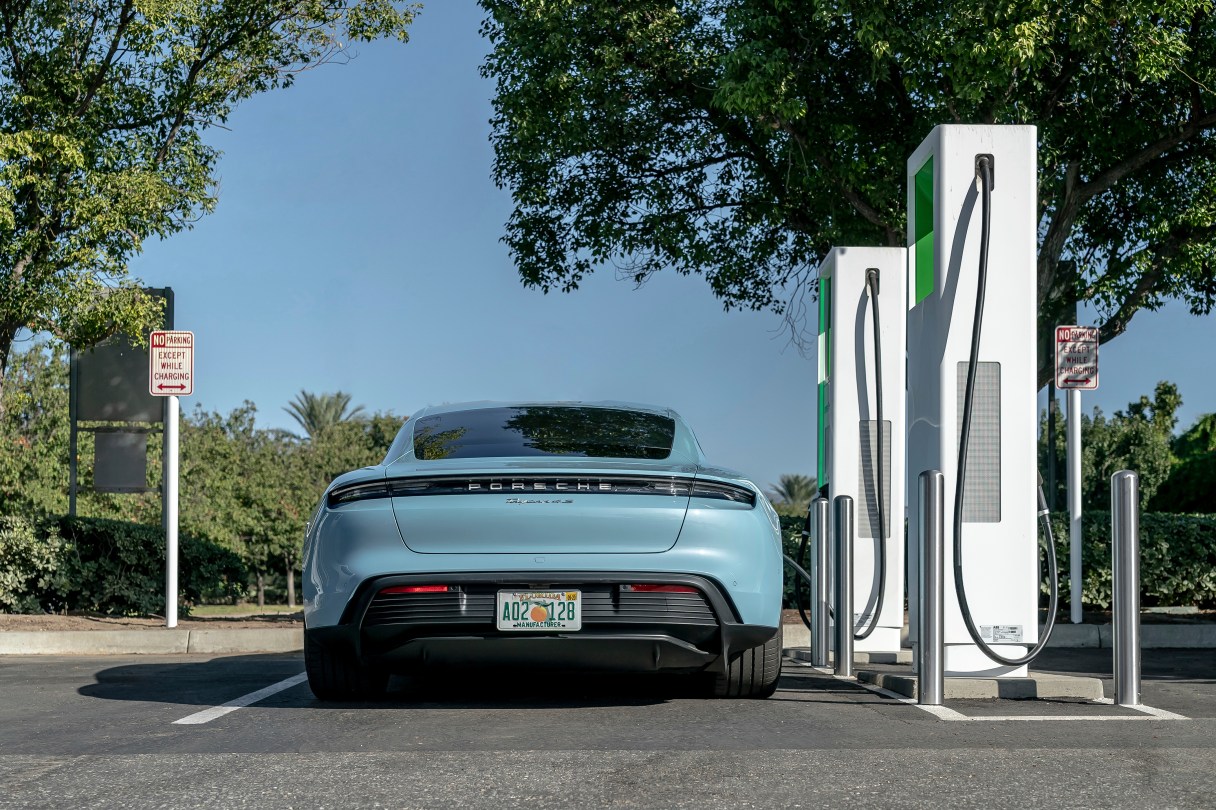
The 2020 Porsche Taycan 4S, an all-new electric luxury sport sedan, was way off from the EPA estimated 203 miles of range in Edmunds’ real-world driving test. Edmunds observed 323 miles and saw a better energy consumption of 32.3 kilowatt-hours of electricity used every 100 miles of driving, versus the EPA’s 49 kWh/100 miles.
In contrast, the 2020 Tesla Model Y Performance with 21-inch wheels – the brand’s newest small SUV – did exceptionally well in the EPA’s test, where it earned an estimated 291 miles and a power consumption rating of 28 kWh/100 miles, using the maximum range mode. While Edmunds saw comparable efficiency in its real-world test, at 28.4 kWh/100 miles, the overall range result of 253 miles was slightly lower than the EPA estimate.