
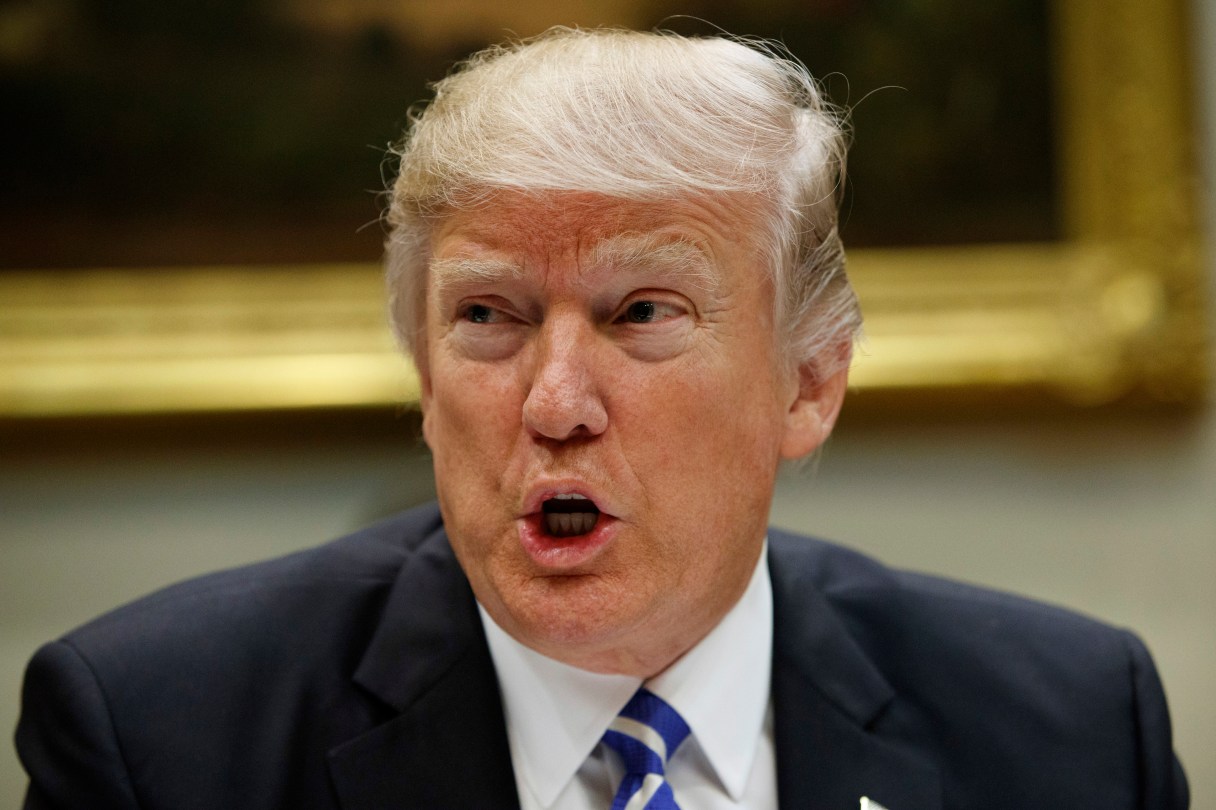
WASHINGTON (AP) – Despite his promises of a no-holds-barred administration, President Donald Trump is tiptoeing around U.S. military engagements in Afghanistan and Iraq, and dialing back the threats of abandoning allies. It seems Trump is opting for an increasingly risk-averse approach to the world.
Although he vowed an aggressive new Iran posture and at one point questioned even basic U.S. policy toward China, Trump has been slow to outline policies to back up the swagger. He’s curtailed his nerve-rattling rhetoric about NATO and even his pledges of new cooperation with Russia. And in his first speech to a joint session of Congress, he didn’t even mention the nation’s two long wars or echo the ritual declarations of American global leadership of Republican and Democratic presidents past.
“My job is not to represent the world,” Trump said flatly on Tuesday evening. “My job is to represent the United States of America. But we know that America is better off when there is less conflict – not more.”
Trump referenced his reluctance to embroil the United States in another war, insisting “we must learn from the mistakes of the past.” But the overall impression he left was of a new leader still trying to find his footing on some of the most vexing foreign policy and international security conundrums.
Trump’s opposition to new conflict is hardly a revolutionary stance. President Barack Obama promised to pull American troops out of the wars he inherited from President George W. Bush, but proved unsuccessful on each. Bush himself promulgated a “humble” foreign policy before being transformed by the Sept. 11, 2001, attacks.