
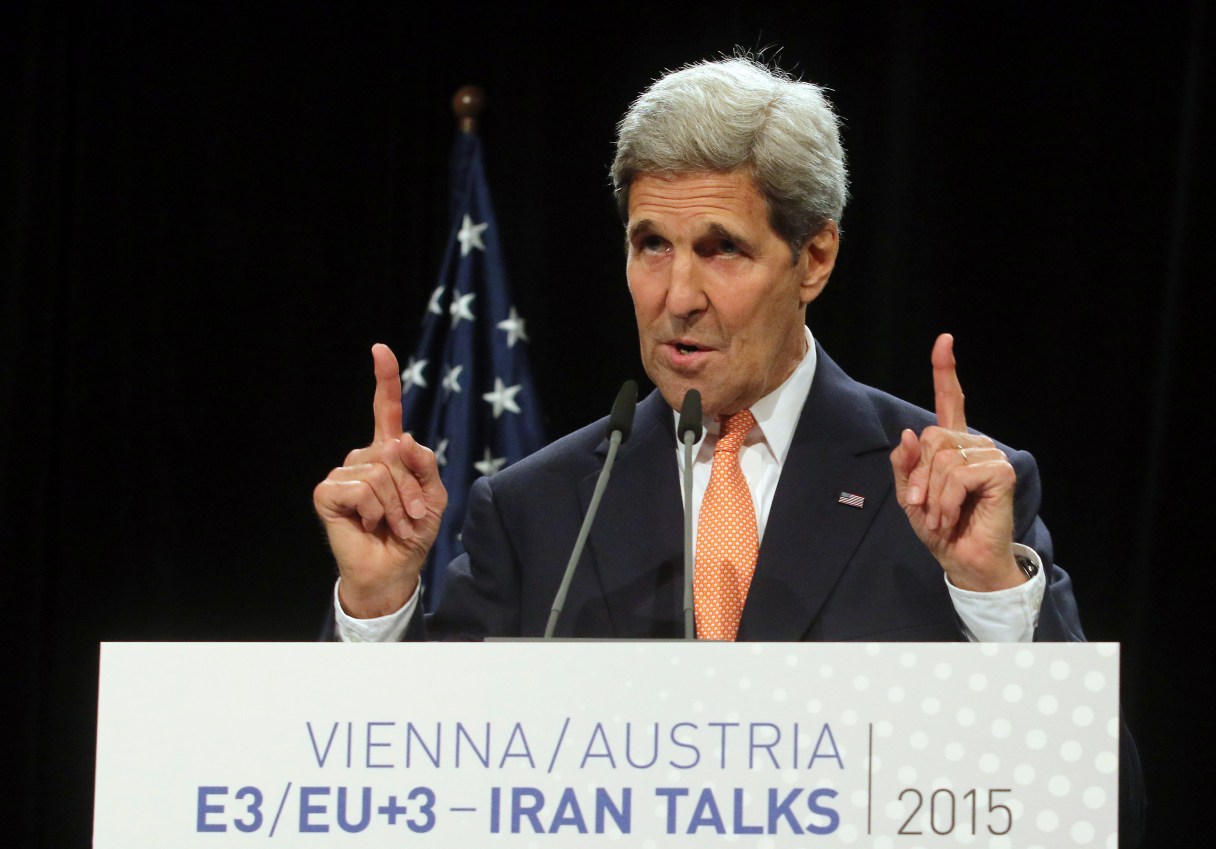
WASHINGTON – As the Iran nuclear talks neared the endgame, some observers worried that President Obama and Secretary of State John Kerry, in their eagerness for a deal, would give away the store with last-minute concessions.
Those fears turned out to be misplaced, notwithstanding Tuesday’s howls of protest from Israeli and GOP critics. The agreement is a well-crafted pact that maintains the framework reached in Lausanne in April. Rather than softening the Lausanne terms, the final language firms up some squishy items. It also adds important new restrictions on Iran’s ability to develop the exotic triggering mechanisms needed to build a nuclear bomb.
The problem isn’t the agreement, but Iran itself. Its behavior remains defiantly belligerent, even as it signs an accord pledging to be peaceful. Its operatives subvert neighboring regimes, even as their front companies are about to be removed from the sanctions lists. The agreement welcomes Iran to the community of nations, even though its leader proclaims that Iran is a revolutionary cause.
Obama argues that dealing with a menacing Iran will be easier if the nuclear issue is off the table for the next 10 years. He’s probably right, but the Iran problem won’t vanish with this accord. Iranian behavior in the region becomes the core issue. Having played the dealmaker, Obama must now press Iran to become a more responsible neighbor.
The big bet Obama is making is that Iran is more likely to evolve if it’s open to the world – and to the winds of change – than if it remains closed and isolated. There is historical evidence to support this view, including the demise of the Soviet Union and the evolution of modern China. But those countries also offer a warning that diplomatic agreements can be a prelude to cold peace and even outright conflict.