
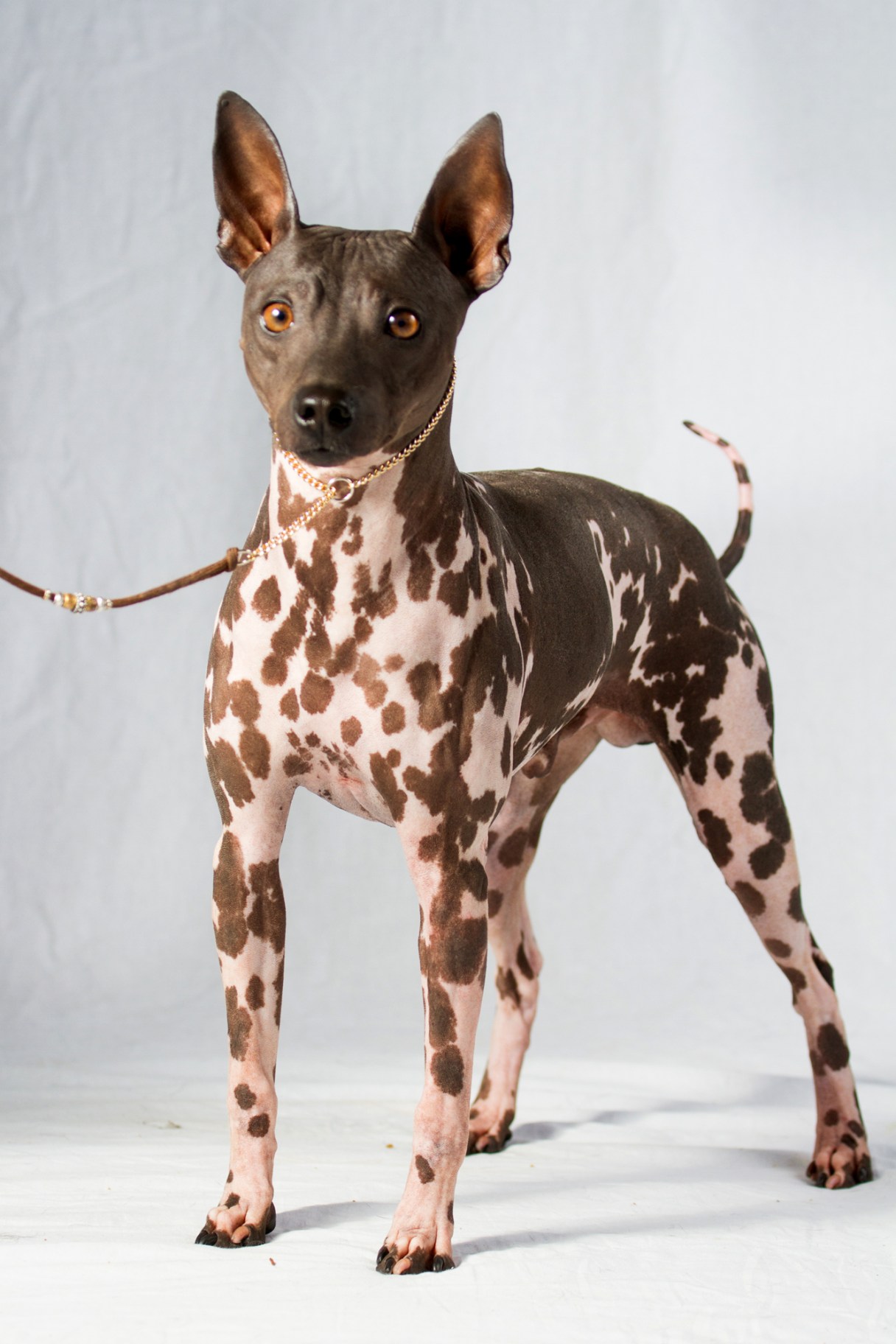
NEW YORK – A hairless terrier and an ancient North African hound are ready to run with the pack of dog breeds recognized by the American Kennel Club.
The organization announced Tuesday that the American hairless terrier and the sloughi have joined 187 other recognized breeds. The newcomers can now compete in most AKC shows and competitions, though not at the prominent Westminster Kennel Club show until next year.
Many American hairless terriers are, as advertised, bare-skinned, though others have short coats but carry the hairless gene. Their rise began when a hairless puppy emerged in a litter of rat terriers in the 1970s, wowing a Louisiana couple and leading to deliberate breeding of the hairless dogs, according to the American Hairless Terrier Club of America.
The lively, inquisitive terriers can do well at canine sports and as pets for people with dog-hair allergies.
“They’re terrier-smart” but somewhat calmer than some other terrier breeds, said club secretary Lynn Poston of Fontana, California. “They’re very easy to live with because they’re very trainable.”