
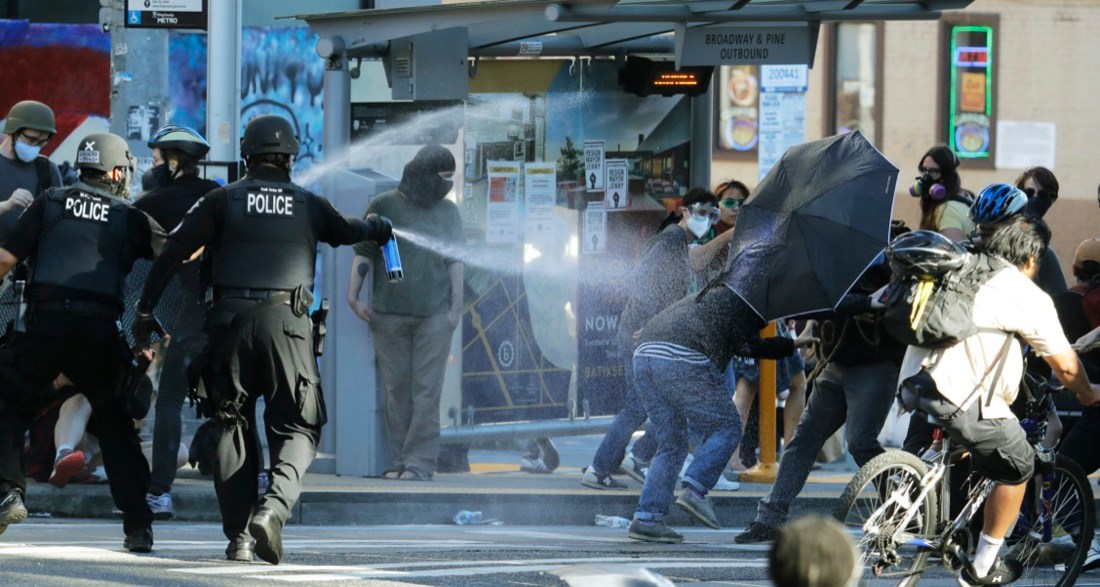
DENVER (AP) – Maryland repealed its half-century-old Law Enforcement Officers Bill of Rights. Washington state reformed use-of-force policies and created a new agency to investigate when officers use deadly force. And California overcame objections from police unions to make sure officers fired in one jurisdiction couldn’t be hired in another.
Those are some of the far-reaching policing changes passed this year in response to the 2020 killing of George Floyd in Minneapolis. But the first full year of state legislative sessions since his death sparked a summer of racial justice protests produced a far more mixed response in the rest of the country.
A number of states implemented incremental reforms, such as banning chokeholds or tightening rules around use of body cameras, while several Republican-led states responded by granting police even greater authority and passing laws that cracked down on protesters.
The state action on both sides of the debate came as Congress failed to implement policing reforms aimed at boosting officer accountability. The George Floyd Justice in Policing Act passed the U.S. House without a single Republican vote and then collapsed in the evenly divided Senate.
Jim Pasco, executive director of the Fraternal Order of Police, which represents more than 356,000 law enforcement officers, said he thinks it’s still possible for Congress to pass police reform, but perhaps only after another deadly case captures the nation’s attention.