
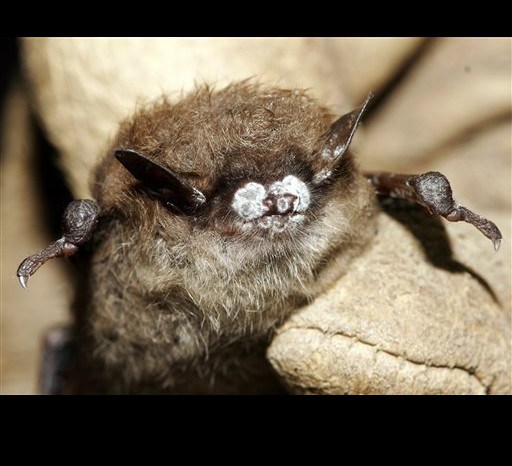
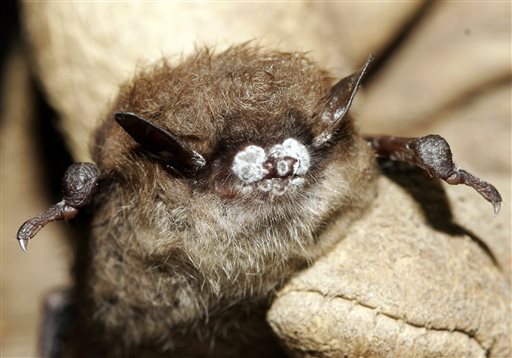
 A brown bat has a fungus that causes white-nose syndrome on its nose in this 2008 photo.
TRAVERSE CITY, Mich. – A fungal disease that has killed millions of North American bats is spreading and now has been detected in half of the United States, officials said Thursday.
Wildlife agencies in Michigan and Wisconsin said they had confirmed diagnoses of white-nose syndrome in tested bats, further evidence of the ailment’s rapid expansion since it first was documented in a cave near Albany, N.Y., in 2006. Cases have turned up in most states east of the Mississippi River, with Georgia and Alabama joining the list in March, and as far west as Missouri and Arkansas.
Officials said the latest discoveries were no surprise but a cause for sadness, acknowledging they had no cure and could take only limited steps to protect the winged mammals that provide an enormous economic and ecological benefit by feasting on nuisance insects that gobble crops and trees.
“We face the loss of multiple bat species and the benefits they provide to our ecosystems and our people,” said Erin Crain of the Wisconsin Department of Natural Resources.
White-nose syndrome is named for the fuzzy spots it plants on victims’ muzzles, wings and tails. It doesn’t affect people or other animals but repeatedly interrupts bat hibernation, sapping their energy and fat stores, which can cause starvation and dehydration.