
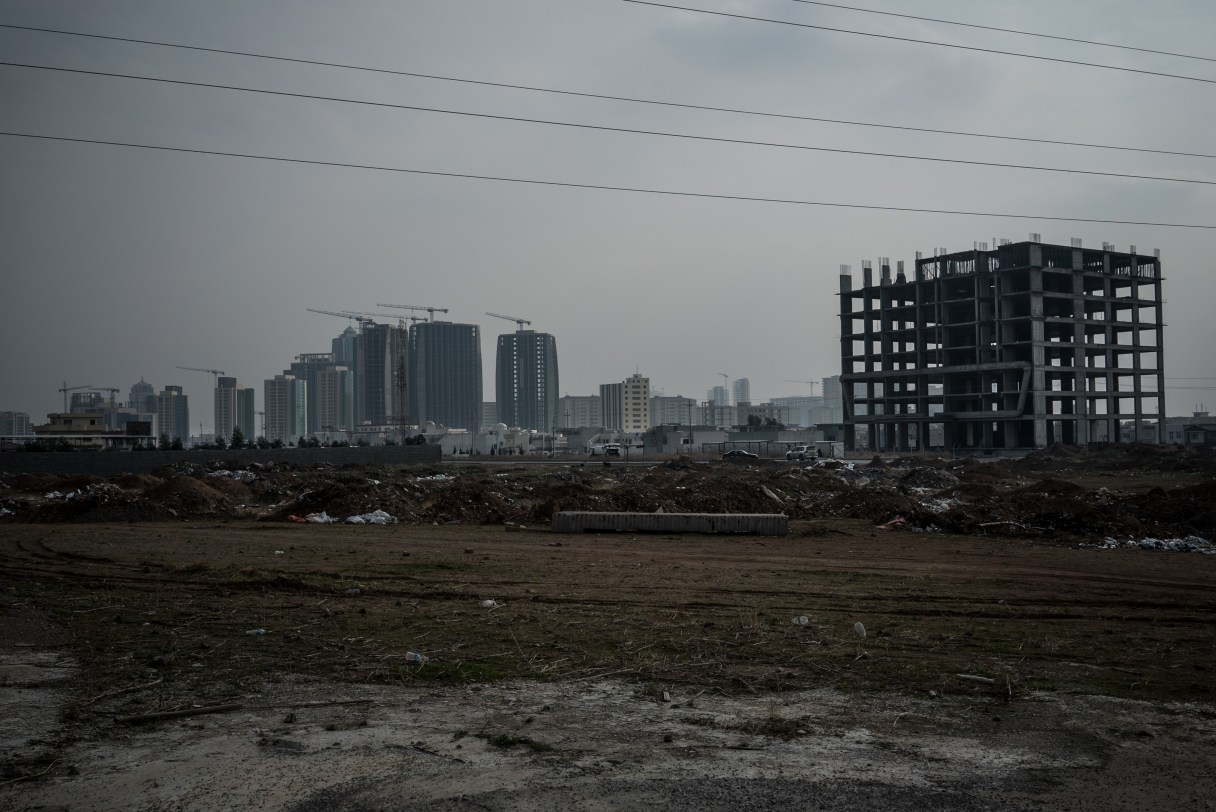
IRBIL, Iraq (AP) – Less than two years ago, Iraq’s northern Kurdish region was booming, as oil revenues poured in and foreign investors flocked to a rare island of stability in a turbulent region, but that all began to change when the black flags of the Islamic State group darkened the horizon.
Kurdish forces backed by U.S.-led airstrikes repelled an IS assault in the summer of 2014 and have been among the most effective forces battling the extremists. But low oil prices and a longstanding dispute with the central government over revenues, along with an influx of refugees, have crippled the local economy.
The regional capital, Irbil, is littered with half-finished or abandoned building projects — hotels, offices and apartments that many had hoped would one day transform the largely autonomous region into a Kurdish Dubai. Foreigners attracted to the region by business opportunities and liberal social mores are leaving, civil servants haven’t been paid for months and day laborers gather on street corners, hoping for work.
“The economy today has very bad indicators. Savings are running out, people are starting to borrow and cut their expenses, which is directly affecting the market’s direction,” said Nabil al-Ethari, an economic analyst and chairman of Development Iraq, a consultancy firm based in Irbil.
“The housing sector is declining in a way that has never been seen before, the trade sector, including car sales, is also seeing declines, and all this is connected to the important fact that the region’s market is disconnected from its customers and markets in central and southern Iraq.”