
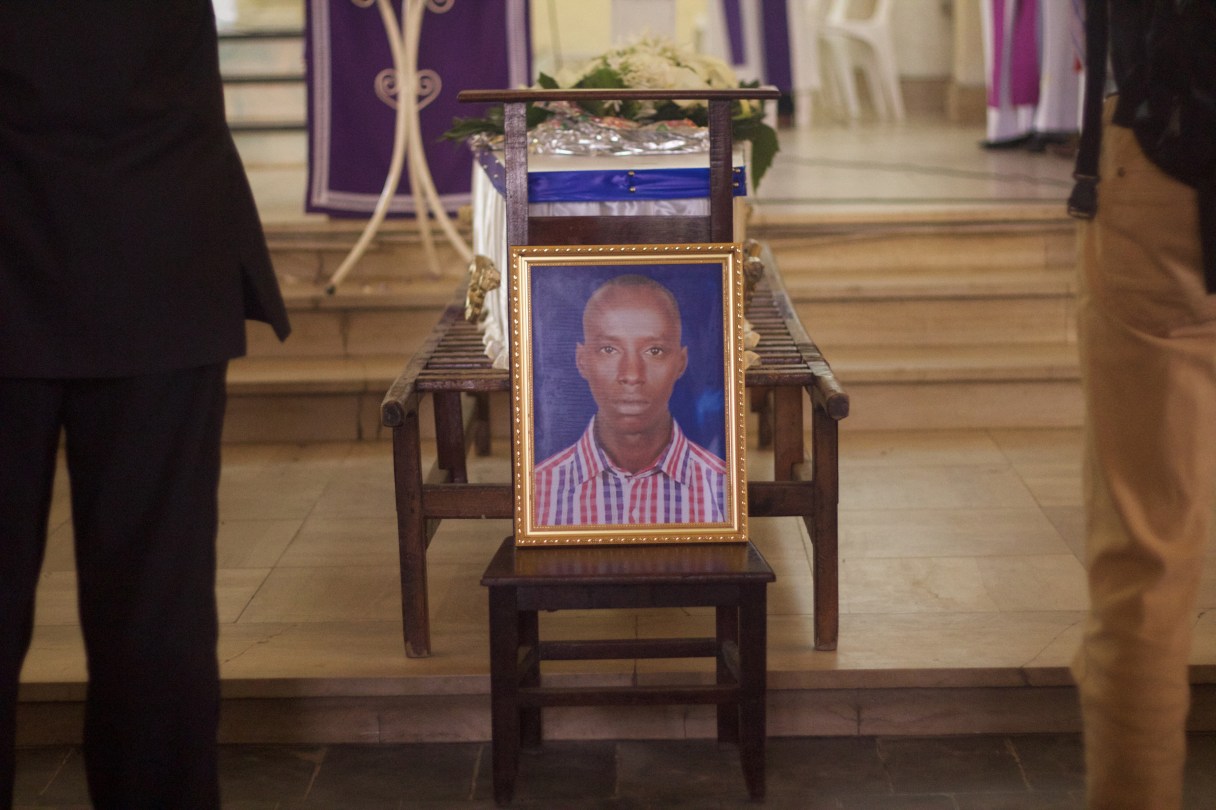
BUJUMBURA, Burundi (AP) – When Burundi’s police raided Nyakabiga, a neighborhood in the capital Bujumbura, on Friday 11 December 2015, Egide Niyongere was sitting at home. The young man who held an administrative post at the Ministry of Health for nearly two years, stayed inside most of the day, while the security forces combed the neighborhood looking for insurgents.
But at about 3 p.m., after phoning his fiancée, Niyongere disappeared. His body was found the next day at the morgue, among the many other young men who were killed during last week’s counterinsurgency operations by government forces. According to witnesses, Niyongere was dragged into a police car by security agents, his hands tied behind his back, and the vehicle drove away.
“Egide had nothing to do with a rebellion or an insurgency,” said a neighbor, who spoke on condition of anonymity because she fears for her safety.
Like many others killed in Nyakabiga, Niyongere’s body bore the marks of a point blank shooting. Some bodies had shattered skulls, while others had their hands bound behind their backs.
“These look like extrajudicial executions by the police and an independent investigation is urgently needed to establish exactly what happened and who was responsible,” said Sarah Jackson, Amnesty International’s deputy regional director for East Africa and the Great Lakes.