
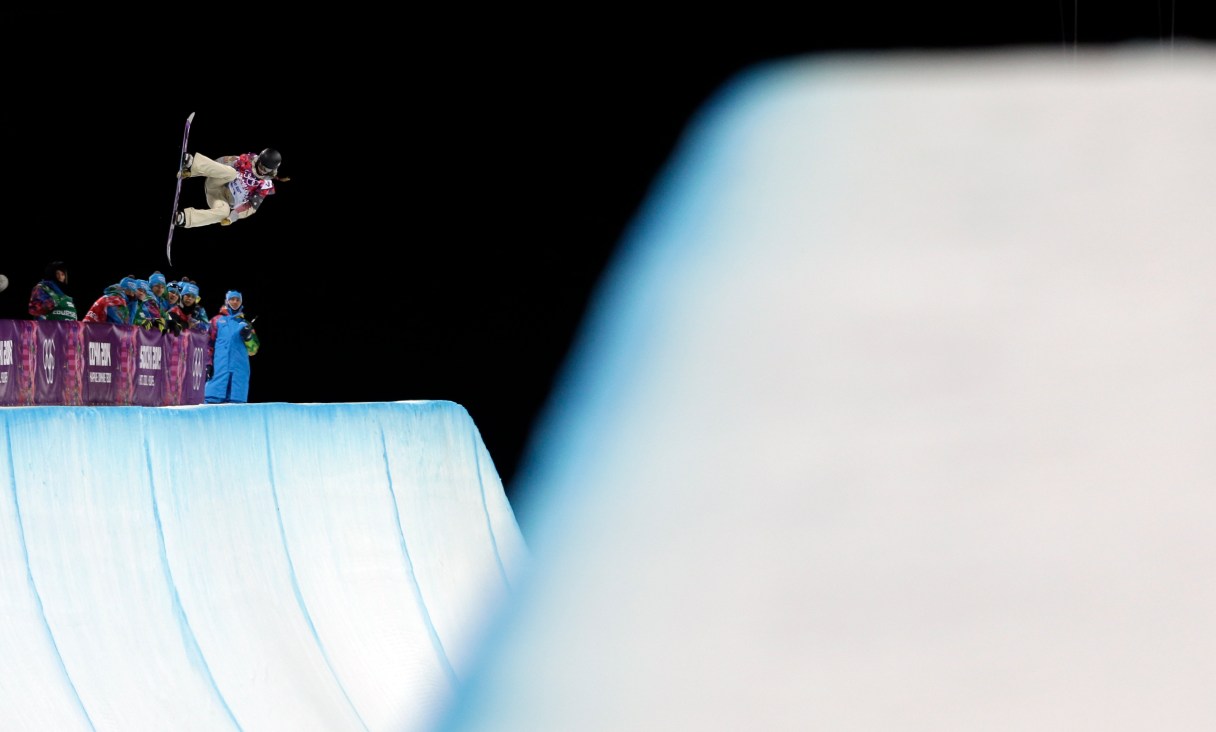
ASPEN, Colo. (AP) – When properly prepared, a halfpipe is as much a snowboarder’s canvas as the work of art itself – a 600-foot-long sculpture of smooth, icy symmetry designed to bring out each daredevil’s talent and courage.
And when that halfpipe isn’t made well, you end up with the sort of trouble we witnessed four years ago at the Sochi Olympics, where no snowboarder or freeskier seemed safe, and hardly any of the best riders got the chance to exhibit their best stuff.
Take American Arielle Gold. She was the defending world champion and a medal contender. But on her last practice run, her board wedged ever so slightly into a small bump toward the bottom of a mushy, misshapen Olympic halfpipe, and she went tumbling . She separated her shoulder and was out for the contest.
“That pipe was pretty bad,” said Gold, who will be back at the Olympics this year on what she hopes is a better halfpipe in Pyeongchang. “Part of it, though, was I could’ve done more in terms of preparation, made more out of the practices we had. When we finally got to contest day, I hadn’t really done much yet. It’s kind of my fault, too. It’s a learning experience.”
Danny Davis called the Sochi halfpipe “garbage.” Torah Bright, the 2010 gold medalist, said it was “brutal, and all you can kind of do is laugh.” And though Shaun White wouldn’t blame this, clearly the inferior pipe did not help him on the way to his fourth-place performance.