
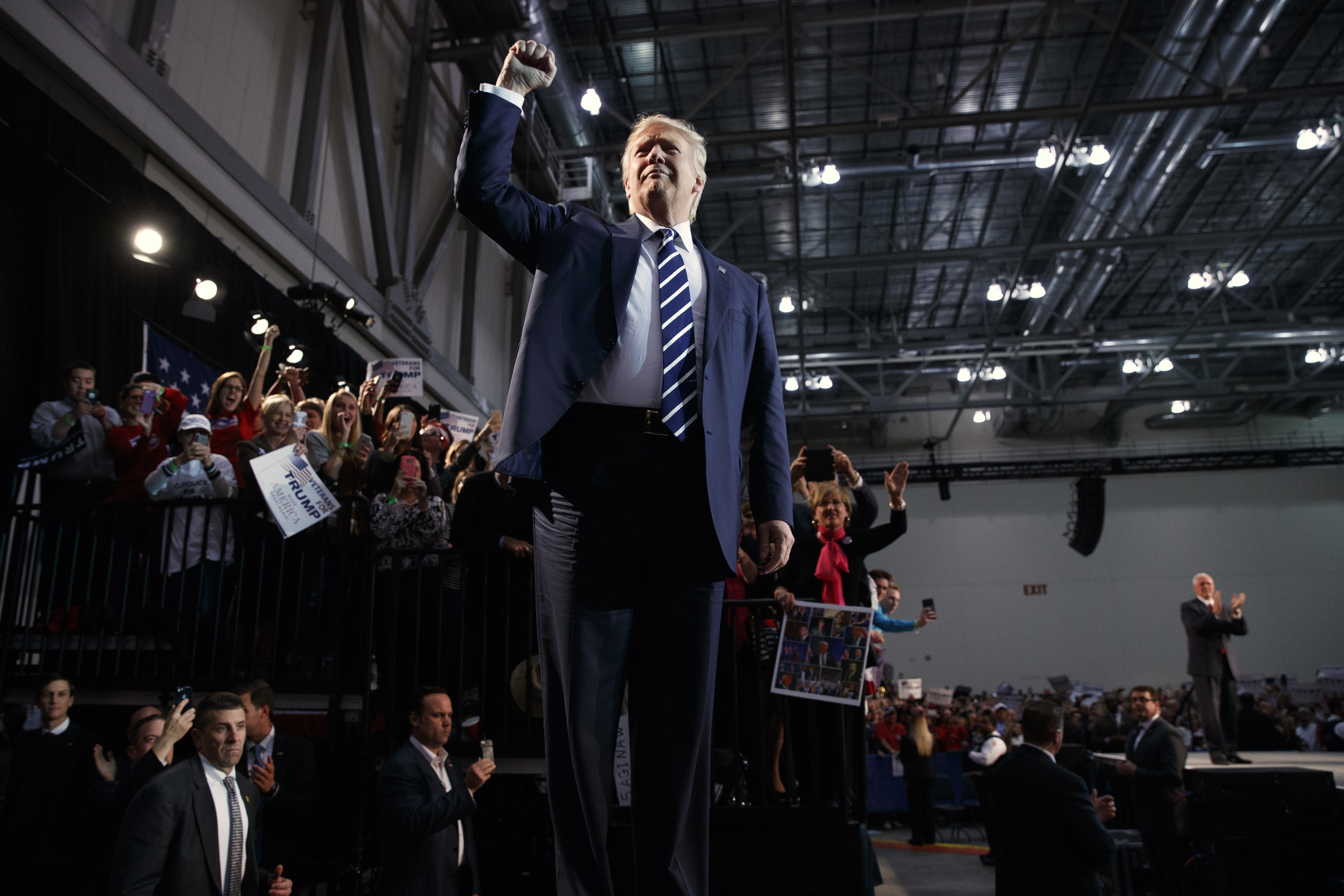
 FILE – In this Tuesday, Nov. 8, 2016, file photo, Republican presidential candidate Donald Trump pumps his fist as he arrives to speak at a campaign rally in Grand Rapids, Mich. President-elect Donald Trump inherits a much sturdier economy than the one Barack Obama took into his second term four years ago. Yet economic growth remains stubbornly sluggish and is expected to remain so. (AP Photo/Evan Vucci, File)
Donald Trump inherits a much sturdier economy than the one Barack Obama carried into his second term four years ago. Back then, the scars of the Great Recession were still fresh. Joblessness was near 8 percent. Pay was flat. Europe faced a grave debt crisis that threatened to spread across the Atlantic.
Now? The job market, with steady hiring and just 4.9 percent unemployment, has proved durable. Pay is finally accelerating. Auto sales are near a record pace. Housing is stronger. Europe’s financial plight has stabilized.
Yet the economy’s long-standing shift toward workers with college degrees left people without them stuck with dimmer job opportunities and stagnant wages – a trend for which Trump blamed trade deals that he said led manufacturers to move overseas. The Americans who elected Trump are longing not just for change but for a reversal of the Obama era – one that will ignite growth, slash taxes, restore lost factory jobs and curb most federal regulations.
Problem is, the economy’s most vexing problems – from an aging workforce to listless productivity to weak corporate spending – defy quick fixes. Trump has pledged an economic renaissance yet has avoided the broad policy prescriptions widely seen as necessary for managing a government.
Well before the election, Trump’s supporters came to distrust government data that pointed to a recovery and to question the interventions by the Federal Reserve to sustain growth. But given his extravagant economic promises, the hotelier, real estate developer and TV celebrity faces an uphill challenge.