
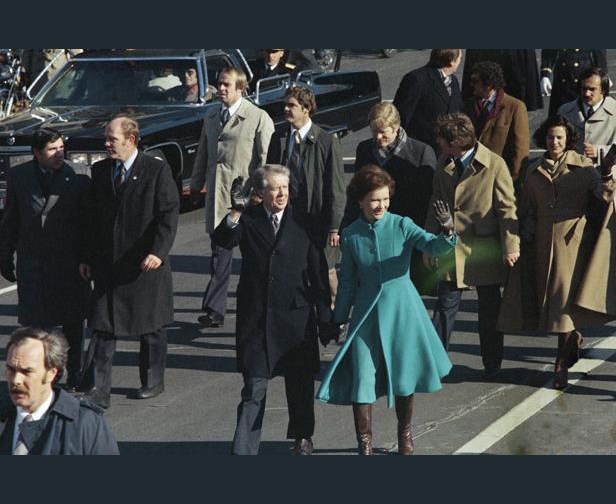
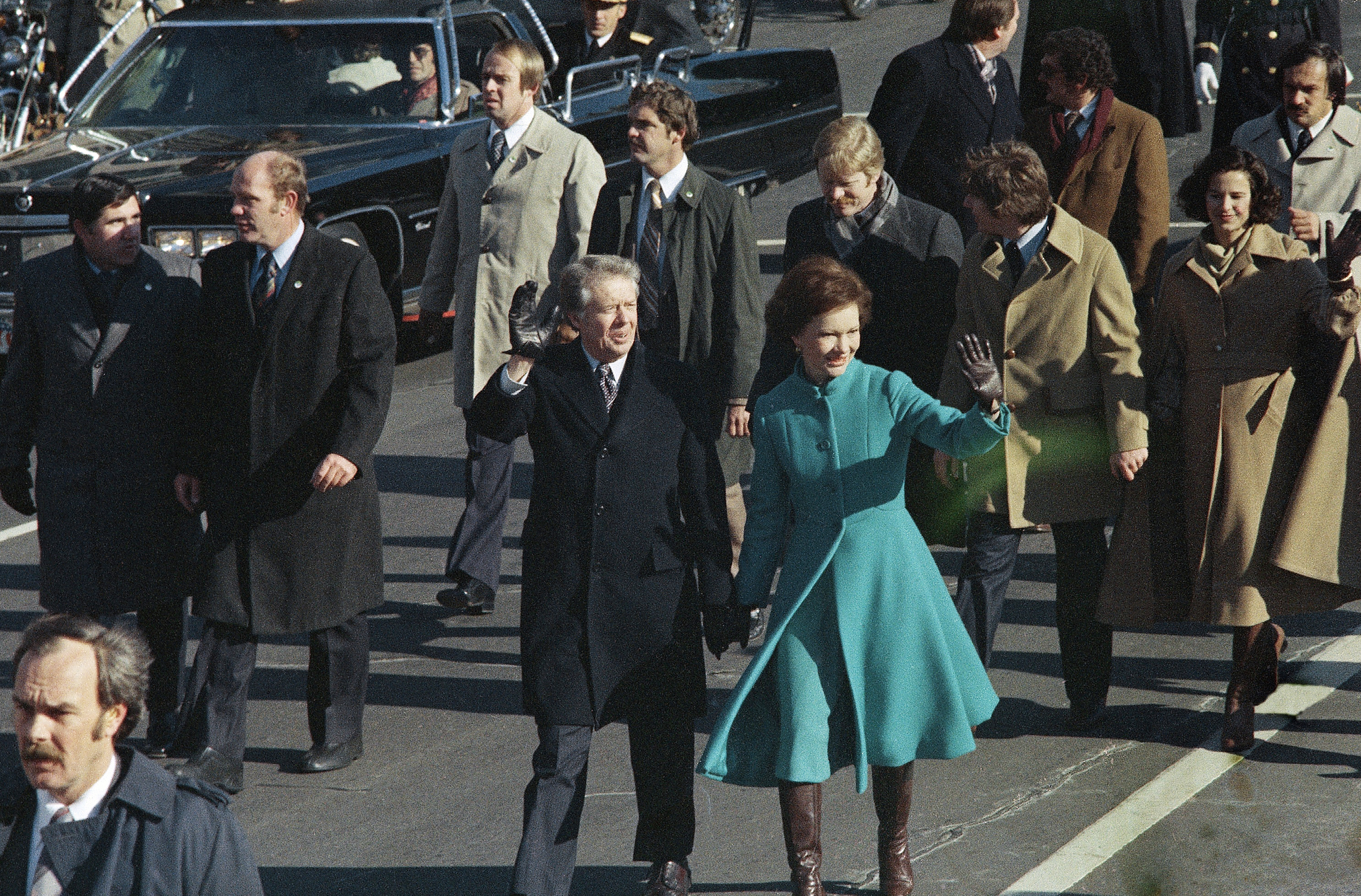
 President Jimmy Carter and first lady Rosalynn Carter wave as they walk down Pennsylvania Avenue in Washington after Carter was sworn in as the nation’s 39th president in 1976. At some point on Inauguration Day, if all goes expected, the president’s limousine will slow to a stop on its journey down Pennsylvania Avenue from the Capitol to the White House. A Secret Service agent will open the rear passenger door, and the newly sworn-in president will emerge from his car for a several-minute stroll. The crowd will cheer. The president will wave. In that moment, Pennsylvania Avenue is Americaís red carpet. And the president is the only celebrity on it. The victory walk has become an iconic inaugural moment, one expected by the public and the press. And though the tradition dates only to President Jimmy Carter, it has already developed an air of inevitability and predictable patterns.
WASHINGTON – At some point on Inauguration Day, if all goes as expected, the president’s limousine will slow to a stop on its journey down Pennsylvania Avenue from the Capitol to the White House. A Secret Service agent will open the rear passenger door, and the newly sworn-in president and the first lady will emerge from his car for a several-minute stroll. The crowd will cheer. Barack Obama will wave.
In that moment, Pennsylvania Avenue is America’s red carpet. And the president and first lady are the only celebrities on it. The victory walk has become an iconic inaugural moment, one expected by the public and the press.
And though the tradition dates only to President Jimmy Carter, it has already developed an air of inevitability and predictable patterns.
Charlie Brotman, who has been the announcer for the inaugural parade for decades, says the crowd never tires of the moment. When it happens, the 85-year-old says, spectators can expect to hear him saying something like this over the loudspeakers: “Ladies and gentleman, here’s what the parade is all about. The president of the United States is walking right in front of you.”
Carter wasn’t thinking about starting a tradition when he decided to walk the mile-plus parade route in 1977. The idea wasn’t even his. Before the inauguration, a Wisconsin senator sent Carter a letter suggesting the new president walk the route to set a good example for physical fitness. Carter initially dismissed the idea as silly, but soon reconsidered. He wrote in his memoir, “Keeping Faith,” that he “began to realize that the symbolism of our leaving the armored car would be more far-reaching than simply to promote exercise.”