
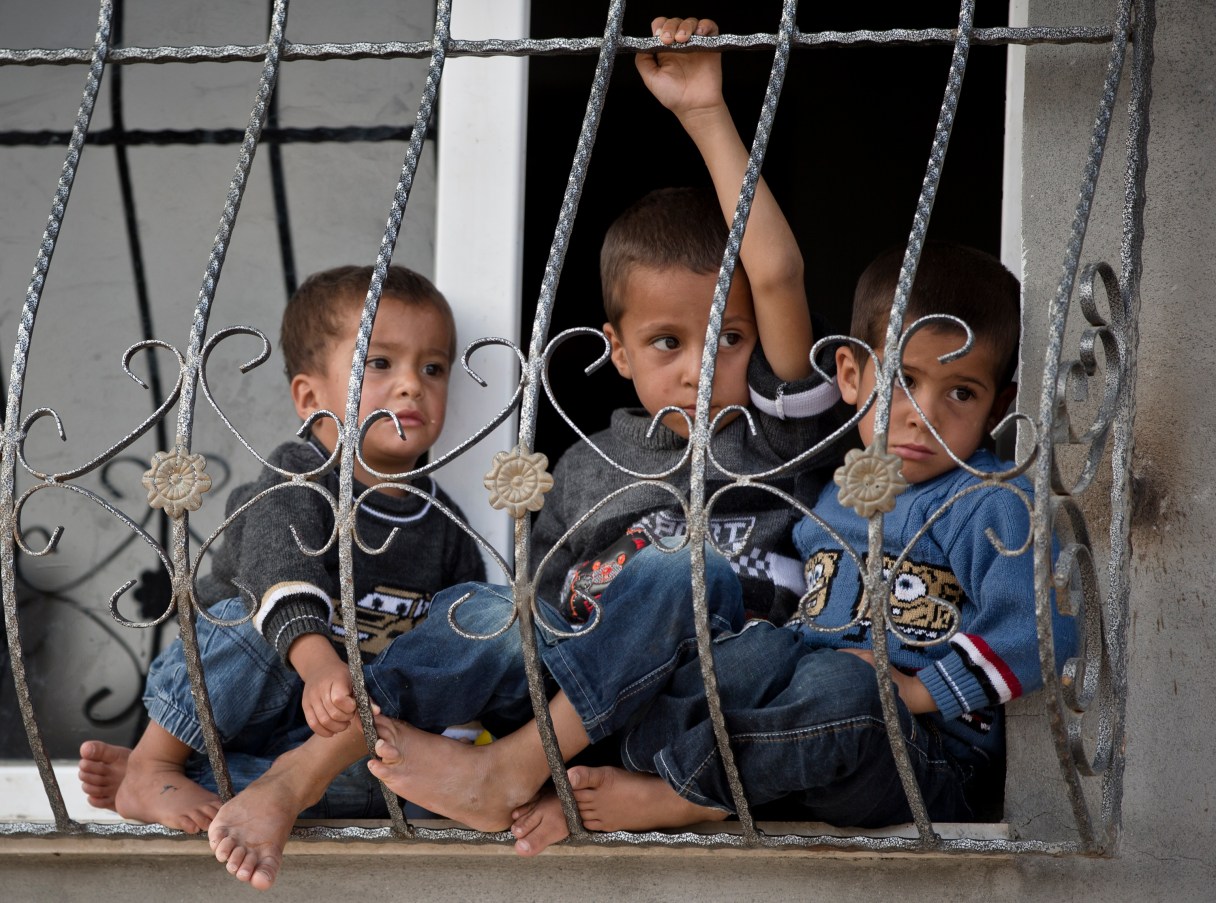
ALANYURT, Turkey (AP) – Just eight families used to inhabit this small hamlet jutting into no-man’s land on the Turkish-Syrian border, eking out a living from the land, living in mud-brick houses yards away from Turkish army lookout posts.
Now, as thick black smoke rises from the besieged Kurdish Syrian town of Kobani in the distance, the village’s population has more than doubled.
In mid-September, up to 80 terrified refugees streamed into Alanyurt – which locals call by its Kurdish name of Zahwan – fleeing an onslaught by extremists from the Islamic State group on Kobani and surrounding villages. Most left with nothing but the clothes on their backs. Bader Uzgar, head of the village, took them in.
Nearly 200,000 people have fled into Turkey from Kobani, which sits right on the border. While many have found refuge in camps set up by authorities around the nearby Turkish town of Suruc, the vast majority have been taken in by relatives, friends or even total strangers. They live in people’s homes, in empty storehouses or in construction sites.
At a conference Tuesday in Berlin, Syria’s neighbors urged European countries to open their doors to more refugees from the 3½ year civil war, and asked for immediate financial and technological help as their infrastructures buckle under the massive refugee influx. More than 3 million people have fled Syria because of the conflict, and another 6 million are displaced within Syria.