
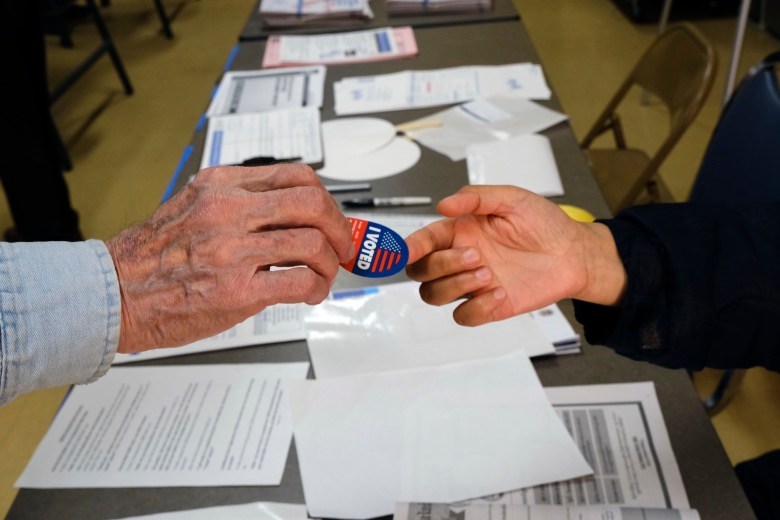
SACRAMENTO, Calif. (AP) – The Democratic presidential candidates are racing toward the biggest day in the primary calendar, when 14 states vote on Super Tuesday. It’s the day when the primary moves from retail to wholesale. Instead of a single state voting at a time, candidates have to focus on contests in every region of the country with all types of voters.
While Super Tuesday won’t necessarily determine who wins the nomination, it has historically been difficult for a candidate who performs poorly on the day to recover. Here’s a look at Tuesday’s contests: THE STATES Fourteen states hold primaries on Super Tuesday, including California and Texas, the two biggest delegate hauls of the entire primary season. California offers 415 delegates and Texas 228. In total, more than 1,300 delegates will be up for grabs, about a third of the total available in the race to the Democratic presidential nomination.
Although Super Tuesday was originally created as a regional primary featuring Southern states, it has morphed over the years. This year, it includes states from every region of the country.
The other states are Arkansas, Alabama, Colorado, Maine, Minnesota, Massachusetts, Vermont, Utah, North Carolina, Virginia, Tennessee and Oklahoma. Most of the Southern states are Republican strongholds in the general election, while others like California are solidly Democratic. North Carolina is likely to be a battleground state in the general election.
Polls close between 7 p.m. and 8 p.m. local time, depending on the state.