
The last footprints left on the moon were imprinted there by Apollo astronaut and Chicago native Eugene Cernan in 1972. In all, only 12 men walked the dusty lunar surface during the Apollo program before it ended. No one has been back since.
That’s a shame. The United States led the way in those heady early days of space exploration, driven by Cold War competition with the Soviet Union that spurred Americans to land the first men on another world. But NASA’s manned space program has been stuck in low-Earth orbit now for decades, and it is way past time for the U.S. to get back in the business of spacefaring.
Now, nearly 50 years after Cernan’s Apollo 17 mission ended, three billionaires – Elon Musk, Jeff Bezos and Richard Branson – are pioneering private space flight and stirring excitement again about space tourism and a new space race.
This time the race is being fueled by private ventures as well as nations. That’s long overdue. Musk and Bezos are vying for NASA contracts and joining other companies like Boeing to contribute to the rockets and technology that could help return men, and the first women, to the moon, and set humankind’s sights next on exploring Mars.
NASA is still leading the way, but international competitors are catching up to the United States. China landed and deployed a rover on Mars in May, and it landed a robotic spacecraft on the dark side of the moon in 2019, the first nation to do so.
Critics argue spending billions of dollars on space is misguided, given the problems of poverty, disease, hunger and climate change on Earth that desperately need funding. Others call out the vanity of the super-rich and condemn the wealthy for spending their money to travel to the edge of space with few obvious scientific benefits. They argue such funding should go to solving crises here on Earth.
But they miss the point. It shouldn’t be either/or; it has to be both/and. It always has been. Humans need to address our problems on the planet but still strive to break barriers, push the envelope of the possible and aim for the final frontiers.
Let’s get on with it. Such risky ventures as space exploration have to be driven by governments, to mitigate those risks and costs, but private companies can make enormous contributions by developing rocket technologies more cost-effectively, providing jobs and engineering innovation. That spurs economic growth, advances research and expands human knowledge.
Billionaires in space and their companies can innovate new discoveries and inventions. The space program led to incredible breakthroughs in science, like GPS in cellphones, global satellite communications and medical imaging, among others.
President Joe Biden should jump at the chance to return Americans to the moon as a way station to the Red Planet, and to revive America’s inspirational leadership in manned missions. He has touted the need to demonstrate that democracies can get things done, and he could find and forge a bipartisan consensus for the Artemis program in Congress. Biden has already committed to funding NASA with $24.7 billion in the budget, and he supports Artemis.
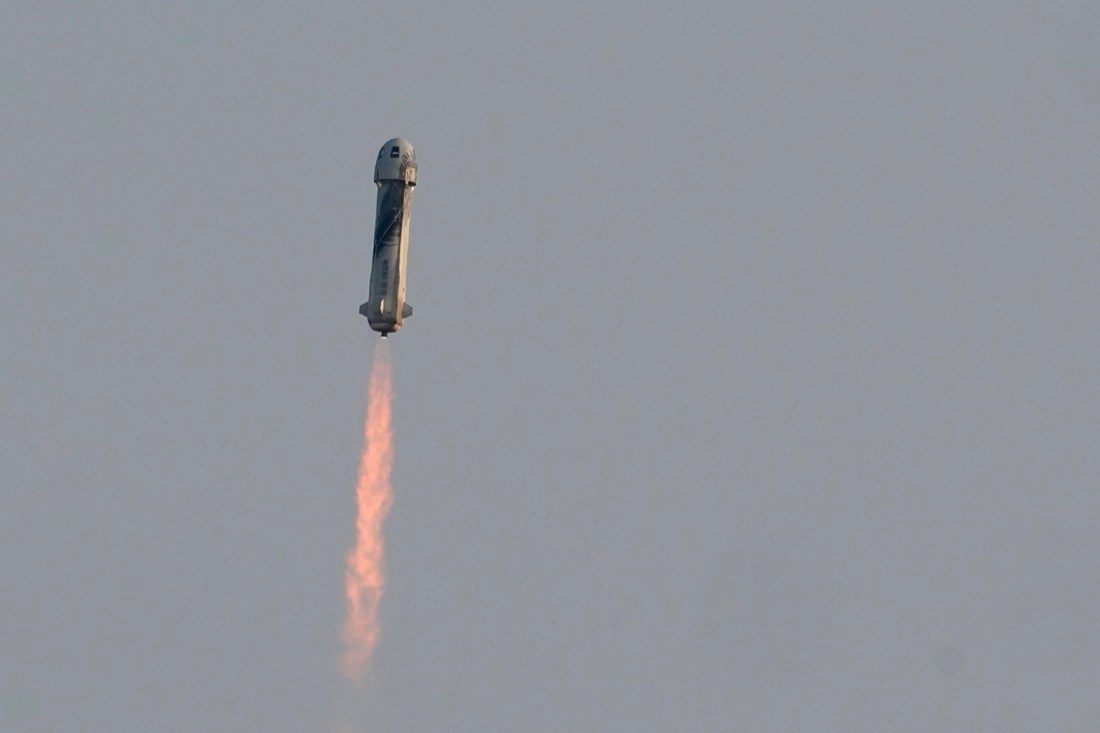
Bezos and the billionaires deserve some credit for getting on with the race. Bezos even took a special guest with him when he traveled to the edge of space July 20. Wally Funk was a pioneering aviator and one of the original Mercury 13 female aviators who took astronaut tests, but she never got to fly to space or get her astronaut wings until Bezos took her there.
At 82, Funk spoke for many grounded Americans when she grew impatient over a six-minute hold on the launch pad before takeoff, Bezos said. He recalled Funk asking him, “Are we going to go, or not? What the hell; we’re burning daylight. Let’s go.”
The Chicago Tribune