
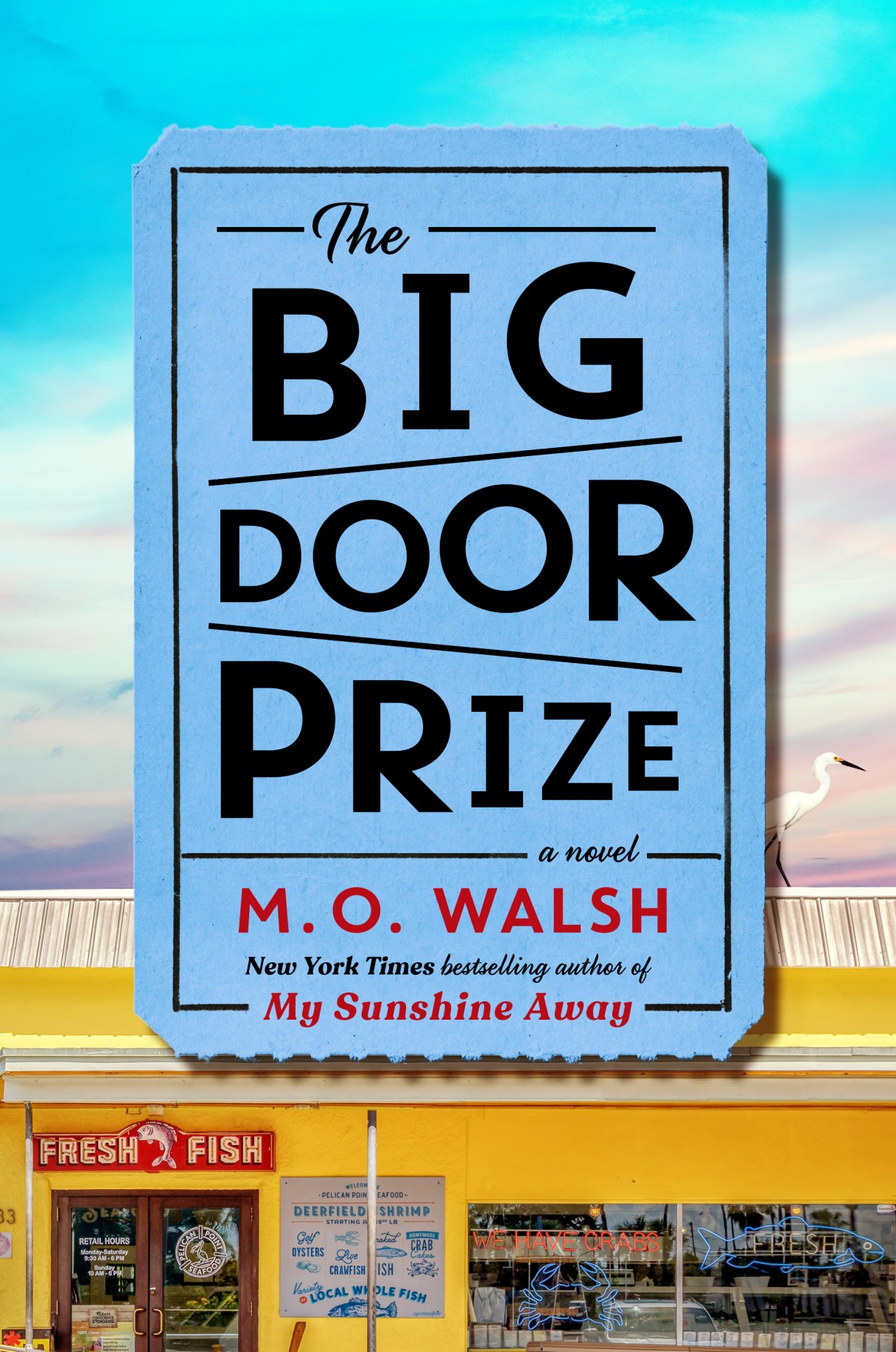
“THE BIG DOOR PRIZE” by M.O. Walsh (G.P. Putnam’s Sons, 384 pages, $27)
With the opening line of his second novel, “The Big Door Prize,” M.O. Walsh asks, “How can you know that your whole life will change on a day the sun rises at the agreed-upon time by science or God or what-have-you and the morning birds go about their usual bouncing for worms? How can you know?” Appropriately, the answer arrives on the book’s final page. In between lies much confusion, hope, odd behavior and ultimately sheer joy for the residents of fictional Deerfield, Louisiana.
The action is set in motion with an air of old-fashioned sci-fi so palpable you can almost hear the theremin in the background. Consider, if you will, a small Southern town like any other, with a historic square, shops “that hang flowering baskets,” a Catholic high school, an upcoming festival and a grocery store. In this grocery appears, almost as if by magic, a cheaply constructed plywood box called the DNAMIX, a sort of Twilight Zone photo booth. Slide $2 into one slot and a Q-tip mouth swab into another, and a hidden device analyzes your DNA before presenting a slip of paper printed with your name, age, height and “potential life station.”
Lines form in the market, and many townsfolk part with two bucks. The results cause most to question previous choices, to weigh their current “life station” against its potential. Among them is Cherilyn Hubbard, a builder of novelty birdhouses, who is married to Douglas, a high school history teacher. They are a perfectly ordinary, generally happy couple approaching 40 with a small assortment of vague regrets. He wants to learn jazz trombone. She wants something more, although she has no idea what shape “more” might take until she receives a surprising suggestion from the DNAMIX booth. Other characters affected by the machine include two troubled teens, the town mayor, a priest, a principal and a recovering alcoholic who offers a free taxi service.
All of these characters are fully realized and artfully drawn. While some may be more central than others to the tangled web of action launched by the machine’s arrival, there is no single protagonist. What emerges instead is the life of the town, a mosaic of folks like those found in Thornton Wilder’s “Our Town” – neither as simple as residents of Mayberry nor as devious as those of Spoon River. (Not coincidentally, an actual mosaic photograph of townspeople, commissioned for an upcoming festival celebrating Deerfield’s founding, becomes a central plot device.) From the opening line, the reader has the sense of a wise, omniscient narrator peeking into various bars, cars and bedroom windows, a twinkle in his eye as he brings some mischief to the lives within.