
Thursday, October 29, 2026Oct 29

This story is free to read.

4-H program aims to grow next generation of ag scientists

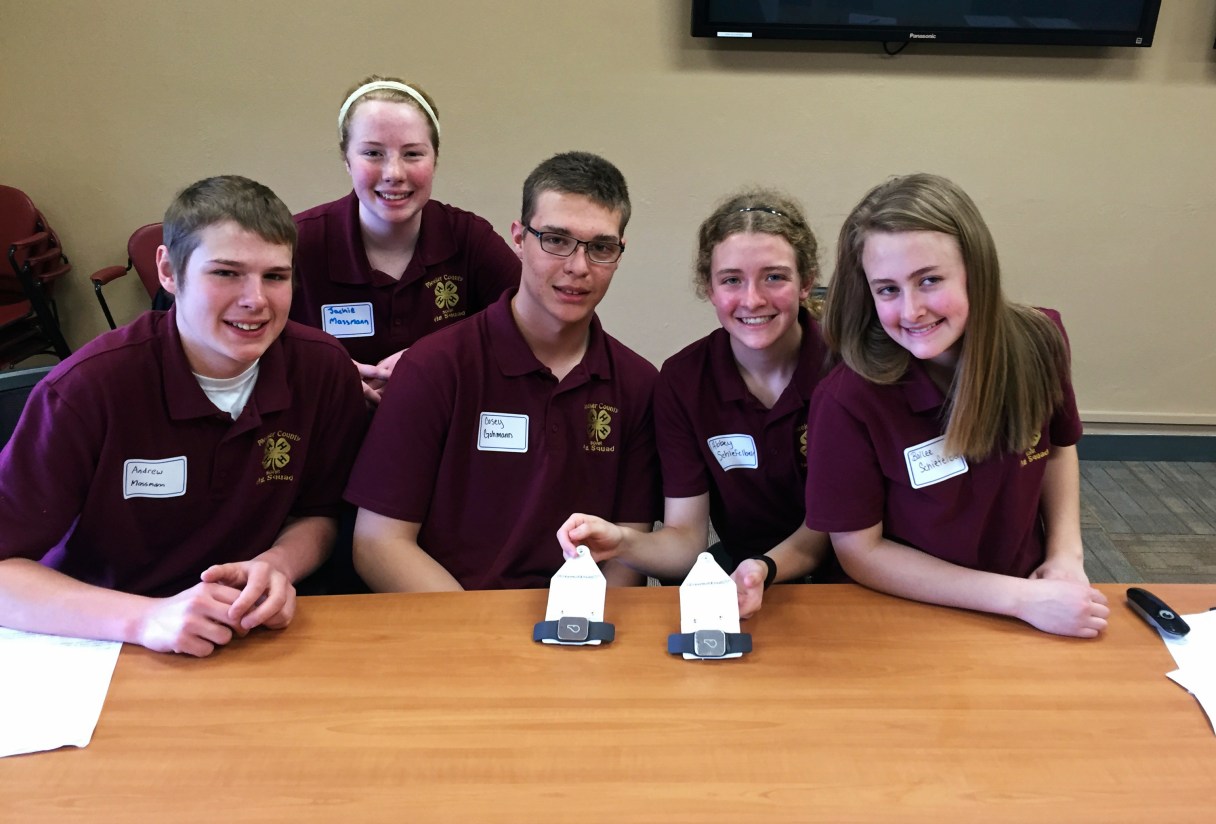
In this April 23, 2016, photo, members of the Meeker County Ag Squad are seen at the University of Minnesota in St. Paul showing off the GPS ear tags they developed to help farmers track their livestock from far away. From left are: are Andrew Massmann, Jackie Massmann, Casey Gohmann, Abbey Schiefelbein, and Bailee Schiefelbein, all of Kimball, Minn. They're taking part in the 4-H Science of Agriculture Challenge, which aims to nurture the next generation of agricultural scientists for a country facing a critical shortage of them. (AP Photo/Steve Karnowski)
In this April 23, 2016, photo, members of the Meeker County Ag Squad are seen at the University of Minnesota in St. Paul showing off the GPS ear tags they developed to help farmers track their livestock from far away. From left are: are Andrew Massmann, Jackie Massmann, Casey Gohmann, Abbey Schiefelbein, and Bailee Schiefelbein, all of Kimball, Minn. They're taking part in the 4-H Science of Agriculture Challenge, which aims to nurture the next generation of agricultural scientists for a country facing a critical shortage of them. (AP Photo/Steve Karnowski) In this April 23, 2016, photo, members of the Meeker County Ag Squad are seen at the University of Minnesota in St. Paul showing off the GPS ear tags they developed to help farmers track their livestock from far away. From left are: are Andrew Massmann, Jackie Massmann, Casey Gohmann, Abbey Schiefelbein, and Bailee Schiefelbein, all of Kimball, Minn. They're taking part in the 4-H Science of Agriculture Challenge, which aims to nurture the next generation of agricultural scientists for a country facing a critical shortage of them. (AP Photo/Steve Karnowski)

ST. PAUL, Minn. (AP) – One team is developing GPS ear tags so cattle farmers can track herds from afar. Another thinks drones can protect livestock from predators. Yet another is developing a rechargeable portable warmer to prevent vaccines from freezing when dairy producers inoculate their herds in the winter.

These aren’t corporate or university researchers, but teenagers in Minnesota’s 4-H Science of Agriculture Challenge, which aims to nurture the next generation of agricultural scientists for a country facing a critical shortage. A study last year by the U.S. Department of Agriculture and Purdue University found that nearly 60,000 high-skilled agriculture-related jobs open up annually, but there are only about 35,000 college graduates available to fill them.

University of Minnesota Extension is developing the challenge, which is now in its second year and already attracting interest from other 4-H programs, such as Michigan’s. Extension specialist Josh Rice says his team will present a workshop for national 4-H officials in October, and recently gave a presentation to youth development officials in Bangladesh.

“This program is going to have an extremely positive impact on getting young people to think about agricultural careers,” Rice said.

In preparation for the finals on June 21-23, teams from across the state have spent months with coaches and mentors. Recently, judges helped them refine their presentations.