
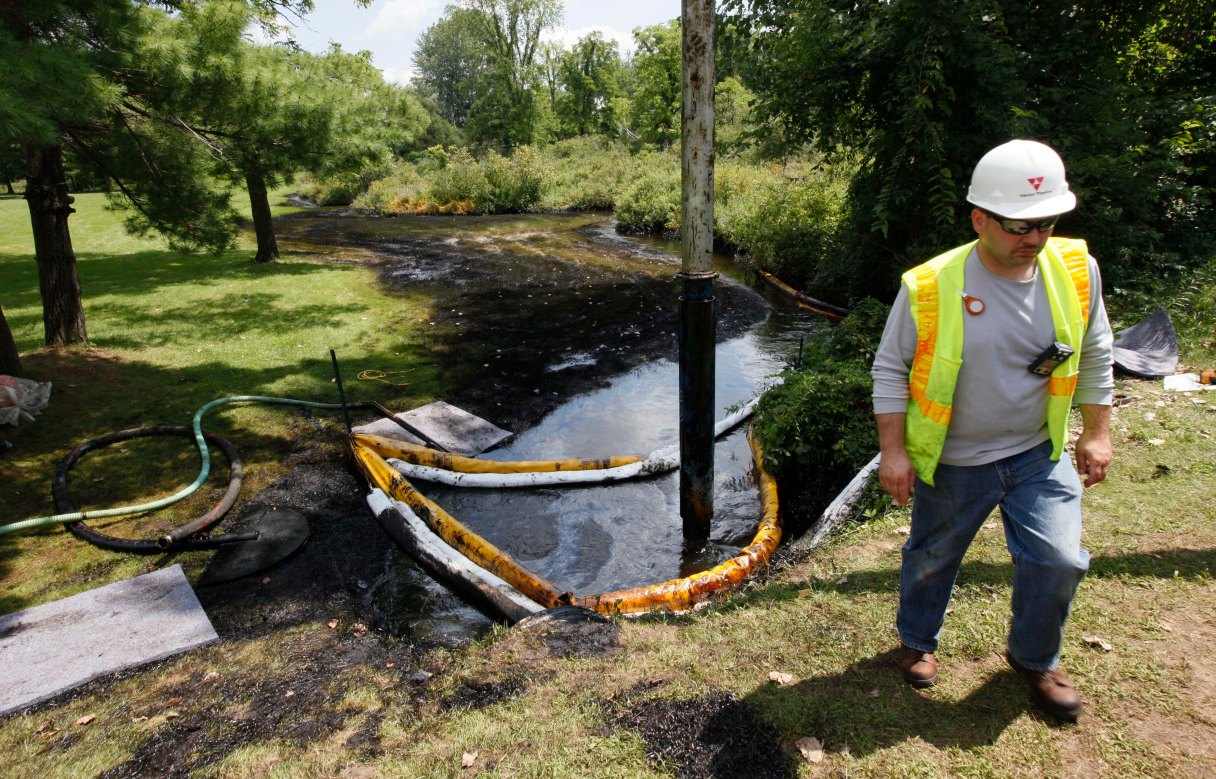
Enbridge Energy Partners has reached a $176 million settlement for the costliest inland oil spill in U.S. history – a pipeline rupture in southwestern Michigan that polluted a nearly 40-mile stretch of the Kalamazoo River, federal officials said Wednesday.
The agreement between U.S. government agencies and the Canadian company concluded years of negotiations following the release of at least 843,000 gallons of heavy crude in July 2010. In addition to a $61 million penalty, the deal requires spending on measures to prevent future spills, detect leaks and prepare for emergencies across Enbridge’s Lakehead network, a web of 14 pipelines extending more than 2,000 miles across seven states.
Particular scrutiny was required for twin underwater pipelines that cross the Straits of Mackinac, the waterway linking Lakes Huron and Michigan in northern Michigan. The agreement does not call for shutting down those lines, as demanded by environmental activists who described the settlement as a wrist slap. Officials with the U.S. Department of Justice and the Environmental Protection Agency who negotiated the deal said they didn’t have the authority to require that.
Additionally, Enbridge pledged to replace 300 miles of a pipeline, pay $1 million for a separate 2010 spill in Romeoville, Illinois, and hire an independent auditor to make sure the company complies with the deal.
The penalty is the largest ever assessed for violations of the federal Clean Water Act except those stemming from the Deepwater Horizon spill in the Gulf of Mexico six years ago, said John Cruden, assistant attorney general for the Justice Department’s environment and natural resources division.