
Few things are as intellectually thrilling as watching an idea spring to life, capturing more and more minds until it becomes conventional wisdom. And there are few areas of law where this has been as pronounced as antitrust.
Forty-three years ago, Robert Bork, who was a professor at Yale Law School at the time, wrote “The Antitrust Paradox,” which argued that antitrust enforcement should focus primarily – if not solely – on whether consumers were helped or hurt rather than whether a proposed merger diminished competition. Many antitrust economists found themselves persuaded by Bork’s logic, and within a decade courts, including the Supreme Court, were making antitrust rulings based on the “consumer welfare standard.”
Thirty-nine years later, Lina Khan, who was a student at Yale Law School, wrote an article for the Yale Law Journal titled “Amazon’s Antitrust Paradox.” It was a powerful takedown of the tech giant. In it, she described both how Amazon.com Inc. used its monopoly power to crush potential rivals and why Bork’s consumer welfare standard made no sense when it came to taking on the platform companies such as Amazon, Facebook and Google. “The current paradigm in antitrust has failed,” she concluded.
The next year, Tim Wu, a law professor at Columbia University, wrote a short book titled “The Curse of Bigness.” He also attacked the monopoly power of the big tech companies but with a different approach. He recounted the early history of antitrust, pointing out that for most of the last century – from Standard Oil in 1911 to Microsoft in 1998 – the federal government wasn’t afraid to end monopolies by trying to break up companies. His core point was that the government shouldn’t be afraid to break up tech giants if their monopolistic practices are squashing competition and harming innovation.
Last week, Wu announced that he was joining President Joe Biden’s National Economic Council as an adviser on technology and competition issues. And on Tuesday, Politico broke the news that Khan is going to be nominated to be a commissioner on the Federal Trade Commission, an agency very much focused on antitrust issues. In just a handful of years, their ideas have gone from exotic to mainstream.
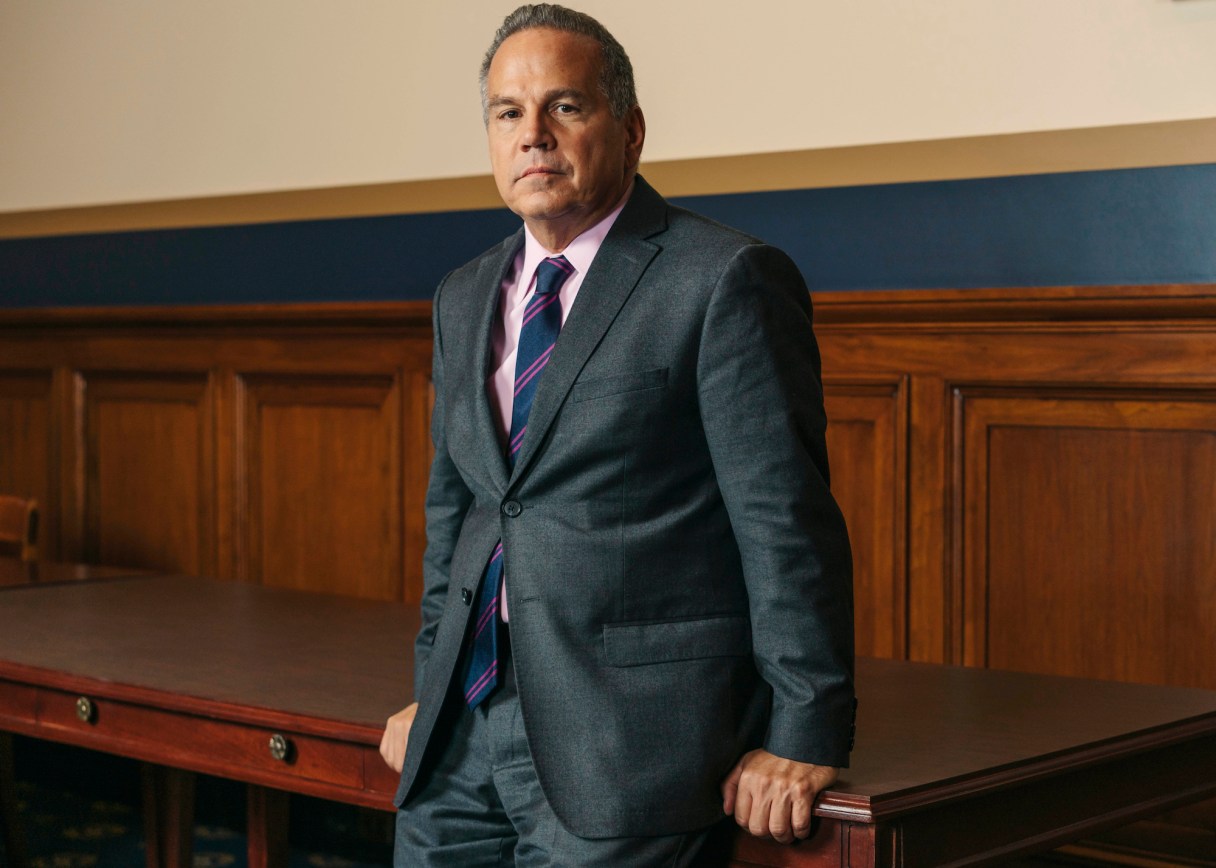
Meanwhile, in Congress, the House subcommittee on antitrust, commercial and administrative law released a damning report last October about the monopolistic practices of four companies: Amazon, Facebook Inc., Google parent Alphabet Inc. and Apple Inc. Khan was the lead investigator for the subcommittee, working for the chairman, David Cicilline of Rhode Island. Cicilline has clearly been influenced by the work of Khan, Wu and other advocates of this new, tougher approach to antitrust such as the economist Hal Singer.
In this new Congress, Cicilline appears ready to lower the boom on Facebook and the others. Members of Cicilline’s subcommittee have come to the correct conclusion that behavioral remedies will never work, and neither will fines. Breaking the companies up may well be the only way to revive competition.
As for the White House, Biden has already shown, with the appointment of Wu and the likely nomination of Khan, that he will not accept the consumer welfare standard as a given, the way Barack Obama did. Wu and Khan are antitrust revolutionaries whose goal is to replace Bork’s ideas with ideas that view that monopoly power as a problem, no matter what it means for the consumer welfare standard.
Biden still has one more important antitrust nomination to make: the head of the Justice Department’s antitrust division. If past is prologue, that person is likely to be another revolutionary. For too long, Bork’s consumer welfare standard gave tech giants a free ride. Two months into his presidency, Biden has shown the free ride is over.
Bloomberg