
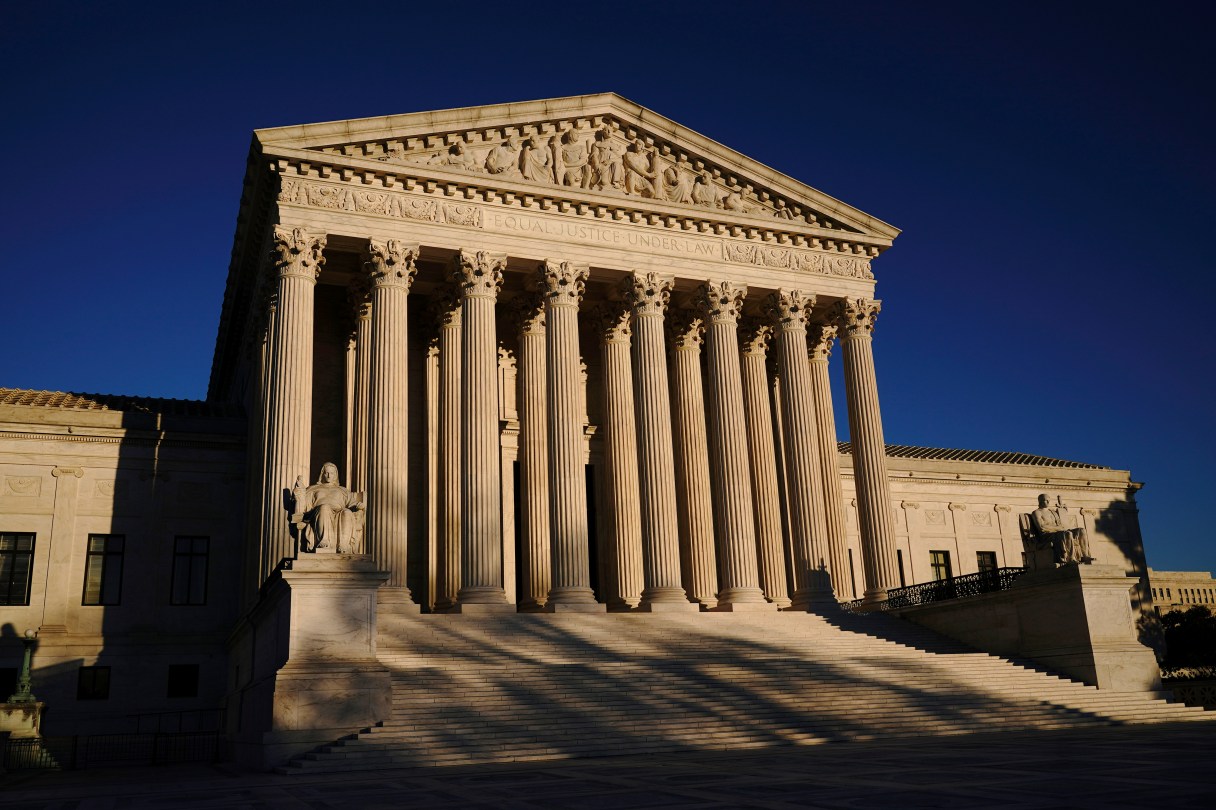
The elections lawsuit pushed by President Donald Trump and dismissed by the U.S. Supreme Court was filled with claims that failed to withstand basic scrutiny.
The high court on Friday threw out a complaint filed by Texas Attorney General Ken Paxton that directly attacked four other states that President-elect Joe Biden won: Georgia, Michigan, Pennsylvania, and Wisconsin. Widely expected by legal experts to fail, the lawsuit still drew the support of 18 Republican attorneys general and 126 Republican members of Congress, including House Republican leader Kevin McCarthy.
Together, Trump and his allies argued that the high court should set aside all four states’ votes, allowing Republican-led state legislatures to swing the election to the president. That would have been something that has never occurred in U.S. history.
Michigan Attorney General Dana Nessel warned before the court’s ruling that if Texas had won, “It is the end of democracy in the United States of America, and that is not hyperbole. It’s just a fact.”
The Supreme Court dismissed the case without addressing most of the lawsuit’s allegations. Here is a look at some of the claims made in the case and how those claims had already been debunked.