
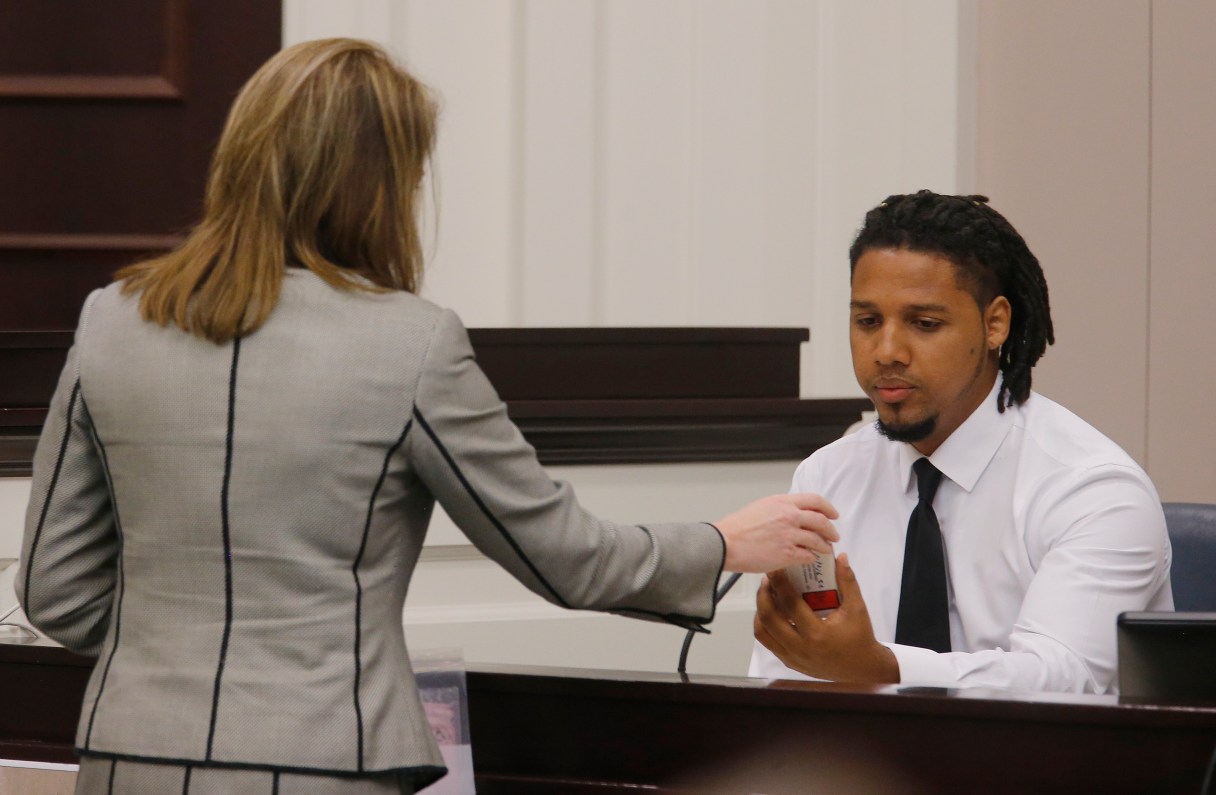
CHARLESTON, S.C. (AP) – The bystander who pressed record on his cellphone after spotting a white North Charleston policeman trying to arrest a black motorist took the witness stand Friday at the former officer’s murder trial.
Feidin Santana, whose steady hand recorded Michael Slager firing eight shots at the fleeing Walter Scott, was called by the prosecution to introduce the video to the jury. The images of the unarmed man being killed stunned the nation as they spread widely on the internet after the fatal encounter in April 2015.
“For some reason I decided to use my phone to record and prevent something that might happen,” he testified. “It was something I will never forget.”
Slager’s defense had sought to keep the video out of the trial, but didn’t object Friday after Santana took the stand. The defense did have two more requests: They wanted the jury to be instructed that the proper perspective to consider the action would be from the perspective of the officer, and they asked that the jury not be allowed to see the video in slow motion.
Judge Clifton Newman denied both requests, saying “I don’t seek to control the manner in which the state presents its evidence.” The jurors then donned headphones to watch the recording.